
GRAP Delhi Vehicle Ban from November 1: Which Cars Can Enter Delhi and Which Are Barred
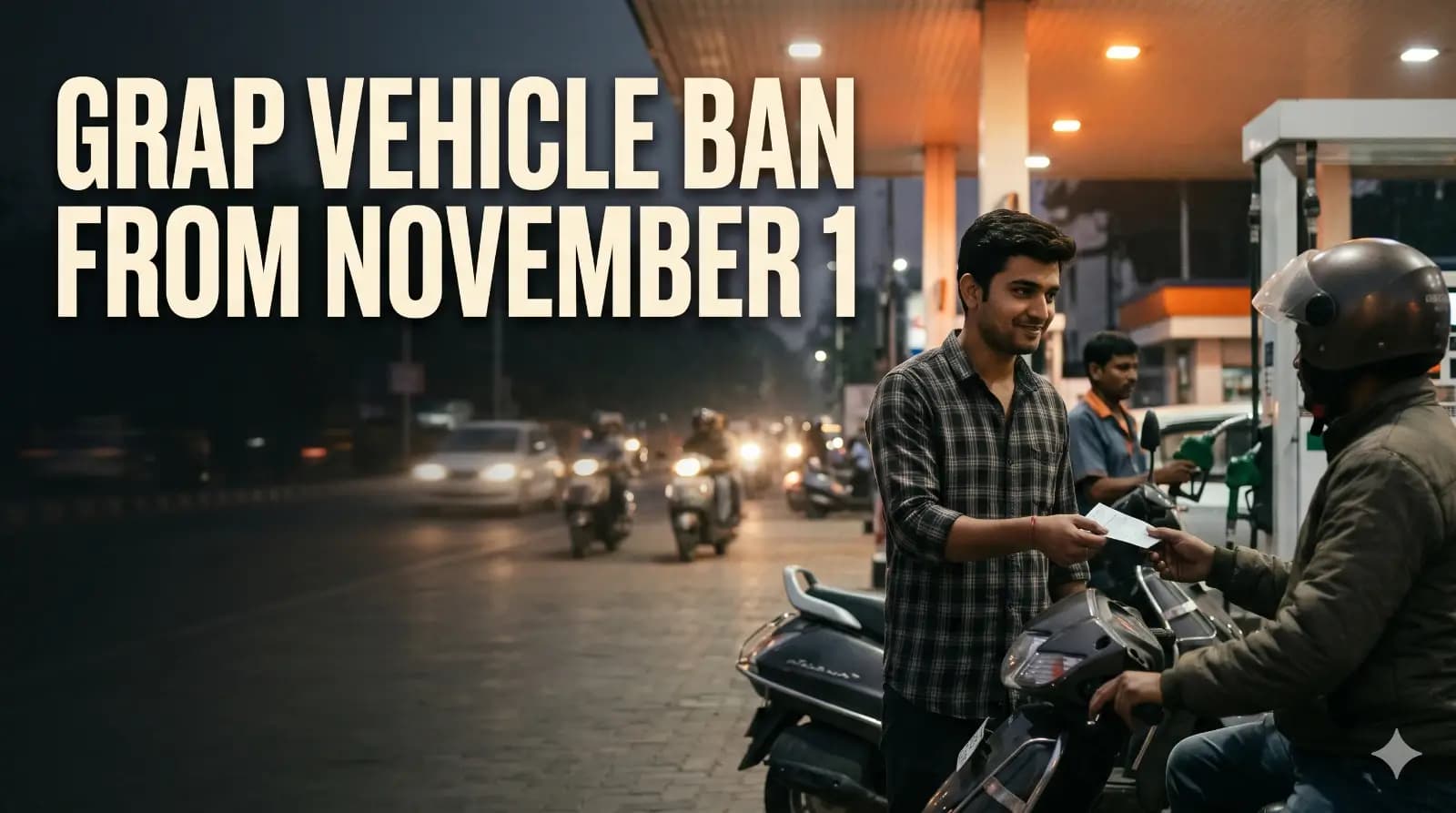
Each winter, Delhi's air quality rules move from advice to restriction. The revised Graded Response Action Plan (GRAP) issued by the Delhi government's Environment Department carries vehicle-entry restrictions that begin on November 1 and run through the winter period, with the Delhi Traffic Police enforcing them at the border points. The purpose of this piece is to explain, in ordinary language, who may drive in and who will be turned back — and what has actually changed from previous years.
What GRAP Is, and Why Vehicle Rules Now Run Through Winter
GRAP is a graded set of measures that the Environment Department can tighten as air quality worsens. Earlier versions switched restrictions on and off depending on the Air Quality Index of the day. The revised plan reported in 2026 is different in one important respect: a category of vehicle restrictions applies across the winter months as a standing rule, not only when a particular stage is triggered. That is why the date November 1 has become the operative line in the calendar rather than a sudden emergency order.
Those restrictions are executed by the Delhi Traffic Police. Their advisory asks motorists to confirm their vehicle's compliance before travelling, which is a fair warning: at a border picket there is no argument to be had about intent.
The Core Rule: BS-VI, CNG and Electric Are the Baseline
As the law and the advisories currently stand, the dividing line is the Bharat Stage emission standard — the pollution norm a vehicle was manufactured to. Vehicles that do not meet BS-VI, the current standard, are the ones facing restriction. BS-VI compliant vehicles, CNG vehicles and electric vehicles remain permitted, subject to the other conditions in the plan.
Two things follow from that. First, an older but well-maintained car cannot be treated as compliant by argument; the standard is on the registration certificate, not on how the engine runs. Second, a driver should look at the emission norm recorded on the RC, not the year of purchase, because the two do not always match.
Which Vehicles Are Barred from Entering Delhi
On the material available, the barred categories cluster around four groups:
- Non-BS-VI vehicles registered outside Delhi, which are the principal target of the entry restriction for the winter window;
- Diesel buses that do not meet the required norm;
- Outstation goods vehicles and trucks falling below the permitted standard;
- Vehicles without a valid Pollution Under Control certificate, which is a separate compliance failure altogether.
A point that is often missed: the restriction is described as applying to entry into Delhi, and enforcement is concentrated at the border. A vehicle already inside the city raises different questions, and the position may vary with the stage in force. Anyone planning a journey that depends on that distinction should verify the current advisory rather than rely on a general summary.
Reporting on the Dates Has Been Inconsistent — Check Before You Travel
This is worth saying plainly. Some reports describe the curbs as running from 1 November 2026 to 31 January 2027, while a social media post attributed to the Delhi Traffic Police refers to 1 November 2025, and another official communication refers to BS-IV and older outstation vehicles. These are not the same rule, and they cannot all be correct.
When official channels conflict, a court would look at the gazette notification of the revised GRAP and the operative advisory, not at news summaries. A driver should do the same in practice: read the Environment Department notification and the latest Delhi Traffic Police advisory for the year in question. Where a specific date or window matters to you, treat the notification as the source and the reporting as background.
What a Challenge in Court Would Actually Turn On
Because the topic sits under writ jurisdiction, it is worth explaining how such restrictions have been tested. A GRAP measure is an executive and administrative action taken under environmental law and the directions of the Supreme Court and the National Green Tribunal, which have consistently treated air quality as a matter affecting the right to life under Article 21 of the Constitution.
What the court examines is whether the classification is reasonable and backed by material — that is, whether the pollution data and expert assessment support drawing the line where the administration has drawn it — and whether the restriction is proportionate to the harm being addressed. What it does not usually do is substitute its own view on the technical merits. General assertions that a vehicle is clean, or that the rule is inconvenient for business, tend not to persuade. Evidence of arbitrary enforcement — the same norm applied to one vehicle and not another at the same picket — is a different and stronger argument.
What I Would Check First
A short list, in the order that saves the most trouble:
- The emission norm on the RC of the vehicle you intend to drive in.
- The state of registration — Delhi or outside.
- A current PUCC, since a lapsed certificate is a standalone violation regardless of the vehicle's standard.
- The latest Delhi Traffic Police advisory for the specific dates of your travel.
- Whether your travel dates fall inside the notified winter window at all.
A typical mistake is a driver who owns a compliant car but lends it, or hires a commercial vehicle, without checking the hired vehicle's norm. The penalty at the border falls on the person driving.
What to Do Next
Before a winter journey into Delhi, keep the RC, the PUCC and, for goods vehicles, the relevant transport documents in the vehicle. Watch the Environment Department's notification and the Delhi Traffic Police advisories for changes in stage, since restrictions can tighten at short notice. If a challan is issued and you believe the vehicle was wrongly classified, the first step is the record on the RC and a copy of the notification in force on that date — those two documents decide most such disputes. For a challenge to the restriction itself, the forum is the writ jurisdiction of the Delhi High Court, and such petitions are usually brought with the environmental directions already on record in mind.
Facing a similar situation? Talk to a BKA advocate before you act.
Chat on WhatsAppNeed help with this?
Our Constitutional Law & Writs services
Frequently Asked Questions
My car is BS-IV but registered in Delhi. Can I still drive it inside Delhi under GRAP?
The entry restriction reported for the winter window is directed principally at non-BS-VI vehicles registered outside Delhi, enforced at the border points. A Delhi-registered vehicle already inside the city raises a different question, and the position can vary with the GRAP stage in force. Check the current Delhi Traffic Police advisory for the dates you plan to drive.
Bahar ki gaadi se Delhi aa sakte hain? (Can I come to Delhi in an outstation-registered car?)
It depends on the emission norm on that vehicle's registration certificate, not on its age or condition. As the position currently stands, BS-VI compliant, CNG and electric vehicles are permitted to enter, while non-BS-VI outstation vehicles face restriction during the notified winter period. Carry the RC and a valid PUCC, since a lapsed certificate is a separate violation.
Does a valid PUCC override the BS-VI requirement?
No. These are two separate compliance requirements. A Pollution Under Control certificate confirms the vehicle is presently emitting within limits; the Bharat Stage norm is a manufacturing standard recorded permanently on the registration certificate. A clean PUCC on a non-BS-VI outstation vehicle does not convert it into a permitted vehicle, and a BS-VI vehicle with a lapsed PUCC can still be penalised.
What documents should I keep in the vehicle when driving into Delhi in winter?
The registration certificate, a current Pollution Under Control certificate, your driving licence and the insurance in force. For goods vehicles, keep the transport and permit documents as well. If you believe the vehicle has been wrongly classified at a picket, the record on the RC and a copy of the notification in force on that date are what decide the dispute.
Can I challenge a GRAP vehicle restriction in court?
A challenge would go to the writ jurisdiction of the Delhi High Court, since these are administrative measures tied to air quality and the right to life under Article 21. Courts examine whether the classification is reasonable, backed by material and proportionate; they do not usually re-decide the technical merits. Evidence of arbitrary or inconsistent enforcement at the same location is a materially stronger argument than general inconvenience.
Related Articles
How to File a Mandamus Petition Against a Government Department in Delhi NCR
A writ of mandamus can force a government department to act, but only if you show a clear legal duty and a refusal to perform it.
GRAP Delhi vehicle ban from November: How to contest a ₹20,000 pollution fine
A Rs 20,000 GRAP pollution fine in Delhi can be contested. The law sets the grounds that work and the cost of fighting it.

Speedy Trial Is Also the Victim's Right: Busting the Myth
Many believe the right to a speedy trial belongs only to the accused. This article busts that myth, explaining how Article 21 of the Constitution extends this right to victims, and how the courts have upheld it.