
Banking & NBFC Disputes
Defending borrowers and guarantors against bank and NBFC recovery action.
When a bank or NBFC initiates recovery action, borrowers and guarantors often have very little time to respond before losing possession of secured assets. Our practice defends individuals and businesses facing SARFAESI notices, wrongful NPA classification, and possession proceedings, challenging procedural lapses and pursuing settlement or restructuring wherever possible.
We represent clients before the Debt Recovery Tribunal (DRT), Debt Recovery Appellate Tribunal, and the Delhi High Court, scrutinising whether the bank or NBFC has followed the mandatory process before invoking its enforcement powers.
Discuss Your CaseServices Covered
- Challenging SARFAESI Section 13(2) demand notices and possession action
- Securitisation Application before the DRT (Section 17 SARFAESI)
- Defending wrongful classification of accounts as NPA
- Guarantor liability defence and one-time settlement negotiation
- Appeals before the Debt Recovery Appellate Tribunal
Frequently Asked Questions
What can I do if I receive a SARFAESI notice from my bank or NBFC?
You have 60 days from the Section 13(2) notice to repay the dues or file objections. The bank is legally required to consider your objections and respond in writing; if it proceeds to possession without doing so, or without following due process, that action can be challenged before the DRT.
Can a bank take possession of my property without a court order?
Under SARFAESI, a bank can take possession without approaching a civil court, but only after following the prescribed notice and objection procedure. If this process is bypassed or the classification of the account as NPA itself is questionable, the borrower can move the DRT under Section 17 to have the action set aside.
Am I liable if I only stood as a guarantor, not the borrower?
Guarantors can be pursued for the full outstanding amount, as their liability is generally coextensive with the borrower's under the Indian Contract Act. However, defences around discharge of guarantee, lack of proper notice, or material alteration of loan terms without consent may be available depending on the facts.
Can I negotiate a settlement instead of contesting recovery in court?
Yes, and it is often the faster route. We assist clients in negotiating one-time settlements or restructuring with the bank or NBFC, while keeping objection and appeal options open in parallel to preserve leverage during the negotiation.
Banking & NBFC Disputes Articles
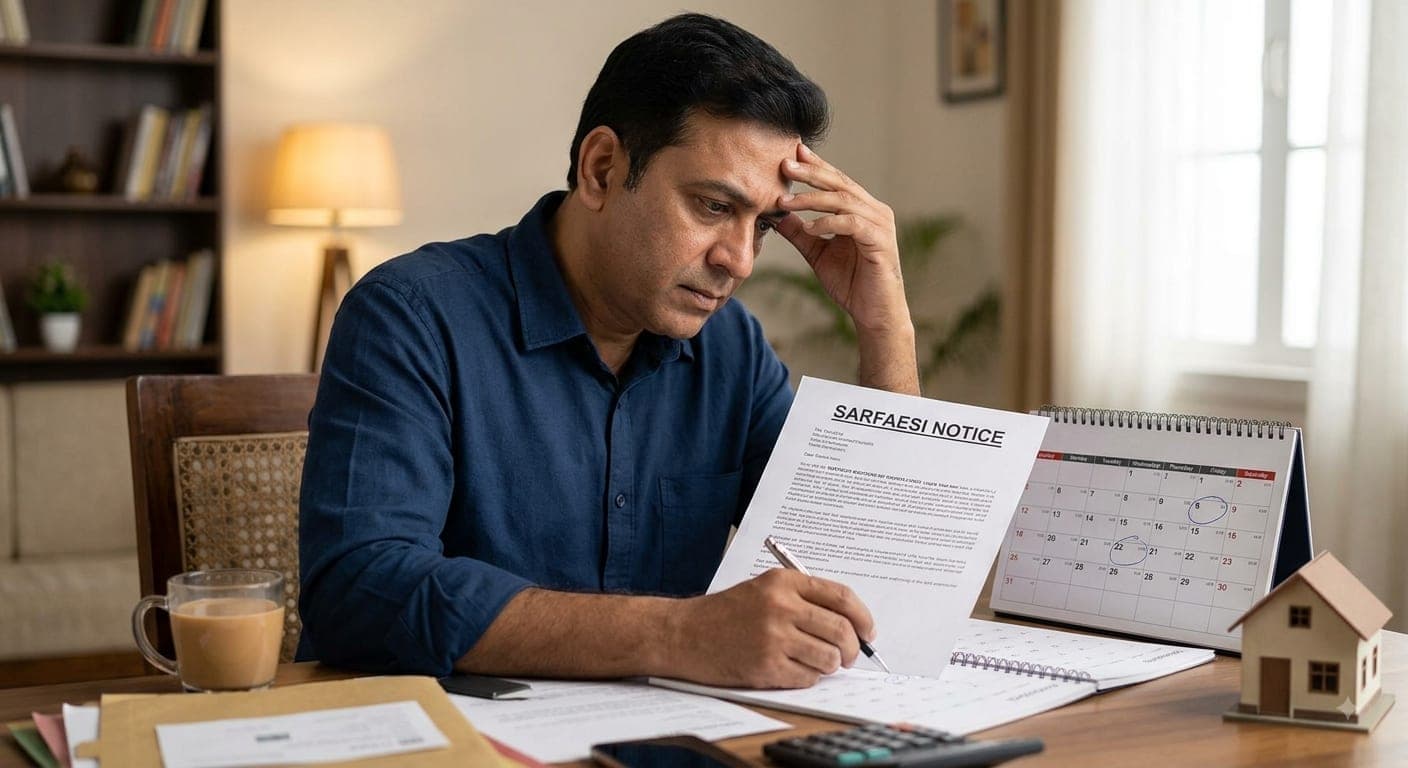
SARFAESI Notice Received: Your 60-Day Action Plan to Protect Your Property
Received a SARFAESI notice from your bank? Here's a clear, step-by-step action plan to protect your property, covering your rights, deadlines, and legal remedies within the 60-day window.
Property Dispute — 10 Costly Mistakes That Sink Property Dispute Cases in Delhi NCR Courts
A senior advocate's plain-English guide to the ten mistakes that quietly destroy property disputes in Delhi NCR — from missing limitation to weak documentation — and what to do instead.
Supreme Court and High Court Rulings on Maintenance When the Wife Has Her Own Income
A wife's salary, flat or car does not automatically shut down her maintenance claim. What the Supreme Court and High Courts have actually held on maintenance where the wife earns, and how the courts decide.
Banking & NBFC Disputes Representation Across Delhi NCR
Our advocates handle banking & nbfc disputes matters before the Supreme Court of India, High Court of Delhi, High Court of Punjab & Haryana, Chandigarh, Rajasthan High Court (Jaipur & Jodhpur), All District & Sessions Courts, Delhi — Tis Hazari, Rohini, Karkardooma, Saket, Dwarka, Patiala House & Rouse Avenue, District Courts across NCR — Gurugram, Noida, Ghaziabad, Faridabad, NCLT & NCLAT, New Delhi, DRT & DRAT, New Delhi, RERA Authorities & Consumer Commissions, Delhi NCR, MACT, Labour Courts, CAT & SDM Courts, Delhi, with chambers at Tis Hazari Court, Rohini Court, Pitampura Office, Narela Office.
Tis Hazari Court
Chamber No. A-15, Western Wing, Tis Hazari Courts, New Delhi - 110054
Rohini Court
Chamber No. 1032, Lawyer's Block, Rohini Court, New Delhi - 110085
Pitampura Office
NP-39/C, Maurya Enclave, Pitampura, New Delhi - 110088
Narela Office
Pocket IV, Sector G2 & G6, 1109, Eleventh Floor, Tower C, Narela, Delhi - 110040
Related Practice Areas
Civil Law
Comprehensive civil litigation and dispute resolution across Delhi NCR courts.
Learn moreFamily Law
Compassionate, effective legal solutions to safeguard your family's interests.
Learn moreDivorce Matters
Skilled divorce lawyers protecting your rights through the complexities of marital dissolution.
Learn more