
Speedy Trial Is Also the Victim's Right: Busting the Myth
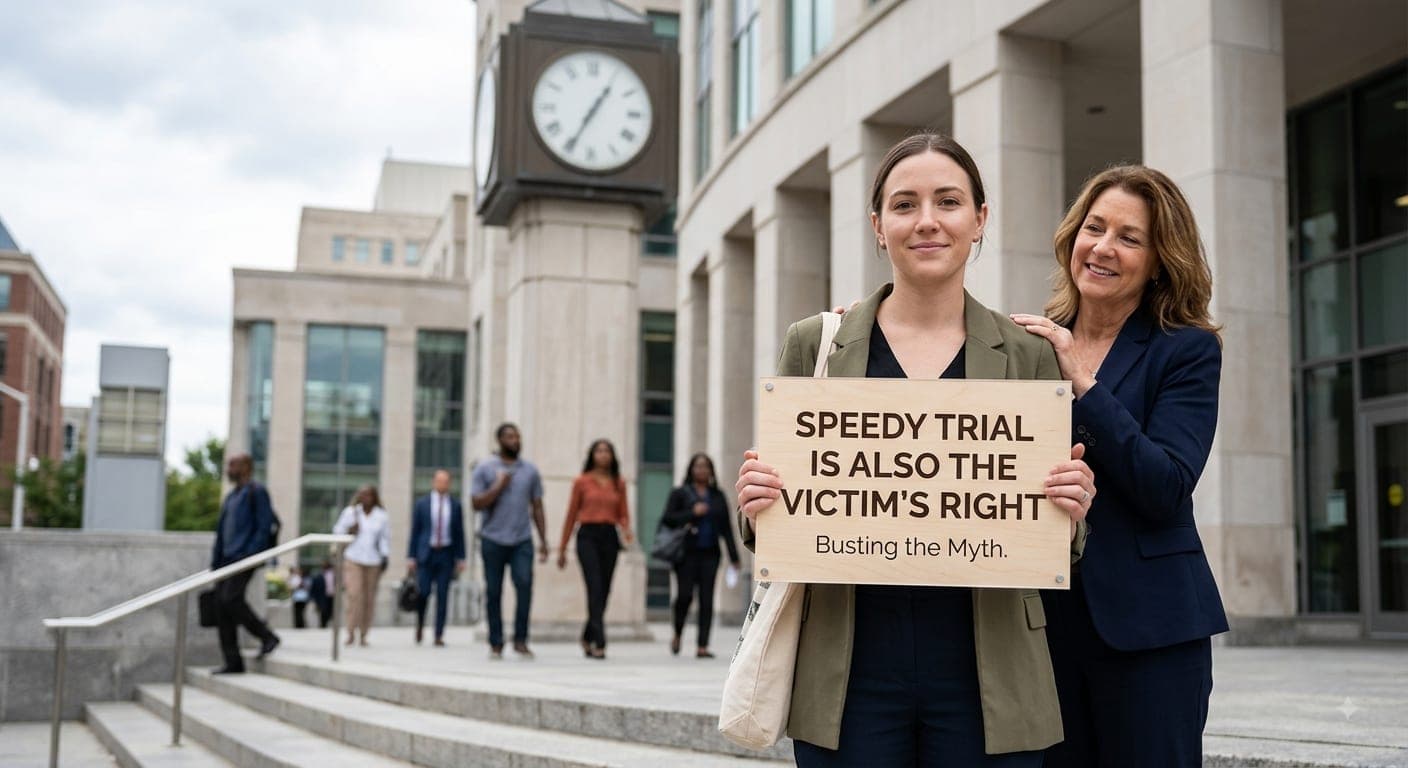
The right to a speedy trial is often spoken about as a shield for the accused—something that protects them from languishing in jail or living under the shadow of a pending case for years. But that understanding is incomplete. The Supreme Court has made it clear that the right to a speedy trial under Article 21 of the Constitution of India belongs to both sides of the courtroom: the accused and the victim. For a victim, justice delayed is not just an inconvenience; it can mean decades of uncertainty, financial strain, and the inability to move on. This article breaks down why the victim's right to a speedy trial is real, how the courts have recognised it, and what you can do if your case is stuck in the system.
What Article 21 Actually Guarantees
Article 21 guarantees the right to life and personal liberty, and the Supreme Court has read the right to a speedy trial into this provision. For the accused, it means they cannot be held indefinitely without a trial, and for the victim, it means they are entitled to a conclusion of the case without unreasonable delay. This is not a new interpretation—it goes back to landmark judgments like Hussainara Khatoon v. Home Secy., State of Bihar (1979) and Abdul Rehman Antulay v. R.S. Nayak (1992), where the Court laid down that a speedy trial is an essential part of a fair, just, and reasonable procedure under Article 21.
But why does the victim need this right? Because a criminal trial is not just about punishing the guilty—it is also about providing closure and justice to those harmed. When a trial drags on, the victim suffers: they may be called to court repeatedly, relive trauma, lose wages, and face social stigma. The Supreme Court in Manoj v. State of Madhya Pradesh (2023) explicitly stated that the victim's right to a speedy trial is a facet of their right to a fair trial under Article 21.
The Victim's Right in the Code of Criminal Procedure (CrPC) and BNSS
The Code of Criminal Procedure, 1973, now largely superseded by the Bharatiya Nagarik Suraksha Sanhita (BNSS), 2023, has several provisions meant to speed up trials. For the victim, Section 357A of the CrPC (now Section 396 of the BNSS) provides a scheme for victim compensation, but that only kicks in after a conviction. The real issue is getting to that conviction without undue delay. The BNSS has introduced changes like the mandatory time frame for framing charges and the requirement to complete trial of a person in custody within a year of framing of charges, which the Supreme Court has emphasized. These provisions are not just procedural—they are a recognition that the victim's life cannot be put on hold indefinitely.
Landmark Judgments Recognising the Victim's Right
The Supreme Court has consistently held that the right to a speedy trial is not a one-way street. In Manoj v. State of M.P. (2023), the Court ruled that a victim's right to a speedy trial is a constitutional right, and a violation of it can be a ground for quashing the proceedings—but not always in favour of the accused. The judgment clarified that if a case is delayed due to the accused's conduct, the victim cannot be blamed, and the trial must proceed. Similarly, in State of Punjab v. Baldev Singh (1999), the Court acknowledged that the victim has a right to be heard at decisive stages of the trial.
These judgments make it clear: the right to a speedy trial is a shared right. The courts have also held that the victim's right to participate in the proceedings, under Section 24(8) of the CrPC (now Section 231 of the BNSS), is linked to their interest in a swift conclusion. If the trial is dragging, the victim can approach the court and ask for an expedited hearing—this is not a favour, it is their right.
Myths About Speedy Trial: What the Courts Say
Myth 1: Only the accused can claim a speedy trial. This is false. The victim is a party to the trial and has a right to see it conclude. In Manoj (2023), the Court held that the victim can invoke Article 21 to demand a speedy trial.
Myth 2: A delay in trial always means the accused goes free. Not necessarily. Delay can be a ground for bail or even quashing, but only if the delay is not attributable to the accused. If the accused is the one causing delay, they cannot benefit from it. The victim can and should oppose any adjournment that is for the accused's benefit alone.
Myth 3: The victim has no say in the pace of the trial. The victim has a right to be heard, though the CrPC/BNSS do not grant them full party status. However, courts have recognized the victim's right to participate in critical stages. Under Section 24(8) of the CrPC, the victim can engage an advocate to assist the prosecutor, and that advocate can submit arguments on aspects like delay.
How Victims Can Assert Their Right to a Speedy Trial
If you are a victim and your case is stuck, you are not powerless. Here are practical steps you can take:
- File a Writ Petition: Under Article 226 of the Constitution, you can approach the High Court seeking a direction to expedite the trial. This is a direct way to enforce your right.
- Move an Application Before the Trial Court: Ask the court to fix a time-bound schedule for the trial. You can cite the constitutional right and ask the judge to invoke powers under the Code to avoid unnecessary adjournments.
- Approach the Legal Services Authority: If you cannot afford a lawyer, the National Legal Services Authority (NALSA) and its state counterparts can provide free legal aid to victims, as guaranteed under Article 39A of the Constitution.
- Complain to the High Court's Vigilance Cell: If your case has been pending for an unreasonably long time without a valid reason, you can bring it to the attention of the High Court's administrative side.
Conclusion
The right to a speedy trial is not a luxury for the accused—it is a fundamental right for every person involved in a criminal case, including the victim. The courts have moved past the old notion that the accused is the only one who suffers from delay. As a victim, you have the law on your side. If you feel your case is being unfairly delayed, do not wait indefinitely. Assert your right, both in court and through a writ petition. At BKA Lawyers, we have helped victims and accused alike navigate these constitutional remedies. If you need guidance on expediting your case, our team is here to help.
Facing a similar situation? Talk to a BKA advocate before you act.
Chat on WhatsAppNeed help with this?
Our Constitutional Law & Writs services
Frequently Asked Questions
Can a victim demand a speedy trial in India?
Yes. The Supreme Court has held that the right to a speedy trial under Article 21 of the Constitution applies to victims as well. You can approach the High Court under Article 226 if your case is being unreasonably delayed.
What if the accused is causing delays in the trial?
If the accused is deliberately delaying the trial, they cannot later claim that their right to a speedy trial was violated. The courts have held that delay attributable to the accused cannot be used to seek quashing of the case.
How can I force the court to speed up my trial?
You can file a writ petition in the High Court seeking a direction to expedite the trial, or move an application before the trial court for a time-bound schedule. The court has the power to curb unnecessary adjournments.
Is there any law that specifically protects the victim's right to a speedy trial?
Article 21 is the primary constitutional protection. Additionally, provisions in the Bharatiya Nagarik Suraksha Sanhita (BNSS) 2023, such as time limits for framing charges and completing trial of accused in custody, indirectly benefit victims by ensuring quicker resolution.
Can a delay in trial result in the accused being acquitted?
In certain cases, if the delay is inordinate and not attributable to the accused, the court may quash the proceedings. However, this is not automatic. The victim has the right to oppose such applications by showing that the delay was caused by the accused or the system.

About the author
Ujjwal Agrawal
Advocate · Commercial & Money Recovery Cases
Ujjwal Agrawal focuses on commercial litigation and money recovery, including cheque bounce cases under the Negotiable Instruments Act and recovery suits for individuals and businesses.
More about our team →Related Articles

Property Dispute — 10 Costly Mistakes That Sink Property Dispute Cases in Delhi NCR Courts
A senior advocate's plain-English guide to the ten mistakes that quietly destroy property disputes in Delhi NCR — from missing limitation to weak documentation — and what to do instead.
Supreme Court and High Court Rulings on Maintenance When the Wife Has Her Own Income
A wife's salary, flat or car does not automatically shut down her maintenance claim. What the Supreme Court and High Courts have actually held on maintenance where the wife earns, and how the courts decide.
Interim vs Permanent Maintenance: When Can a Husband Legally Reduce or Stop Payments?
Maintenance cannot be stopped at will. This explainer sets out when a husband can lawfully seek reduction or cancellation, and when non-payment is simply illegal.