
Menstrual Hygiene Is Now a Fundamental Right Issue: What the Supreme Court's Warning to States Really Means
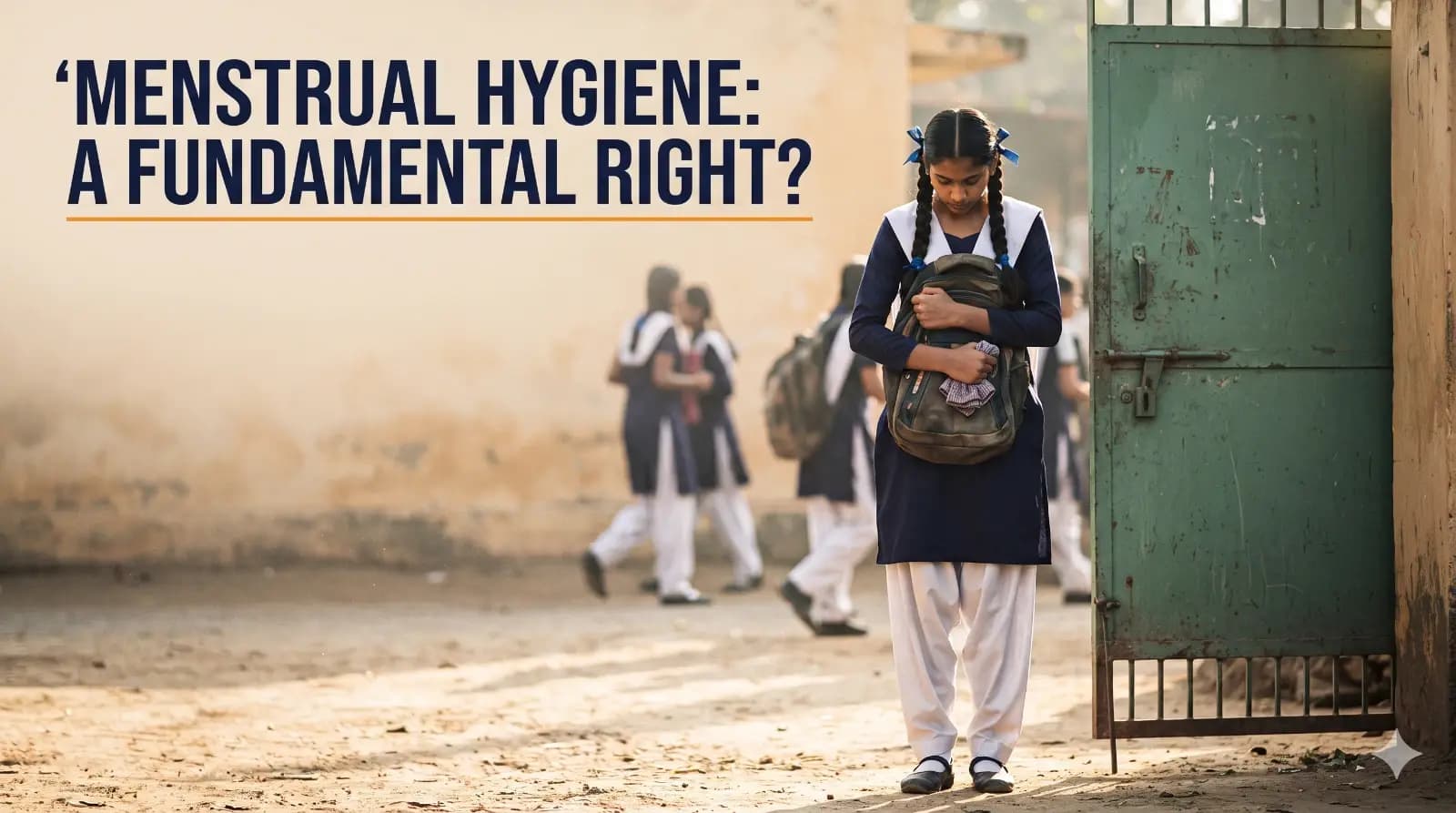
In a recent hearing, the Supreme Court said plainly what many citizens feel: a judgment that guarantees menstrual hygiene support is of no use if states and Union Territories simply do not respond. The bench observed that if what the Court has said remains only on paper, the fundamental right cannot be delivered in practice. That observation is a warning, and it deserves to be understood — not as a news item about one case, but as a lesson in how rights work in India.
What the Supreme Court Has Actually Said
The Court has been monitoring how states and Union Territories are implementing earlier directions on menstrual hygiene. Its concern is procedural as much as moral: the Union has asked states for feedback, and several have not responded. The bench framed this sharply, asking how a fundamental right will be given effect if judgments stay on paper. This is a classic contempt-of-court and compliance-monitoring posture, not a fresh declaration of rights. The Court is supervising implementation of an order already passed.
Why This Is a Fundamental Right Question, Not Just a Policy One
Menstrual hygiene sits at the intersection of several constitutional guarantees. The right to health, the right to dignity, and the right to equality are all part of the right to life under Article 21 of the Constitution. When a girl misses school because she has no safe sanitation facility, or a woman cannot access sanitary products during an emergency, the State's failure touches those guarantees. That is why courts have treated sanitation and menstrual hygiene as part of dignified living, not as optional welfare.
What "Not Responding to the Centre" Actually Means in Practice
India's federal structure works through correspondence as much as through law. The Union asks states for information, states compile it, and monitoring continues in the Supreme Court. When a state does not respond, three things happen. First, the Court cannot assess compliance. Second, the gap is hidden — non-response often masks uneven implementation. Third, the Court may eventually summon senior officials or order personal appearances. A situation that comes up often in compliance matters: a department treats a court direction as an internal file to be moved slowly. The cost is that the Court's timeline becomes the department's only timeline.
What Courts Look at When Compliance Is in Question
Judges are not impressed by general statements that "work is underway." In practice, courts look at documented evidence: data on facilities, budgets released, procurement completed, and timelines met. Assertions without records rarely satisfy a court monitoring its own order. What tends to persuade is a concrete affidavit setting out what was done, what remains, and by when, signed by an officer who can be held responsible. What tends not to persuade is a status report that restates policy without figures.
Where Citizens and Institutions Can Act
Where a court is monitoring an issue, the public record matters. Citizens, students, ward-level bodies and civil society groups can use Right to Information requests to seek information on facilities, funds and implementation in their district. School and hospital sanitation data, and municipal budget allocations for sanitation, are usually available through the relevant department. Courts have repeatedly accepted that information and evidence from the ground strengthen monitoring. If a court order is being ignored, the record that shows this is the record that gets acted upon.
A Practical Checklist Before You Rely on Any Order
The first thing I would check is whether the direction in question is a mandatory direction or merely an observation. Second, identify the authority actually responsible — the Union ministry, the state department, or the local body. Third, gather the paper trail: application, response, and the court order itself. Fourth, note every deadline in the order, because courts act on missed dates, not vague delays. Fifth, keep the record dated and in writing. Oral assurances are worth very little before a court.
Facing a similar situation? Talk to a BKA advocate before you act.
Chat on WhatsAppFrequently Asked Questions
Is menstrual hygiene recognised as a fundamental right in India?
It is not a separately enumerated right in the Constitution. Courts have, however, linked sanitation and menstrual hygiene to the right to health, dignity and equality, which form part of Article 21. The Supreme Court's recent remarks treat it as a matter of delivering a fundamental right, not merely a welfare scheme.
States ne jawab kyun nahi diya? (Why have states not responded?)
The Court's concern is that the Union sought information from states and Union Territories on implementation, and several did not reply. Courts monitoring an order cannot assess compliance without that information. Non-response usually reflects administrative delay rather than any legal justification.
What happens if a state ignores a Supreme Court direction?
The Court can seek a fresh affidavit from a senior officer, summon officials, or initiate contempt proceedings in appropriate cases. In practice, courts first give an opportunity to file a proper compliance report with figures and deadlines before escalating.
How can a citizen find out what their district has actually done?
File a Right to Information application with the relevant municipal or state department, asking specifically about sanitation facilities in schools, funds allocated and released, and procurement completed. Keep the application and the reply. Specific, dated questions usually produce specific answers.
What is the difference between a court observation and a binding direction?
An observation expresses the court's view or concern. A direction requires a named authority to do a specific act within a stated time. Enforcement, including contempt, attaches to directions. This distinction should be checked before treating any order as enforceable.
Do I need a lawyer to use an RTI request on this issue?
No. Any citizen can file an RTI application and pay the prescribed fee. A lawyer becomes useful if the reply is refused, delayed, or if you intend to place the material before a court monitoring the matter.

About the author
Ujjwal Agrawal
Advocate · Commercial & Money Recovery Cases
Ujjwal Agrawal focuses on commercial litigation and money recovery, including cheque bounce cases under the Negotiable Instruments Act and recovery suits for individuals and businesses.
More about our team →Related Articles
Property Dispute — 10 Costly Mistakes That Sink Property Dispute Cases in Delhi NCR Courts
A senior advocate's plain-English guide to the ten mistakes that quietly destroy property disputes in Delhi NCR — from missing limitation to weak documentation — and what to do instead.
Supreme Court and High Court Rulings on Maintenance When the Wife Has Her Own Income
A wife's salary, flat or car does not automatically shut down her maintenance claim. What the Supreme Court and High Courts have actually held on maintenance where the wife earns, and how the courts decide.
Interim vs Permanent Maintenance: When Can a Husband Legally Reduce or Stop Payments?
Maintenance cannot be stopped at will. This explainer sets out when a husband can lawfully seek reduction or cancellation, and when non-payment is simply illegal.