
Arbitration and Settlement in India: A Practical Guide
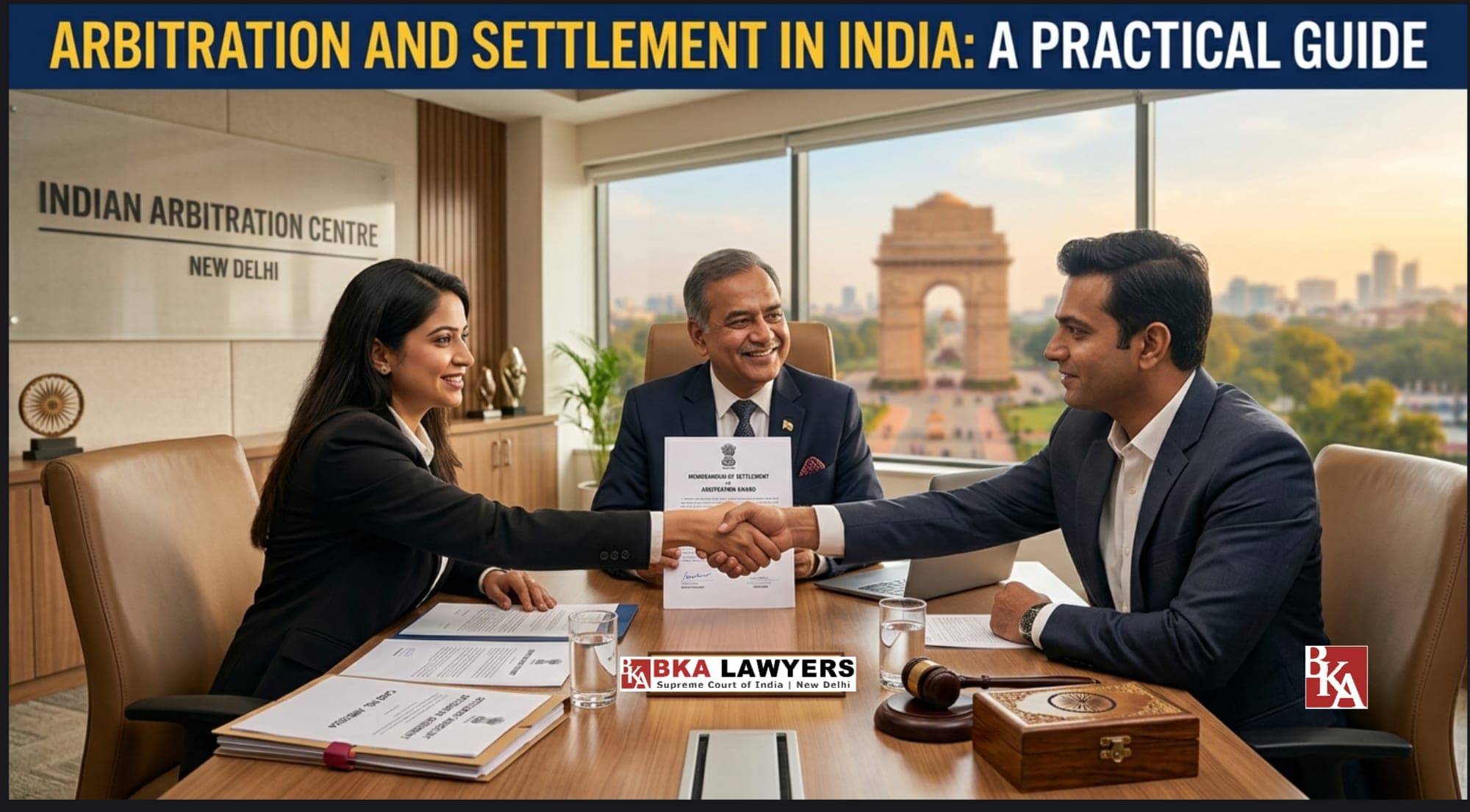
When a commercial dispute arises, most people assume the only answer is a court trial that drags on for years. But there is a faster, more flexible route: arbitration. Governed by the Arbitration and Conciliation Act, 1996 (India Code), this process lets parties resolve their differences privately, with a neutral arbitrator instead of a judge. It is designed to save time, money, and relationships. Here is how arbitration and settlement actually work in India, and why it may be your smartest move.
What Is Arbitration Under the 1996 Act?
Arbitration is a form of alternative dispute resolution where the parties agree to submit their dispute to one or more arbitrators, whose decision (called an award) is binding. The 1996 Act is based on the UNCITRAL Model Law, which means Indian arbitration law aligns with international standards. The Act has four parts: Part I governs arbitrations seated in India (both domestic and international), Part II deals with enforcement of foreign awards, Part III covers conciliation, and Part IV has miscellaneous provisions. The Act was last amended in 2021, and it replaced the older Arbitration Act, 1940 and other colonial-era laws.
When Can You Go to Arbitration?
Arbitration only happens if there is a valid arbitration agreement. This can be a standalone contract or a clause inside a larger agreement. The agreement must be in writing, and it can cover existing disputes or future ones. If a dispute falls within the scope of that clause, neither party can run off to court unless the clause is invalid. Under Section 8 of the Act, a court must refer the parties to arbitration if such an agreement exists. This is a key difference from negotiation or mediation, which can happen anytime without a prior agreement.
The Arbitration Process: Step by Step
If you are in an arbitration, the process typically follows these steps:
- Notice of arbitration: One party sends a notice to the other, invoking the arbitration clause and naming its arbitrator.
- Appointment of arbitrators: The parties either agree on a sole arbitrator or each appoints one, and those two appoint a presiding arbitrator. If they cannot agree, a court can step in under Section 11.
- Preliminary hearing: The tribunal sets a schedule, defines the issues, and decides on procedural rules.
- Exchange of pleadings: Each side files its statement of claim and defence, along with evidence.
- Hearing: Both sides present arguments and witnesses. Hearings can be in person, virtual, or a mix.
- Award: The tribunal makes a final decision, usually within 12 months, extendable by another 6 months under the amended Act. If the arbitrators miss the deadline, they can lose their fees.
One crucial point: the arbitral tribunal has the power to grant interim relief, like injunctions or freezing assets, similar to a court. This is a powerful tool, especially in commercial disputes where time is of the essence.
Settlement During Arbitration: Section 30
Arbitration does not have to be adversarial. Under Section 30 of the Act, the arbitral tribunal is required to encourage the parties to settle the dispute amicably. This is unique—it makes settlement a mandatory part of the process. The tribunal can suggest mediation or conciliation at any stage. If the parties reach a settlement during arbitration, the tribunal can record it as an award on agreed terms. That award is then enforceable in the same way as any other arbitral award, meaning you do not need a separate lawsuit to enforce the settlement. This saves both time and money.
Enforceability of Arbitral Awards
An arbitral award is binding on the parties and can be enforced as if it were a decree of the court. To enforce it, you file a petition under Section 36 of the Act before the court. The other side can challenge the award under Section 34, but only on narrow grounds: lack of jurisdiction, violation of natural justice, or if the award is contrary to the public policy of India. Courts rarely overturn awards, making arbitration a reliable way to get a final resolution. For foreign awards, the recognition and enforcement procedures are set out in Part II, following the New York Convention.
Arbitration vs. Litigation: Why Choose Arbitration?
Compared to court litigation, arbitration offers four clear benefits:
- Speed: Arbitration usually concludes in months, not years.
- Confidentiality: Unlike courtrooms, which are open to the public, arbitration hearings and documents can stay private.
- Expertise: You can choose an arbitrator who is an expert in your industry, like a construction engineer or a banking specialist.
- Flexibility: The parties can tailor the procedure to their needs, such as time limits and language.
The downsides? Arbitration is not free—you pay the arbitrator’s fees, which can be substantial. And the grounds for appeal are limited, so a bad award can be hard to overturn. That is why you need an experienced arbitration lawyer to guide you.
Practical Steps for a Smooth Arbitration
If you are considering arbitration, take these steps:
- Review your contract: Check if there is an arbitration clause. Note the seat, language, and governing law.
- Act quickly: Most contracts have a notice period. Missing it can forfeit your claim.
- Gather evidence: Collect emails, invoices, and communications. Arbitration is just as evidence-driven as litigation.
- Choose the right arbitrator: Look for someone with domain expertise and a reputation for fairness.
- Consider settlement: Before spending on a full hearing, evaluate the strength of your case. A settlement under Section 30 can be a pragmatic win-win.
At BKA Lawyers, we regularly handle arbitration matters across Delhi NCR. We can help you draft arbitration clauses, represent you in proceedings, or negotiate a settlement. The goal is to resolve your dispute efficiently, without losing sight of your business interests.
In summary, arbitration is a powerful tool for dispute resolution in India. Whether you are a party to a contract or faced with a claim, understanding your rights and the process is the first step. With the right counsel, you can turn a contentious dispute into a managed, cost-effective resolution.
Facing a similar situation? Talk to a BKA advocate before you act.
Chat on WhatsAppNeed help with this?
Our Civil Law services
Frequently Asked Questions
How long does arbitration take in India?
Under the Arbitration and Conciliation Act, 1996, the arbitral tribunal must make an award within 12 months, extendable by 6 months in some cases. If the parties agree, the deadline can be extended further, but the tribunal may lose fees if it is tardy. In practice, complex cases can take longer, but arbitration is almost always faster than court litigation.
Can an arbitral award be challenged in court?
Yes, but only on limited grounds under Section 34 of the Act, such as lack of jurisdiction, violation of natural justice, or if the award is against the public policy of India. Courts do not re-examine the merits of the case, so successful challenges are rare. Once the challenge period passes, the award is final and enforceable.
What is a settlement award under Section 30?
If the parties reach a settlement during arbitration, the tribunal can record it as an 'award on agreed terms'. This award is enforceable as a normal arbitral award, so you do not need to file a separate lawsuit to enforce the settlement. It is a cost-effective way to end the dispute.
Is an arbitration clause mandatory for arbitration?
Yes, you need a written arbitration agreement, either as a standalone contract or a clause in your main contract. If no such clause exists, you cannot force another party into arbitration. Courts will refer matters to arbitration only if a valid agreement is present under Section 8.
Does arbitration guarantee confidentiality?
Unlike court proceedings, which are public, arbitration hearings and documents can be kept confidential. The Act does not explicitly state confidentiality, but arbitral institutions and rules often impose it. However, proceedings may become public if a challenge or enforcement petition is filed in court.
Can I settle a dispute before arbitration even starts?
Absolutely. You can settle at any time, including before arbitration begins. If you have a dispute, you can negotiate directly or use mediation. If you reach a settlement, you can record it in a written agreement. If arbitration already started, you can ask the tribunal to pass a settlement award under Section 30.

About the author
Ujjwal Agrawal
Advocate · Commercial & Money Recovery Cases
Ujjwal Agrawal focuses on commercial litigation and money recovery, including cheque bounce cases under the Negotiable Instruments Act and recovery suits for individuals and businesses.
More about our team →Related Articles

Hiding a Live-In Relationship or a Child From a Prospective Bride: What the Kerala High Court Has Now Said
The Kerala High Court has held that concealing a live-in relationship or an existing child from a prospective bride can amount to obtaining consent to sex by deceitful means. Here is what the ruling means, in plain English, and what both sides should know before a marriage is arranged.
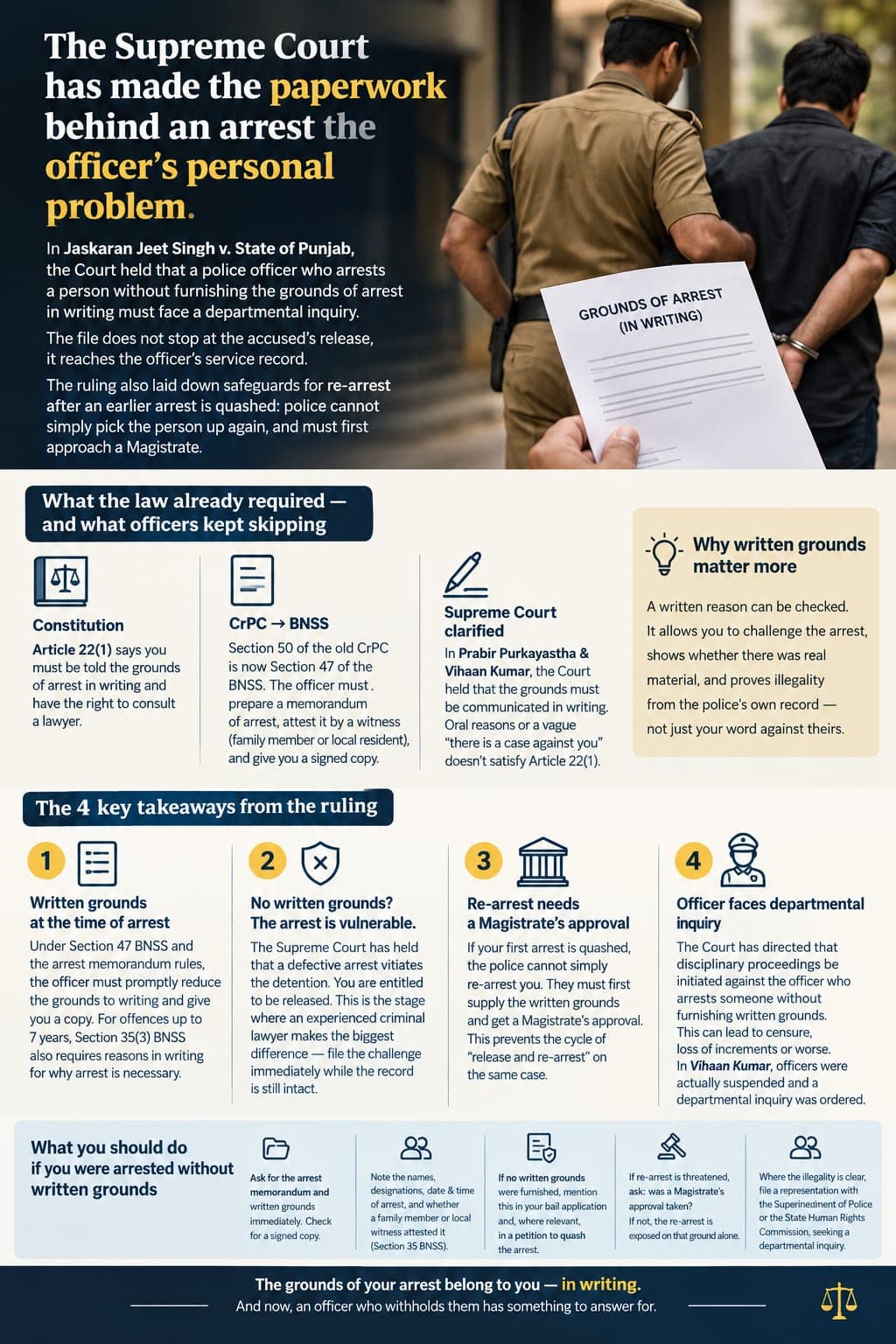
Arrest Without Written Grounds: Why the Supreme Court Says the Officer Must Face a Departmental Inquiry
A police officer who arrests you without handing over written grounds of arrest now faces a departmental inquiry. Here is what the Supreme Court's ruling means for your rights under Article 22(1), Section 35 BNSS and Section 58 BNSS.
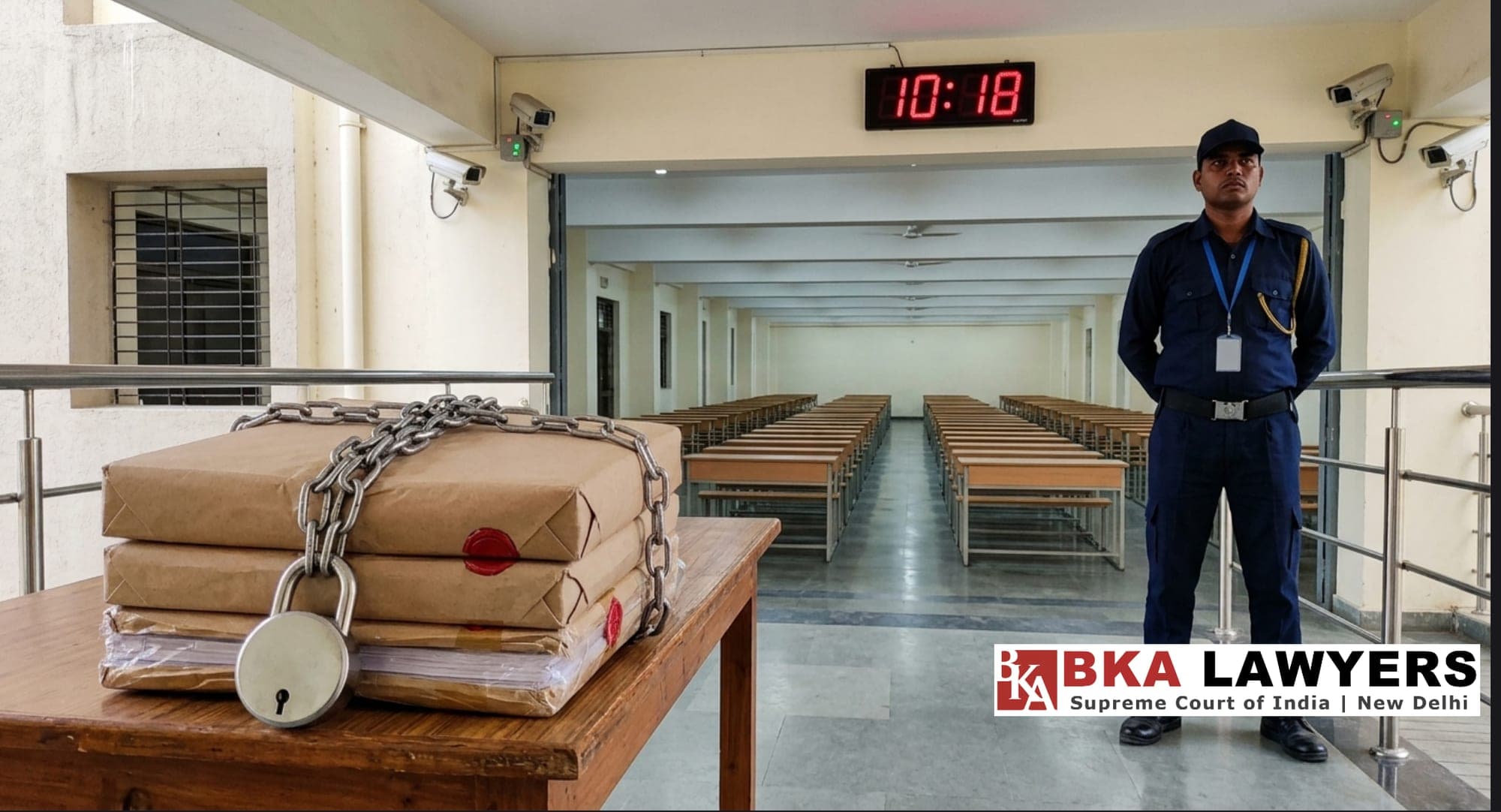
Anti-Paper Leak Law Gets Stronger: How the 2026 Amendment Builds on the 2024 Act
In-depth analysis of the 2026 amendment to India's anti-paper leak law, explaining its key provisions and how it enhances the earlier 2024 Act.