
Why a Sloppy Cheque Bounce Notice Can Sink Your Section 138 Case
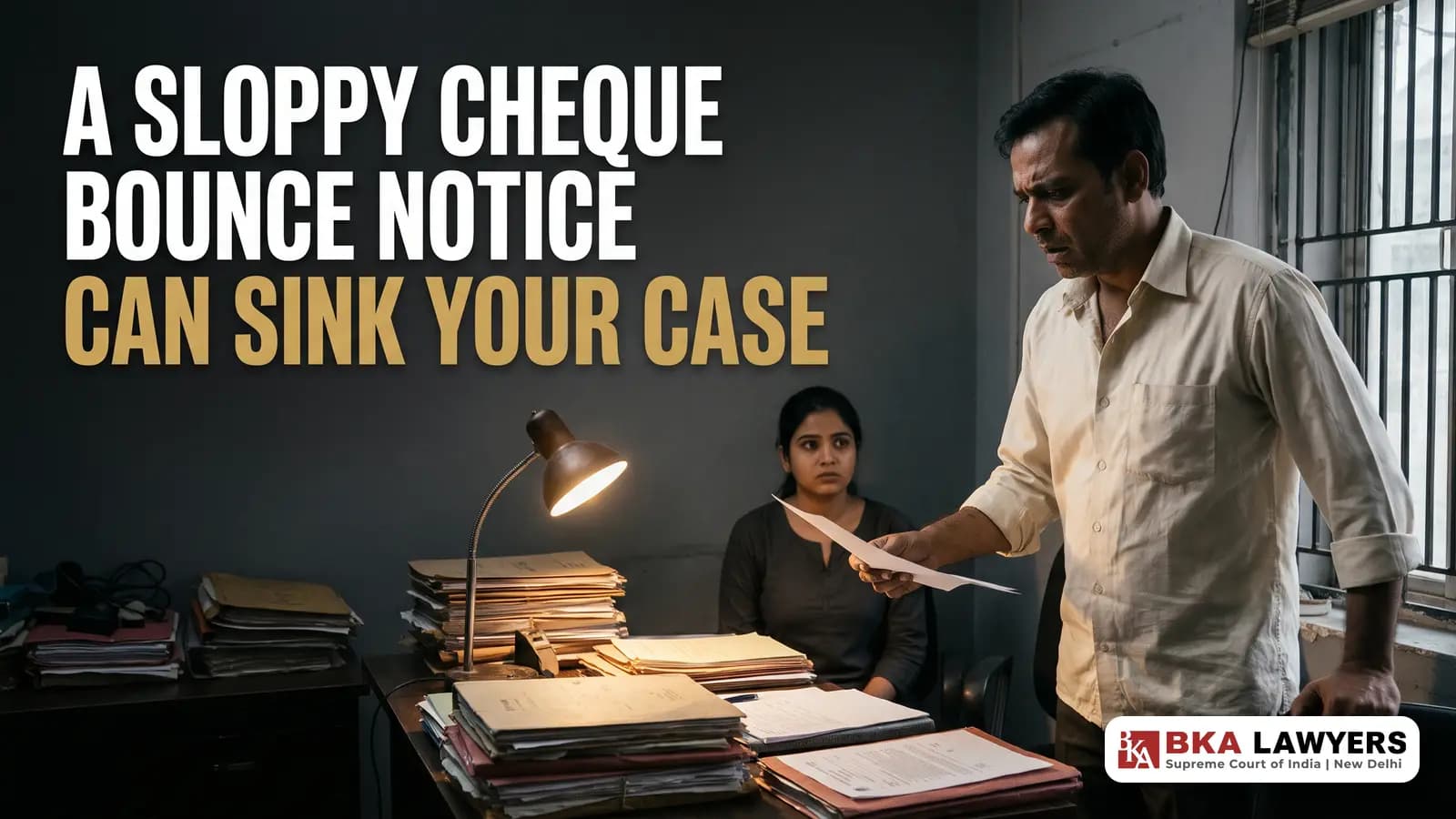
Most cheque bounce complaints that fail do not fail at trial. They fail on paper, at the notice stage, months before anyone enters a courtroom. Under Section 138 of the Negotiable Instruments Act, 1881, the demand notice is not a formality — it is a statutory precondition. Get it wrong and the complaint can be dismissed at the threshold, whatever the merits of your dues.
A situation that comes up often: a business receives a cheque returned unpaid, and its accounts team sends out a strongly worded letter the same week. The letter is firm. It is also, in law, not a notice. The complaint that follows is dismissed, and by then the 30-day window to send a proper notice has closed.
Below are the assumptions that cause this, and what the law actually says.
Myth: A stern letter from the accounts department is a valid demand notice
The fact: the notice must be a demand for payment of the cheque amount, made by the payee to the drawer, in writing. Courts read it against the statutory language, not against how forceful it sounds.
A letter that complains of unpaid dues, threatens "legal action" and asks for a "settlement of accounts" may not qualify. It has to demand the money covered by the dishonoured cheque. If it demands an outstanding running balance, interest, or a larger amount than the cheque, the notice is open to challenge. Send it under a recognised mode of service, to the drawer's correct address, and keep proof.
Myth: Any address for the drawer will do
The fact: several High Courts have held that a Section 138 notice sent to the correct address is presumed served even if the drawer claims never to have received it. That presumption helps a complainant who did the paperwork properly — and destroys one who did not.
Use the address on the cheque, the address in your records, and the address in the drawer's own correspondence. If the notice goes to an old office the drawer left years ago, you have handed the defence its first argument. Where a company is the drawer, address the notice to the company, and consider naming the persons in charge of its affairs, because their liability under Section 141 is separate.
Myth: The notice can be sent whenever you get around to it
The fact: the notice must be issued within 30 days of receiving the bank's return memo — the written intimation that the cheque was dishonoured. Miss that, and the cause of action itself is not properly laid.
The drawer then gets 15 days from receipt of the notice to pay. A complaint can be filed only after that window closes without payment, and generally within the following month. Two dates, both short, both capable of ending the case. If your bank memo is sitting in an inbox unread, that is the first thing to check.
Myth: A small spelling or amount error will not matter
The fact: this cuts both ways, and it is where sloppiness is most expensive. A typographical slip in a name or a minor discrepancy in the notice has been held by appellate courts not to defeat a genuine complaint, provided the substance is clear. But a notice that misstates the cheque number, the amount, or the date of dishonour gives the drawer a real argument about what he was asked to pay.
The difference between a harmless slip and a fatal defect is whether the drawer could understand the demand. Do not rely on a court's indulgence to cure what a proofreader could have caught.
Myth: Once the notice is out, the rest is the lawyer's problem
The fact: the notice is built from documents only the client holds. The cheque, the bank return memo, the ledger entry or invoice showing the debt, the delivery proof of the notice, and any reply received — these decide whether the case survives the first hearing.
When courts look at a Section 138 complaint, they check whether the statutory sequence was followed: presentation within validity, dishonour, notice within time, the 15-day period, then the complaint. What judges tend to find unconvincing is a complainant who cannot produce clean records of that sequence and instead argues that the debt was obviously owed. The debt may well be owed. The offence still has to be proved through the procedure.
Myth: A bounced cheque is always a criminal case
The fact: Section 138 creates a criminal offence, but the real object for most businesses is recovery. A magistrate can award compensation, and Section 143A allows interim compensation during trial — though the Supreme Court has clarified that this power is discretionary, not automatic. Separately, the debt itself can be pursued as a civil claim or through the appropriate forum for the amount involved.
The notice serves both routes. A precise one preserves your options; a careless one narrows them.
What to do now
Pull the file together before anything else: the original cheque, the bank's return memo with its date, proof of how and when the notice was dispatched, the acknowledgement or postal record, and the invoice or ledger entry establishing the liability. Check the dates on the notice against the memo. If a notice has already gone out and it is defective, work out whether the statutory window to issue a fresh, proper notice is still open — and take a view quickly, because that window does not wait.
Facing a similar situation? Talk to a BKA advocate before you act.
Chat on WhatsAppNeed help with this?
Our Commercial Recovery services
Frequently Asked Questions
Is a demand notice under Section 138 mandatory before filing a cheque bounce complaint?
Yes. A complaint under Section 138 of the Negotiable Instruments Act cannot be filed without a written demand notice first being served on the drawer. The complaint becomes maintainable only after the drawer fails to pay within 15 days of receiving that notice.
What are the time limits for a cheque bounce notice and complaint?
The notice must be issued within 30 days of the date you receive the bank's return memo showing the dishonour. The drawer then has 15 days from receipt of the notice to pay. If payment is not made, the complaint is generally filed within the following month.
Notice galat address pe chala gaya, ab kya karein? (The notice went to the wrong address — what now?)
A notice sent to the wrong address is treated as not served, and a complaint built on it is vulnerable to dismissal. Check whether the 30-day window from the bank's return memo is still open and, if so, issue a fresh notice to the drawer's correct address with proof of dispatch. If the window has closed, the criminal route may no longer be available, though the underlying debt can still be pursued separately.
Will a minor spelling mistake in the notice invalidate my complaint?
Not necessarily. Courts have taken the view that trivial discrepancies which do not confuse the drawer about what is being demanded should not defeat a genuine complaint. But errors in the cheque number, amount, or date of dishonour give the drawer a real defence to raise.
Related Articles
What Happens If You Ignore a Cheque Bounce Case in Delhi? Real Consequences for Business Owners
Ignoring a Section 138 cheque bounce case in Delhi can bring summons, non-bailable warrants, asset attachment and personal liability for directors.
Money Recovery Suit in India: A Practical Guide to Filing and Winning
Learn how to file a money recovery suit in India, including jurisdiction, limitation, summary suits, and enforcement. Practical guidance from BKA Lawyers, Delhi NCR.
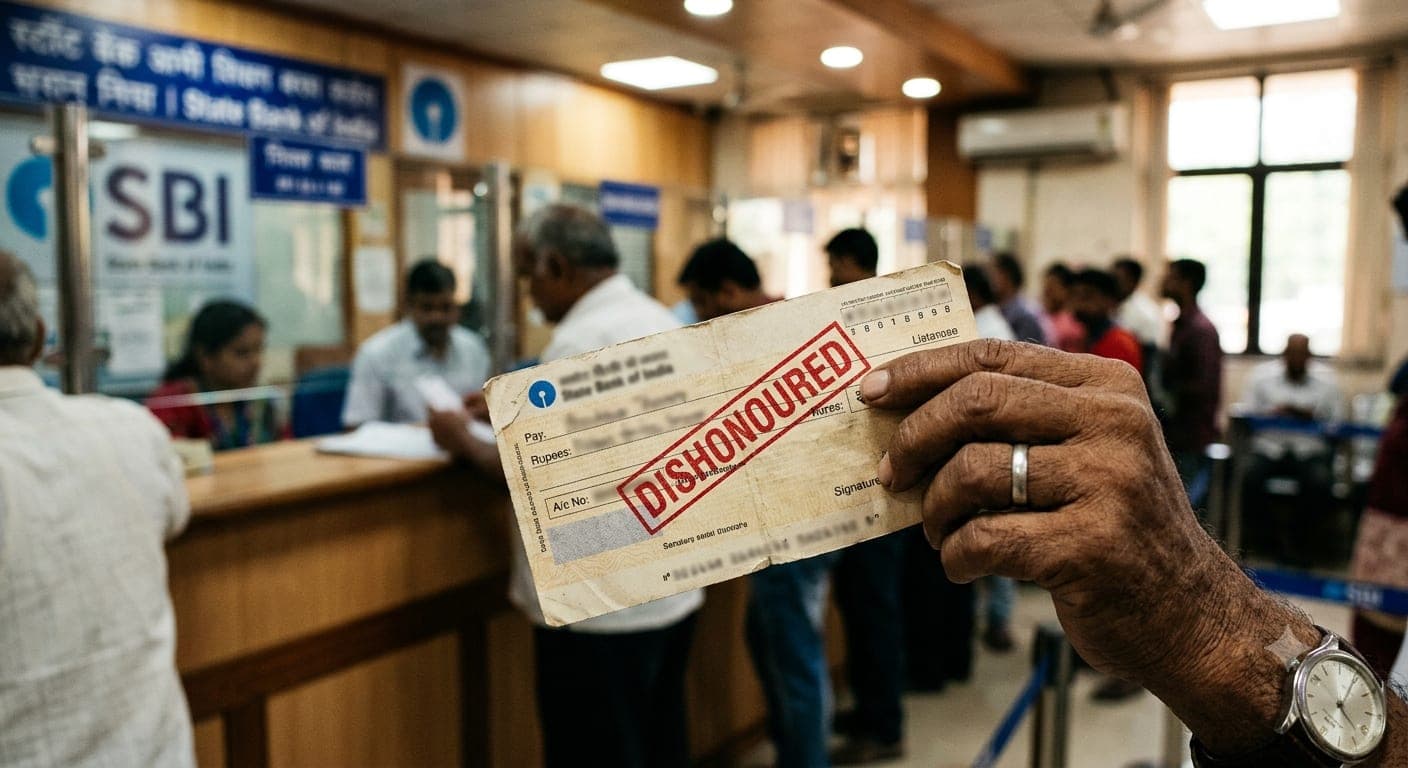
Cheque Bounce Under Section 138 NI Act: A Complete Guide
Learn about the legal process, penalties, and defenses for cheque bounce cases under Section 138 of the Negotiable Instruments Act, 1881, including recent court rulings and practical steps for both payees and drawers.