
What Happens If You Ignore a Cheque Bounce Case in Delhi? Real Consequences for Business Owners
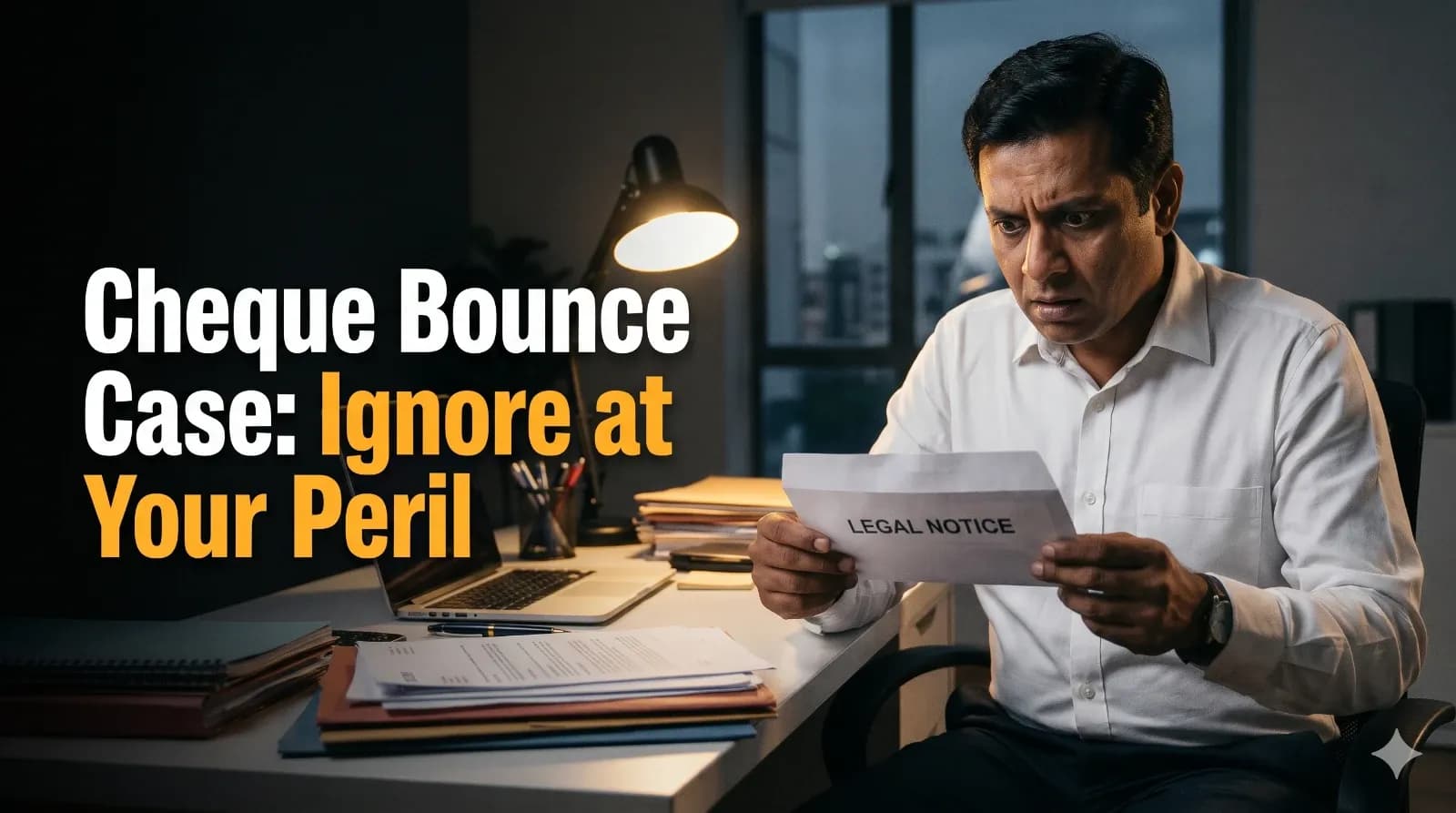
A bounced cheque is not a billing dispute you can park. Once the holder of the cheque sends a statutory notice under Section 138 of the Negotiable Instruments Act, 1888 and you do not pay within the prescribed period, the matter moves from a commercial disagreement to a criminal complaint. In Delhi, these complaints are filed in the court where the complainant's bank branch — the branch where the cheque was presented — is located. From the day that complaint is filed, every step you ignore costs you more than the last.
The starting point: a notice that is easy to miss
The sequence is fixed. The cheque is presented and returned unpaid, usually with the remark "insufficient funds" or "refer to drawer". The holder must then send a written demand notice within the statutory window, and the drawer gets a fixed period from receipt of that notice to make payment. Only if that period passes without payment can a complaint be filed.
A situation that comes up often: a promoter is travelling, a notice arrives at the registered office and is signed for by a junior employee, and nobody connects it to a cheque issued months earlier against a supply contract. By the time the file reaches the promoter, the payment window has closed and the complaint is already being drafted. Service of notice is what counts — not whether you actually read it. Once it is delivered to your correct address, the law treats you as having been informed.
Step 1: The complaint is filed and the court takes cognizance
After the complaint is filed, the magistrate examines the complaint and the supporting documents — the cheque, the bank return memo, a copy of the notice and proof of its dispatch. If the material is in order, the court takes cognizance (formally accepts the case) and issues summons to the accused.
For a company, the complaint is normally filed against the company and against the persons who were in charge of and responsible for its business at the time the cheque was issued. The law does not permit a blanket array of every director; the complainant must plead and later prove a specific role. That pleading requirement cuts both ways: a director named without any stated role has a genuine ground to seek discharge, but a director who simply ignores the summons loses the chance to raise it early.
Step 2: Summons, then warrants if you do not appear
This is where ignoring the case turns expensive. If the accused does not appear despite service of summons, the magistrate can issue a bailable warrant, and thereafter a non-bailable warrant — meaning the police may arrest and produce the person before the court, with release then resting on the court's discretion. A proclamation and, eventually, a declaration as an absconder can follow for a person who stays away despite substituted service.
Consider a director who assumes that because the company is the main accused, his personal non-appearance will not matter. It does. The moment a warrant is issued in his name, it can surface during travel, at an airport, or in a routine verification for another regulatory filing. By then the court's willingness to accept a simple exemption application has usually narrowed.
Step 3: Defence, trial and the burden you carry
The offence carries a maximum imprisonment of up to two years and a fine that can extend to twice the cheque amount. In practice, most trials end in a conviction followed by compounding — a settlement recorded by the court — but that outcome is available only to an accused who is present and participating.
The burden under this provision is unusual. Once the complainant shows the cheque, its signature and the bank return, the law presumes you issued it for a legally enforceable debt. You must then displace that presumption — with evidence of the underlying transaction, accounts, correspondence, or proof that the cheque was given as security and not against a live liability. Judges tend to find unconvincing a defence that rests only on oral assertion at the witness box with no documentary support. "The goods were substandard" is not a defence unless there is something in writing from the relevant period to support it.
Step 4: Asset attachment and enforcement
If the case ends in conviction and you still do not pay, the court can impose a sentence and, separately, order compensation to the complainant — commonly up to twice the cheque amount. The sentence can include imprisonment in default of payment. Separately, a decree for the same underlying debt obtained in a civil suit or before a tribunal can be executed by attachment and sale of property, and by garnishee orders against bank accounts.
One practical caution for promoters in Delhi: an unpaid cheque complaint filed in the capital, coupled with a civil recovery suit or an application before a debt recovery tribunal, can run in parallel. Ignoring the criminal case does not stay the civil one. The two proceed independently, and a default recorded in one is regularly produced in the other.
Step 5: Director and personal liability
A company's liability does not automatically flow to every director, but a director cannot hide behind the corporate structure either. Where the complainant pleads that a particular director was in charge of and responsible for the company's affairs at the relevant time, the burden shifts. Section 141 of the Act also provides that where an offence is committed by a company, the person in charge — and the company — are liable, with a separate route for directors who consented to or connived in the offence.
What courts actually look at here is documentary: board resolutions, signatory mandates, bank records showing who operated the account, and the correspondence around the transaction. A director who was genuinely not involved may still have to appear, file a discharge application and produce that record. Doing so late is harder and costlier than doing so at the first hearing.
What to do before the next date
The first thing to check is the notice file — whether a demand notice was received, when, and to which address. Next, gather the cheque and bank return memo, the invoices or contract behind the cheque, ledger statements, and the board resolution or mandate identifying who was authorised to sign. Confirm the correct court in Delhi based on the bank branch where the cheque was presented. If summons have already been served, appearing on the date through counsel and seeking exemption properly is far cheaper than waiting for a warrant. If a warrant has already been issued, moving the court promptly with a genuine explanation is still better than letting it stand. The deadlines in this area are short and largely non-extendable — treat the notice stage as the last real opportunity to close the matter quietly.
Facing a similar situation? Talk to a BKA advocate before you act.
Chat on WhatsAppNeed help with this?
Our Commercial Recovery services
Frequently Asked Questions
How long does a cheque bounce case take in Delhi courts?
Timelines vary widely between districts and depends on whether the accused appears and contests. Straightforward matters where the accused appears, admits the debt and compounds often conclude within a year or so, while contested trials can run considerably longer. The key point for a business owner is that delay does not make the case go away — warrants and attachment orders can issue at any stage if you do not appear.
Can a director be arrested in a cheque bounce case if the company issued the cheque?
Yes, a director can be arrayed as an accused where the complaint pleads that he was in charge of and responsible for the company's affairs when the cheque was issued, as contemplated by Section 141 of the Negotiable Instruments Act. If he does not appear despite summons, the court can issue a bailable and later a non-bailable warrant against him personally. Merely being a director without any role in the transaction gives a ground to seek discharge, but that ground must be raised in court with supporting records.
Cheque bounce ke baad notice ignore kar diya toh kya hota hai? (What happens if I ignore the notice after a cheque bounces?)
If you ignore the statutory demand notice and do not pay within the period it allows, the holder can file a criminal complaint under Section 138 before the appropriate magistrate. The court may then take cognizance and issue summons to you and, in a company matter, to the persons responsible for its affairs. Non-appearance after that can lead to warrants, so the notice stage is the last point at which the matter can usually be settled quietly.
Which court in Delhi has jurisdiction over a cheque bounce complaint?
Jurisdiction follows the bank branch where the cheque was presented for collection, not simply where the drawer sits. For a Delhi-based business dealing with parties elsewhere, this is a frequent source of surprise, because the complaint may land in a different district than expected. Before filing or responding, confirm the presenting branch from the bank return memo and the account statement.
Can my property be attached if I do not pay after losing a cheque bounce case?
Yes. If the case ends in conviction and the court orders compensation, non-payment can lead to imprisonment in default of payment as well as recovery proceedings. Separately, the same underlying debt can be pursued through a civil suit or tribunal proceedings, where a decree can be executed by attachment and sale of property or by orders against your bank accounts. The criminal and civil tracks run in parallel and do not pause each other.
Is a bounced cheque given as security also an offence?
The answer turns on the facts. Cheques given purely as security, with no existing legally enforceable debt at the time of presentation, are on a different footing from cheques issued towards a live liability. Because the law presumes a debt once the cheque and signature are proved, the drawer must produce records from the relevant period showing the cheque's actual purpose. A bare assertion in the witness box, without documents, is rarely enough.
Related Articles
Why a Sloppy Cheque Bounce Notice Can Sink Your Section 138 Case
A defective demand notice under Section 138 of the Negotiable Instruments Act is one of the most common reasons cheque bounce complaints fail. Here are the myths businesses believe about the notice, and what the law actually requires.
Money Recovery Suit in India: A Practical Guide to Filing and Winning
Learn how to file a money recovery suit in India, including jurisdiction, limitation, summary suits, and enforcement. Practical guidance from BKA Lawyers, Delhi NCR.
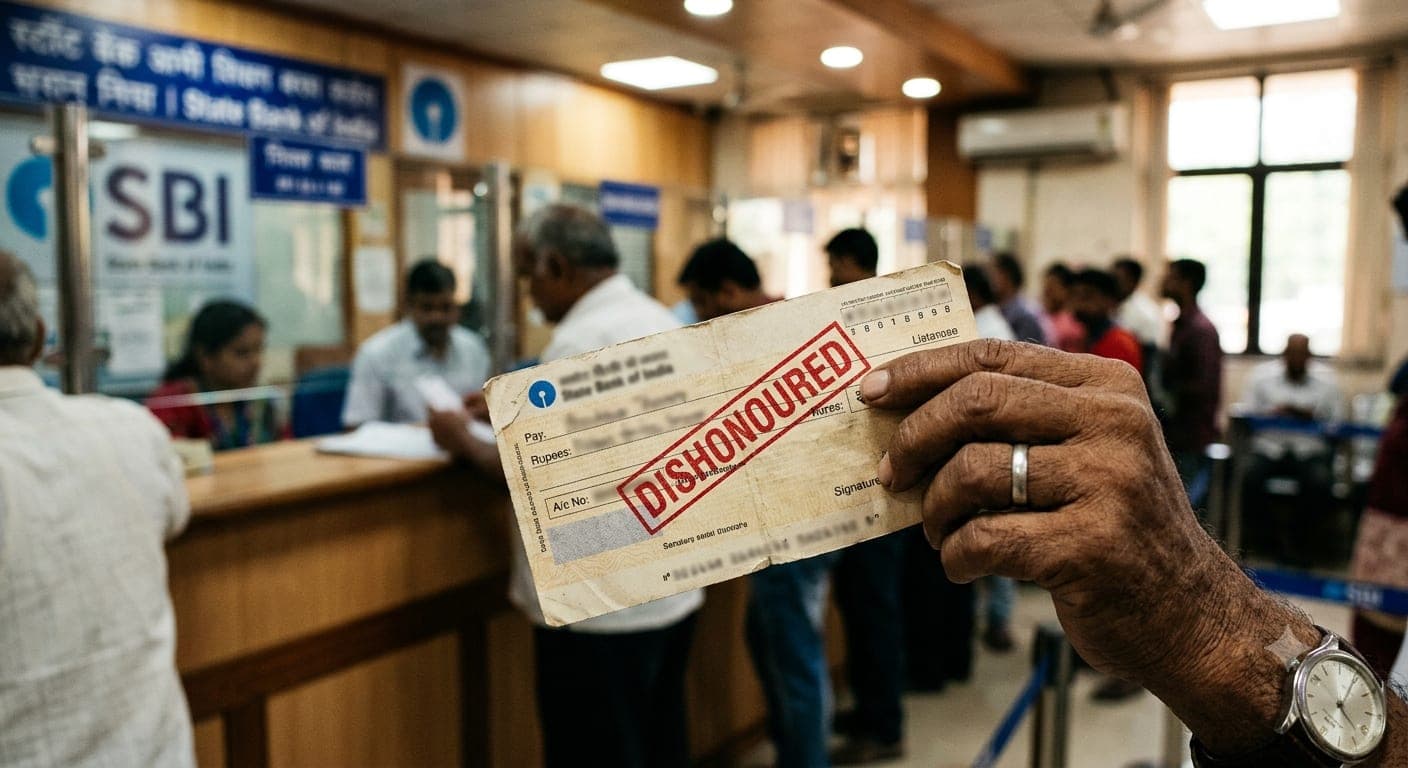
Cheque Bounce Under Section 138 NI Act: A Complete Guide
Learn about the legal process, penalties, and defenses for cheque bounce cases under Section 138 of the Negotiable Instruments Act, 1881, including recent court rulings and practical steps for both payees and drawers.