
Cheque Bounce Under Section 138 NI Act: A Complete Guide
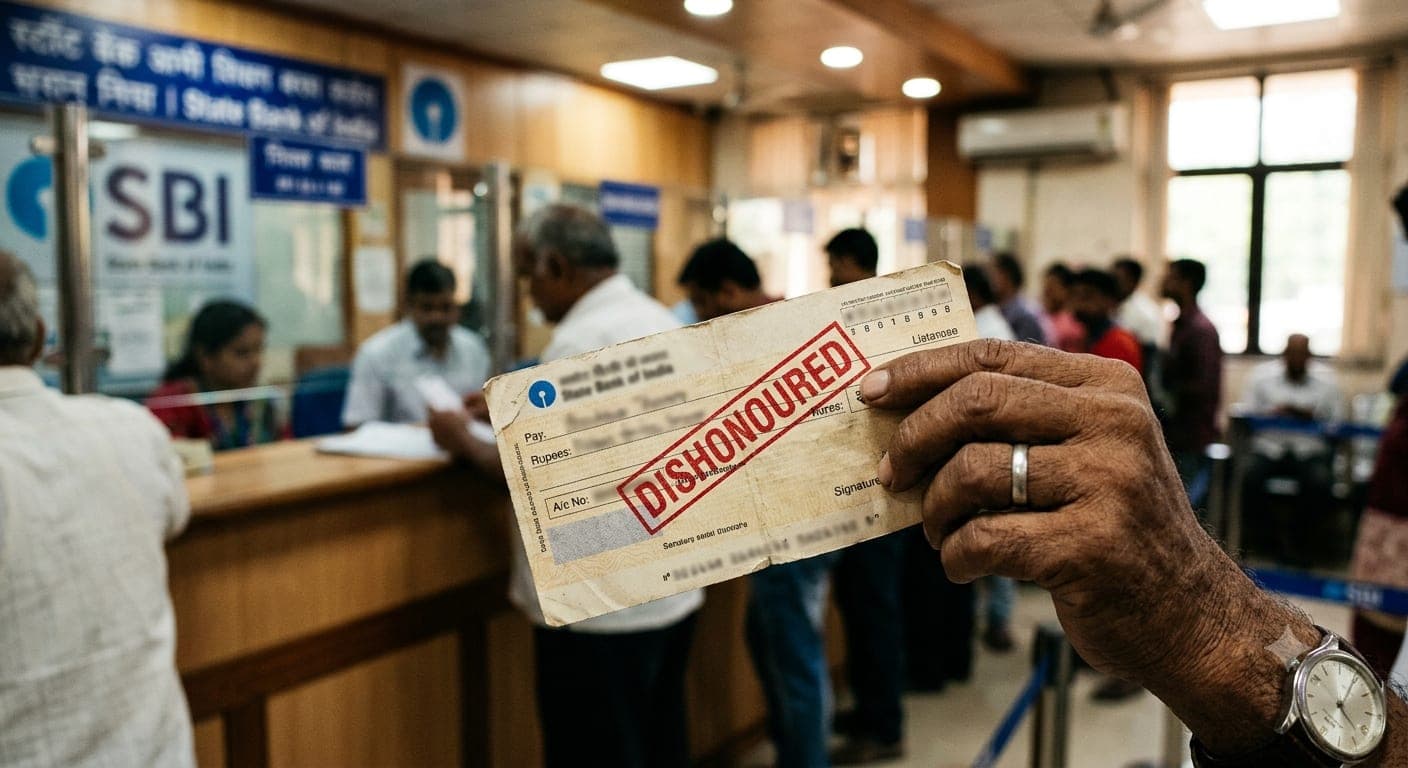
A bounced cheque is not just a financial inconvenience; it's a criminal offence in India. Section 138 of the Negotiable Instruments Act, 1881 (the NI Act) was designed to instil confidence in the use of cheques for settling debts and liabilities. When a cheque is dishonoured due to insufficient funds or if it exceeds the arranged limit, the drawer (the person who wrote the cheque) can be prosecuted. For businesses and individuals owed money, this provision is a powerful recovery tool that carries both monetary penalties and the threat of imprisonment. Understanding how it works can mean the difference between recovering your dues and facing procedural hurdles.
The Legal Framework: What Section 138 Says
Section 138 of the NI Act makes the dishonour of a cheque a criminal offence. However, the offence is not complete simply because the cheque bounced. Several pre-conditions must be met before the drawer can be held liable:
- The cheque must be presented to the bank within six months (or the validity period, whichever is earlier) of its issue.
- The cheque must be issued for the discharge, in whole or in part, of a debt or other liability.
- The cheque is returned unpaid due to insufficiency of funds in the account, or because it exceeds the amount arranged to be paid.
If these conditions are satisfied, the payee must follow a strict, two-stage process before filing a criminal complaint in court.
Step 1: The Legal Demand Notice
Within 30 days of receiving the bank's cheque return memo, the payee must send a written demand notice to the drawer. This notice must be sent via registered post (or other prescribed mode) demanding payment of the cheque amount within 15 days of receipt. Courts have emphasized that the notice must clearly state the amount due; a vague notice that omits the specific amount can be fatal to the case, as highlighted by the Kerala High Court in a 2026 ruling. The notice is the foundation of the entire prosecution—procedural lapses here often lead to acquittals.
Step 2: Filing the Criminal Complaint
If the drawer fails to pay within 15 days of receiving the notice, the payee can file a criminal complaint before the jurisdictional magistrate within one month from the expiry of that 15-day period. This is a strict deadline; courts generally do not condone delays beyond this period without sufficient cause. The complaint must contain particulars of the cheque, the dishonour, the notice, and the failure to pay. It is at this stage that the territorial jurisdiction becomes crucial.
Territorial Jurisdiction: Where to File the Case
One of the most contentious issues in cheque bounce cases is determining the correct court. The Supreme Court in Prakash Chimanlal Sheth vs. Jagruti Keyur Rajpopat clarified that jurisdiction is not limited to the place where the cheque was issued. The complainant can file the case in the court within whose local jurisdiction the cheque was presented for payment, or where the bank branch (on which the cheque is drawn) is situated. This means the payee can often file in their own city if they presented the cheque there, rather than being forced to travel to the drawer's location. This ruling has significantly eased the burden on payees.
The recent Supreme Court Observer article further notes that the jurisdiction can also extend to the place where the amount is due and payable. However, if the cheque is presented for collection through a clearinghouse, the jurisdiction is typically determined by the location of the payee's bank branch.
Notice and Acknowledgment: Common Defences and Fixes
A common defence raised by drawers is that they never received the demand notice. Courts have repeatedly held that if the notice is sent to the correct address by registered post, the service is presumed to be complete, even if the acknowledgment slip bears a signature different from the drawer's. The Kerala High Court in a 2026 decision underscored that a minor discrepancy in the postal acknowledgment does not invalidate the notice, as long as it was properly dispatched.
Similarly, the drawer cannot escape liability by claiming the cheque was not presented within validity if the payee can prove presentment within six months. The burden of proof often shifts based on the bank's return memo, which is admissible as evidence.
Defences Available to the Drawer
While Section 138 is stringent, it is not absolute. The drawer can raise several defences, including:
- Lack of debt or liability: The cheque was not issued for a legally enforceable debt. The Madhya Pradesh High Court in a 2026 case reiterated that if the payee fails to prove the existence of a loan or the service of notice, the case will fail.
- Cheque issued as a gift or security: If the cheque was not for a "debt or liability" but merely as a guarantee, it may not attract Section 138.
- Stop payment instructions: If the drawer stops payment for a valid reason, such as a dispute over goods, it may not be an offence, but the drawer must prove the reason was not fraudulent.
Recent Court Rulings and Their Impact
Recent judicial pronouncements have refined the law:
- Insolvency is not a shield: The Punjab & Haryana High Court ruled that the initiation of insolvency proceedings against a company does not protect its directors from Section 138 liability. This is crucial for lenders, as it means directors cannot evade criminal prosecution by seeking insolvency protection.
- Failure to prove foundational facts is fatal: The Madhya Pradesh High Court in February 2026 held that the payee must prove the existence of the loan and service of the notice; mere production of the cheque and return memo is insufficient.
- Notice must be precise: The Kerala High Court ruled that a demand notice that fails to mention the exact amount is incomplete and cannot sustain a prosecution.
These rulings signal that both parties must be meticulous in following the statutory procedure.
The Final Step: Trial and Remedy
Once the complaint is filed, the court will examine the complainant and witnesses. If the offence is proved, the drawer can be sentenced to imprisonment up to two years, or fined up to twice the cheque amount, or both. The trial also offers scope for compounding (settlement) with the payee's consent, which is a practical route for recovery.
If you are a payee facing a bounced cheque, act swiftly. The limitation periods are unforgiving, and any deviation from the prescribed procedure can derail your claim. Conversely, if you are a drawer, you have rights—but only if you raise them early and correctly.
While this guide simplifies the process, each case is fact-specific. Consult a lawyer experienced in commercial recovery to assess your situation and ensure procedural compliance.
Facing a similar situation? Talk to a BKA advocate before you act.
Chat on WhatsAppNeed help with this?
Our Commercial Recovery services
Frequently Asked Questions
What is the time limit to send a legal notice after a cheque bounces?
You must send the demand notice within 30 days of receiving the bank's 'cheque return memo' (the official document stating the cheque was dishonoured). This is a strict deadline; missing it can bar you from filing a complaint.
Can I file a cheque bounce case in my own city if the drawer is in another state?
Yes. The Supreme Court in *Prakash Chimanlal Sheth vs. Jagruti Keyur Rajpopat* clarified that you can file where you presented the cheque (usually your bank branch) or where the drawer's bank is located. This gives you flexibility in choosing a convenient jurisdiction.
What happens if the drawer claims they never received the demand notice?
If you sent the notice by registered post to the correct address, the court presumes service. A minor discrepancy in the postal acknowledgment signature doesn't invalidate the notice, as held by the Kerala High Court. However, you must keep proof of dispatch.
Does insolvency of the drawer company protect its directors from Section 138 prosecution?
No. The Punjab & Haryana High Court ruled that insolvency proceedings do not shield directors from criminal liability under Section 138. Directors can still be prosecuted for cheque bounce, regardless of the company's insolvency status.
What is the punishment for cheque bounce if convicted?
The drawer can be jailed for up to two years, or fined up to twice the cheque amount, or both. The fine is payable to the payee, making it a strong recovery tool. Often, courts prefer a fine covering the cheque amount.
What defences can the drawer raise in a cheque bounce case?
Common defences include: the cheque was not issued for a legally enforceable debt (e.g., it was a gift or security), the payee failed to prove the underlying loan, or the demand notice was defective. For instance, a notice without the exact amount is fatal, as per the Kerala High Court.

About the author
Ujjwal Agrawal
Advocate · Commercial & Money Recovery Cases
Ujjwal Agrawal focuses on commercial litigation and money recovery, including cheque bounce cases under the Negotiable Instruments Act and recovery suits for individuals and businesses.
More about our team →Related Articles
Money Recovery Suit in India: A Practical Guide to Filing and Winning
Learn how to file a money recovery suit in India, including jurisdiction, limitation, summary suits, and enforcement. Practical guidance from BKA Lawyers, Delhi NCR.
Property Dispute — 10 Costly Mistakes That Sink Property Dispute Cases in Delhi NCR Courts
A senior advocate's plain-English guide to the ten mistakes that quietly destroy property disputes in Delhi NCR — from missing limitation to weak documentation — and what to do instead.
Supreme Court and High Court Rulings on Maintenance When the Wife Has Her Own Income
A wife's salary, flat or car does not automatically shut down her maintenance claim. What the Supreme Court and High Courts have actually held on maintenance where the wife earns, and how the courts decide.