
Can Police Still Register an FIR After Your Section 156(3) Application Is Rejected? Here's What the Supreme Court Just Clarified

A recent Supreme Court ruling has clarified an important point that often confuses complainants: the rejection of your application under Section 156(3) of the Code of Criminal Procedure (CrPC) does not create a legal bar on the police registering an FIR on their own. In other words, a Magistrate's refusal to direct an investigation does not extinguish the police's independent power to register an FIR if a cognizable offence is disclosed. This article breaks down the ruling, its implications, and what you should do if you're in this situation.
What Does Section 156(3) CrPC Do?
Section 156(3) CrPC empowers a Magistrate to order the police to register an FIR and investigate a cognizable offence when a complainant approaches the court after the police refuse to act. It is a crucial remedy for complainants who face inaction at the police station. The provision allows the Magistrate to direct investigation even before taking cognizance of the offence. However, a rejection under this section does not amount to a judicial determination that no offence was committed—it simply means the Magistrate did not find it necessary to direct a police investigation at that stage.
The Supreme Court's Clarification
In a recent ruling, the Supreme Court held that the police can still register an FIR even if a Magistrate has rejected an application under Section 156(3) CrPC. The Court reasoned that the power of the police to register an FIR for a cognizable offence is derived from Section 154 CrPC, which is independent of the Magistrate's powers under Section 156(3). A rejection under 156(3) does not operate as a bar on the police exercising their statutory duty to register an FIR when they receive information about a cognizable offence.
The judgment also emphasized that the rejection of a 156(3) application is not a final adjudication of the complaint's merits. It is merely a refusal to direct investigation at that point, and it does not prevent the complainant from pursuing other remedies, such as filing a private complaint before the Magistrate or approaching higher police authorities.
What This Means for Complainants
For complainants, the ruling is a relief because it means that a rejection under 156(3) is not the end of the road. You can still approach the police station again with the same information, and if the police find that a cognizable offence is disclosed, they are legally bound to register an FIR. The ruling also reinforces that the police cannot cite a prior 156(3) rejection as a reason to avoid registering an FIR.
However, the practical reality is that police may still be reluctant to register an FIR after a court has rejected a direction. In such cases, your best course is to:
- Document your attempt to file a complaint and the police's refusal.
- File a written complaint with the Superintendent of Police or the Commissioner of Police under Section 154(3) CrPC.
- Consider filing a private complaint before the Magistrate under Section 200 CrPC, if the police remain inactive.
The Difference Between 156(3) and Private Complaint
It's important to understand that a rejection under 156(3) does not bar you from filing a private complaint under Section 200 CrPC. A private complaint is a different legal route where the Magistrate takes cognizance of the offence directly and may conduct an inquiry or order investigation under Section 202. The Supreme Court's ruling clarifies that the police's independent power under Section 154 is unaffected by a 156(3) rejection, but it also highlights that the complainant has multiple remedies available.
Key Takeaways from the Ruling
- Police retain independent power to register an FIR under Section 154, even after a Magistrate rejects a 156(3) application.
- Rejection is not a decision on the merits of your complaint—it is only a refusal to order police investigation at that stage.
- You can still approach the police with the same information; if it discloses a cognizable offence, they must register an FIR.
- Alternative remedies remain open—including private complaint and complaint to higher police authorities.
Practical Advice from BKA Lawyers
If you face a situation where your 156(3) application has been rejected, do not lose hope. The Supreme Court's clarification means that the police can still act on your information. However, legal strategy matters. Consult a criminal defence lawyer to assess whether it is better to approach the police again, file a private complaint, or seek other remedies. At BKA Lawyers, we regularly handle such matters in Delhi NCR and can guide you through the process, ensuring your rights are protected at every step.
Facing a similar situation? Talk to a BKA advocate before you act.
Chat on WhatsAppNeed help with this?
Our Criminal Defence services
Frequently Asked Questions
My Section 156(3) CrPC application was rejected. Can I still get an FIR registered?
Yes. The Supreme Court has clarified that the police can register an FIR even if a Magistrate rejects your 156(3) application. The police have independent power under Section 154 CrPC to register an FIR if your complaint discloses a cognizable offence. You can approach the police station again with the same information.
What should I do if the police refuse to register an FIR after my 156(3) rejection?
You should make a written complaint to the Superintendent of Police or Commissioner of Police under Section 154(3) CrPC. If that fails, you can file a private complaint before the Magistrate under Section 200 CrPC. It is advisable to consult a lawyer to ensure you follow the correct procedure.
Does a 156(3) rejection mean my case has no merit?
No. A rejection under Section 156(3) is not a decision on the merits of your complaint. It simply means the Magistrate did not see the need to direct a police investigation at that stage. The Supreme Court has clarified that this does not bar the police from registering an FIR if they find a cognizable offence.
What is the difference between Section 156(3) and a private complaint under Section 200 CrPC?
Section 156(3) allows a Magistrate to order the police to investigate and register an FIR. A private complaint under Section 200 is a direct complaint to the Magistrate, who may take cognizance and proceed with inquiry or trial. Even if 156(3) is rejected, you can still file a private complaint.
Is the police's power to register an FIR under Section 154 affected by a Magistrate's rejection of 156(3)?
No. The Supreme Court's ruling clarifies that the police's power under Section 154 CrPC is independent. Even if a Magistrate rejects a 156(3) application, the police can still register an FIR if the information discloses a cognizable offence.

About the author
Ujjwal Agrawal
Advocate · Commercial & Money Recovery Cases
Ujjwal Agrawal focuses on commercial litigation and money recovery, including cheque bounce cases under the Negotiable Instruments Act and recovery suits for individuals and businesses.
More about our team →Related Articles
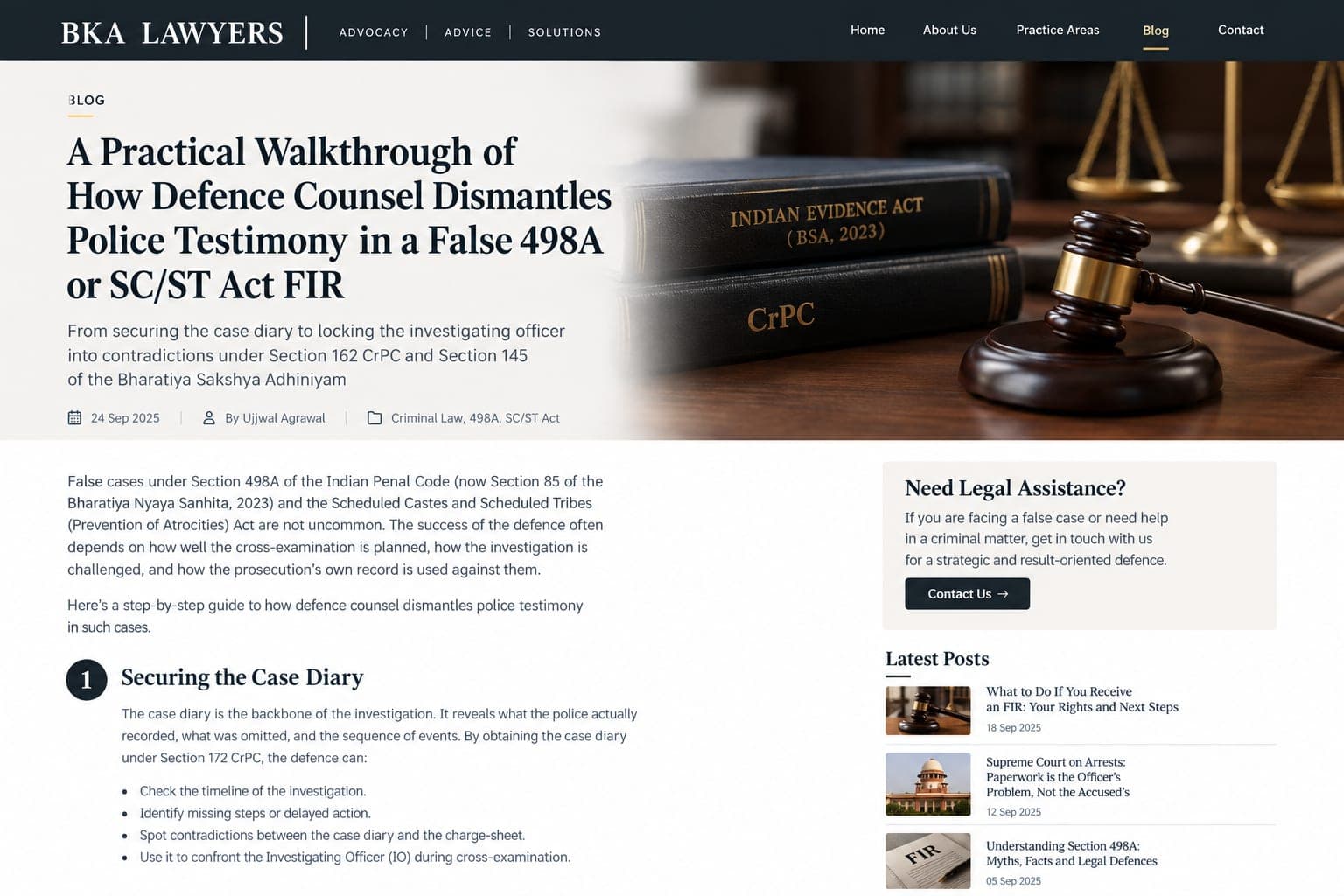
Cross-Examining Police Witnesses in a False FIR: A Step-by-Step Defence Guide
A practical walkthrough of how defence counsel dismantles police testimony in a false 498A or SC/ST Act FIR — from securing the case diary to locking the investigating officer into contradictions under Section 162 CrPC and Section 145 of the Bharatiya Sakshya Adhiniyam.

Samay Raina and Criminal Liability for Offensive Online Content: What Creators Need to Know
The FIR against Samay Raina over 'India's Got Latent' highlights the real criminal risks of offensive online content. This article breaks down the laws, the legal process, and practical steps for creators.
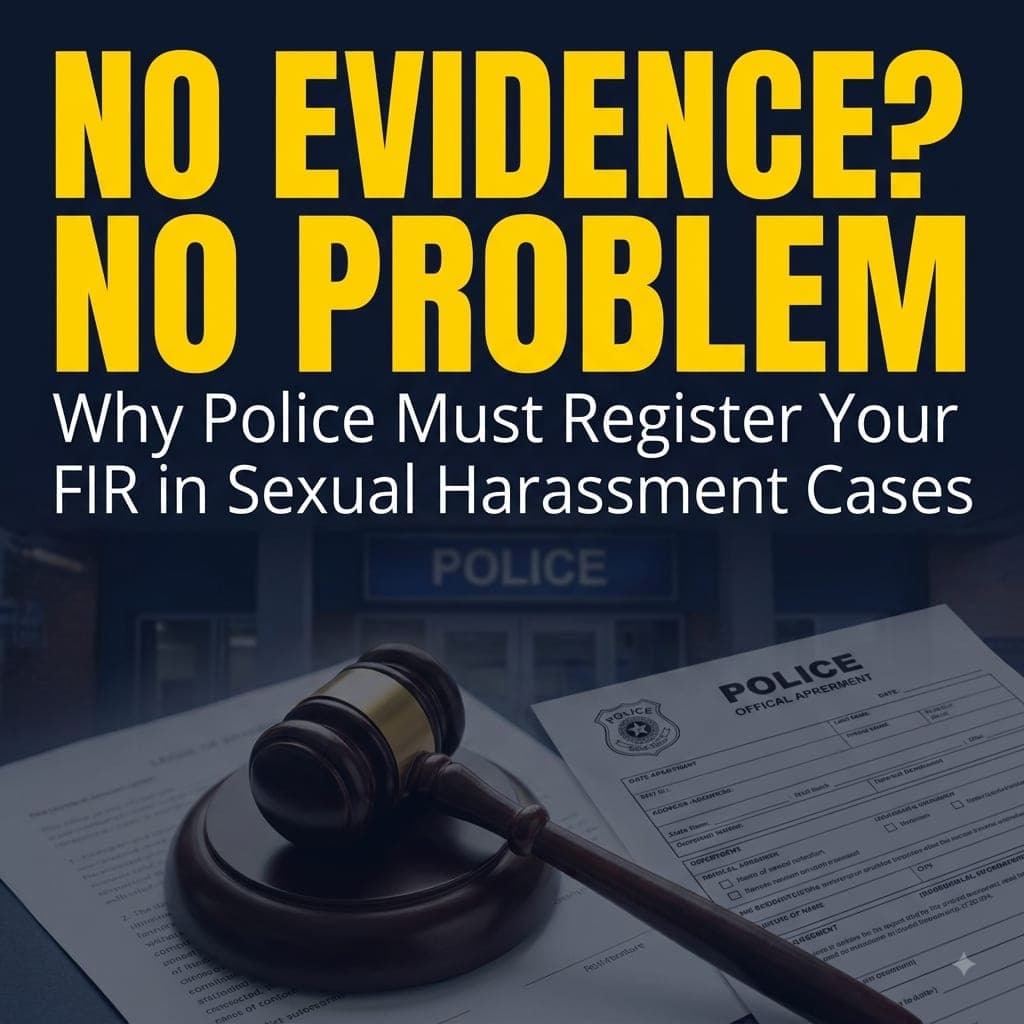
No Evidence? No Problem: Why Police Must Register Your FIR in Sexual Harassment Cases
The Allahabad High Court recently reaffirmed that police cannot refuse to register an FIR in sexual harassment cases merely because the complainant hasn't produced evidence like WhatsApp chats or call recordings. This article explains the legal basis, what the law requires, and what to do if the police refuse to register your complaint.