
How to Evict a Tenant in Delhi: A Step-by-Step Guide Under the Delhi Rent Control Act, 1958
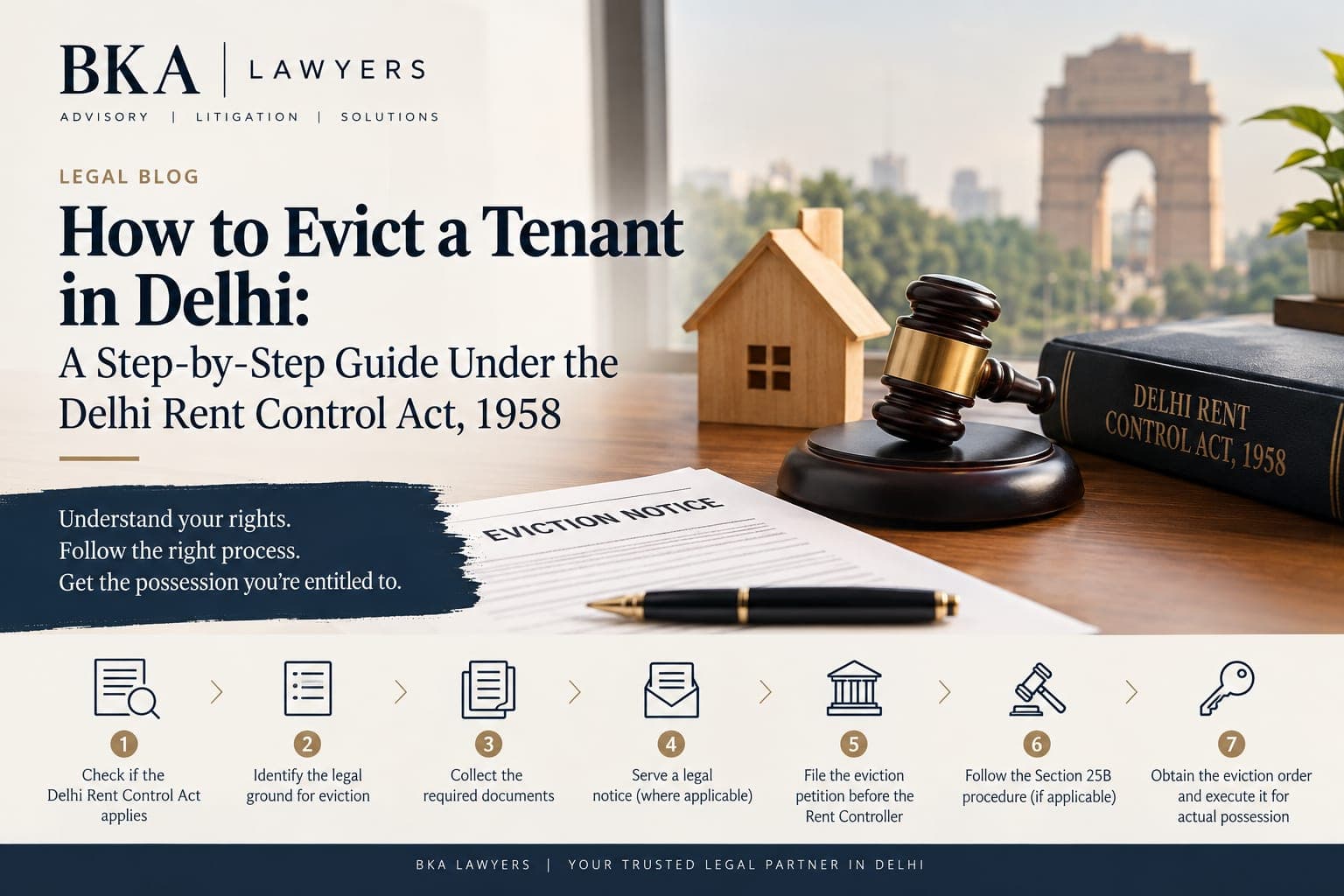
A tenant who stops paying rent, damages the flat, or simply refuses to leave is one of the most common — and most stressful — problems a Delhi landlord faces. The instinct to change the locks or cut the power is understandable but legally dangerous: self-help eviction is itself an offence, and it can hand the tenant a counter-claim that sets your case back months. Delhi has its own dedicated statute for this, the Delhi Rent Control Act, 1958, and there is a defined route through it. Here is how that route actually works.
Understand the Delhi Rent Control Act, 1958 Applies to Your Property
The Delhi Rent Control Act, 1958 ("DRCA") governs tenancies in the capital, and you cannot simply sue for possession the way you would in a state without rent control. The Act applies to premises whose monthly rent does not exceed ₹3,500 — the threshold that survived the 1988 amendment. If your rent is above that figure, the tenancy is outside the DRCA and your remedy lies in a civil suit for possession, not a Rent Controller petition. This distinction decides your entire strategy, so verify it before drafting anything. The full text is on India Code.
A registered lease deed under the Registration Act, 1908 also matters: an unregistered lease for a term over one year is not admissible to prove the terms, though it can still be used to show the existence of a tenancy. Keep your original rent agreement, rent receipts, and bank statements showing the rent credits — these are your foundational evidence.
Step 1: Issue a Written Notice of Eviction
The law does not allow a landlord to evict on a phone call. You must serve a written notice setting out the ground for eviction and demanding that the tenant vacate within the statutory period. Under Section 106 of the Transfer of Property Act, 1882, a month-to-month tenancy can be terminated by a notice of 15 days, while a year-to-year tenancy needs six months' notice. The notice must be in writing, signed by the landlord or an authorised agent, and served on the tenant.
Serve it through registered post with acknowledgement due, and retain the postal receipt and the returned acknowledgement card. Send a copy by email and, if possible, have a second copy delivered by hand against a written receipt. Delhi courts have repeatedly held that eviction petitions have failed not on the merits but on defective service, so treat the notice as your first and most important piece of evidence. Even after a valid notice, the tenancy does not automatically end if the tenant refuses to leave — it merely gives you the right to file for eviction.
Step 2: Choose the Correct Ground for Eviction
The DRCA does not permit eviction at will. You must plead and prove one or more of the statutory grounds, typically under Section 14. The common grounds are:
- Non-payment of rent — the tenant has failed to pay rent lawfully due, and has not paid or tendered it within two months of a notice of demand.
- Subletting or assignment — the tenant has parted with possession of the premises without your written consent.
- Nuisance or damage — the tenant has caused substantial damage to the property or is a nuisance to neighbours.
- Bona fide requirement — you genuinely need the premises for yourself or your family, and you have no other reasonably suitable accommodation.
- Unsafe or unfit premises — the building is required for reconstruction or is unsafe for occupation.
For the bona fide requirement ground, note that the tenant can resist by showing that you have alternative accommodation or that the requirement is not genuine. This is the ground most heavily litigated in Delhi, and courts scrutinise the landlord's motive closely. Plead facts, not conclusions — "I need the flat for my son's residence" with supporting detail is stronger than "I require the premises."
Step 3: File an Eviction Petition Before the Rent Controller
If the tenant does not vacate after the notice, you file a petition for eviction before the Rent Controller having jurisdiction over the area where the property is located. The petition must state the ground, the relationship of landlord and tenant, the rate of rent, the description of the premises, and the facts constituting the ground. It must be verified and supported by an affidavit and documents.
The tenant then files a written statement and the matter proceeds like a civil trial — framing of issues, evidence by both sides, and arguments. In non-payment cases, the tenant can deposit the arrears and seek relief, which is why the notice-stage paperwork matters so much. Expect the trial stage to take anywhere from a year to several years depending on the complexity and the court's docket. Interim relief is limited; the DRCA does not permit a quick summary eviction for most grounds.
Step 4: Obtain and Execute the Eviction Order
If the Rent Controller finds the ground proved, it passes an eviction order. The tenant has a right of appeal to the Delhi High Court (and, where applicable, a revision), and those proceedings can take further time. Do not assume the order is the end of the matter.
Only once the order attains finality can you seek execution — the process by which the court's order is actually enforced. Execution is where a bailiff may be appointed to deliver possession to you, and where the tenant may seek further time to vacate. Physical dispossession without an execution order remains illegal even if you hold a favourable eviction decree. Throughout, keep a written record of every step: notices, postal receipts, hearing dates, and the final order.
What You Must Never Do
Cutting off water or electricity, changing locks, removing the tenant's belongings, or threatening the tenant to make them leave is illegal self-help eviction. Section 45 of the DRCA and general civil law protect the tenant's basic amenities, and a landlord who resorts to these tactics can face criminal complaints and a civil action, besides weakening their eviction case. The absence of a quick statutory remedy is frustrating, but the only reliable route is the one laid down in the Act.
If your tenancy is outside the DRCA (rent above ₹3,500), the process changes to a civil suit for possession and recovery of arrears under the Specific Relief Act, 1963 and the Transfer of Property Act, 1882. The grounds and the notice requirements remain broadly similar, but the forum and the pleading are different — and getting that wrong at the outset can cost you years.
The practical takeaway is simple: document everything from day one, serve a properly drafted notice, plead a ground you can actually prove, and resist every temptation to take the law into your own hands. Delhi's eviction process rewards preparation far more than urgency. If you are dealing with a tenant who has stopped paying or refuses to leave, having your agreement, rent records, and notice reviewed by a property disputes lawyer before you file will usually save more time than it costs.
Facing a similar situation? Talk to a BKA advocate before you act.
Chat on WhatsAppNeed help with this?
Our Property Disputes services
Frequently Asked Questions
Does the Delhi Rent Control Act, 1958 apply to my tenancy?
The DRCA applies where the monthly rent of the premises does not exceed ₹3,500. If your rent is above that threshold, your tenancy falls outside the Act and you must file a civil suit for possession instead of a petition before the Rent Controller. Confirm this before drafting any notice or petition, because the wrong forum can derail the entire case.
How much notice must I give a tenant before filing for eviction in Delhi?
A month-to-month tenancy can be terminated by 15 days' written notice under Section 106 of the Transfer of Property Act, 1882, while a year-to-year tenancy requires six months' notice. The notice must be in writing, signed, and properly served — registered post with acknowledgement due is the safest method. Keep the postal receipt and acknowledgement card, as defective service is one of the most common reasons eviction petitions fail.
Can I evict a tenant for non-payment of rent if they later pay the arrears?
In a non-payment case, the tenant is usually given an opportunity to deposit the arrears in court, and doing so may allow them to resist eviction on that ground. This is why the notice of demand and its proof matter so much — the two-month window after a lawful demand is central to the ground. If the tenant clears the arrears, you may need to rely on a different ground, such as bona fide requirement or nuisance, if one exists.
Can I change the locks or cut off electricity to make my tenant leave?
No. Cutting off water or electricity, changing locks, removing the tenant's belongings, or threatening them is illegal self-help eviction. Section 45 of the Delhi Rent Control Act and general civil law protect the tenant's basic amenities, and a landlord who resorts to these tactics can face criminal complaints and a civil claim from the tenant, besides weakening their own eviction case.
How long does a tenant eviction case take in Delhi?
The timeline varies widely. The trial before the Rent Controller can take anywhere from about a year to several years depending on the complexity and the court's docket, and an appeal to the Delhi High Court can add further time. Execution of the eviction order — when a bailiff delivers possession — is a separate stage that follows only after the order attains finality.
What is bona fide requirement as a ground for eviction in Delhi?
Bona fide requirement means you genuinely need the premises for yourself or your family and have no other reasonably suitable accommodation. It is one of the most heavily litigated grounds under Section 14 of the DRCA, and the tenant can resist it by showing you have alternative accommodation or that the need is not genuine. Plead specific facts about who needs the property and why, not general conclusions.

About the author
Ujjwal Agrawal
Advocate · Commercial & Money Recovery Cases
Ujjwal Agrawal focuses on commercial litigation and money recovery, including cheque bounce cases under the Negotiable Instruments Act and recovery suits for individuals and businesses.
More about our team →Related Articles
Property Dispute — 10 Costly Mistakes That Sink Property Dispute Cases in Delhi NCR Courts
A senior advocate's plain-English guide to the ten mistakes that quietly destroy property disputes in Delhi NCR — from missing limitation to weak documentation — and what to do instead.
How to Legally Block a Co-Owner from Selling the Family Home
Learn the legal steps to stop a co-owner from selling joint property in India, including filing a partition suit and obtaining a stay order under Order 39 Rule 1 and 2 of the CPC.
Supreme Court and High Court Rulings on Maintenance When the Wife Has Her Own Income
A wife's salary, flat or car does not automatically shut down her maintenance claim. What the Supreme Court and High Courts have actually held on maintenance where the wife earns, and how the courts decide.