
Can a Widow Be Denied Her Husband's Share in a Partition?
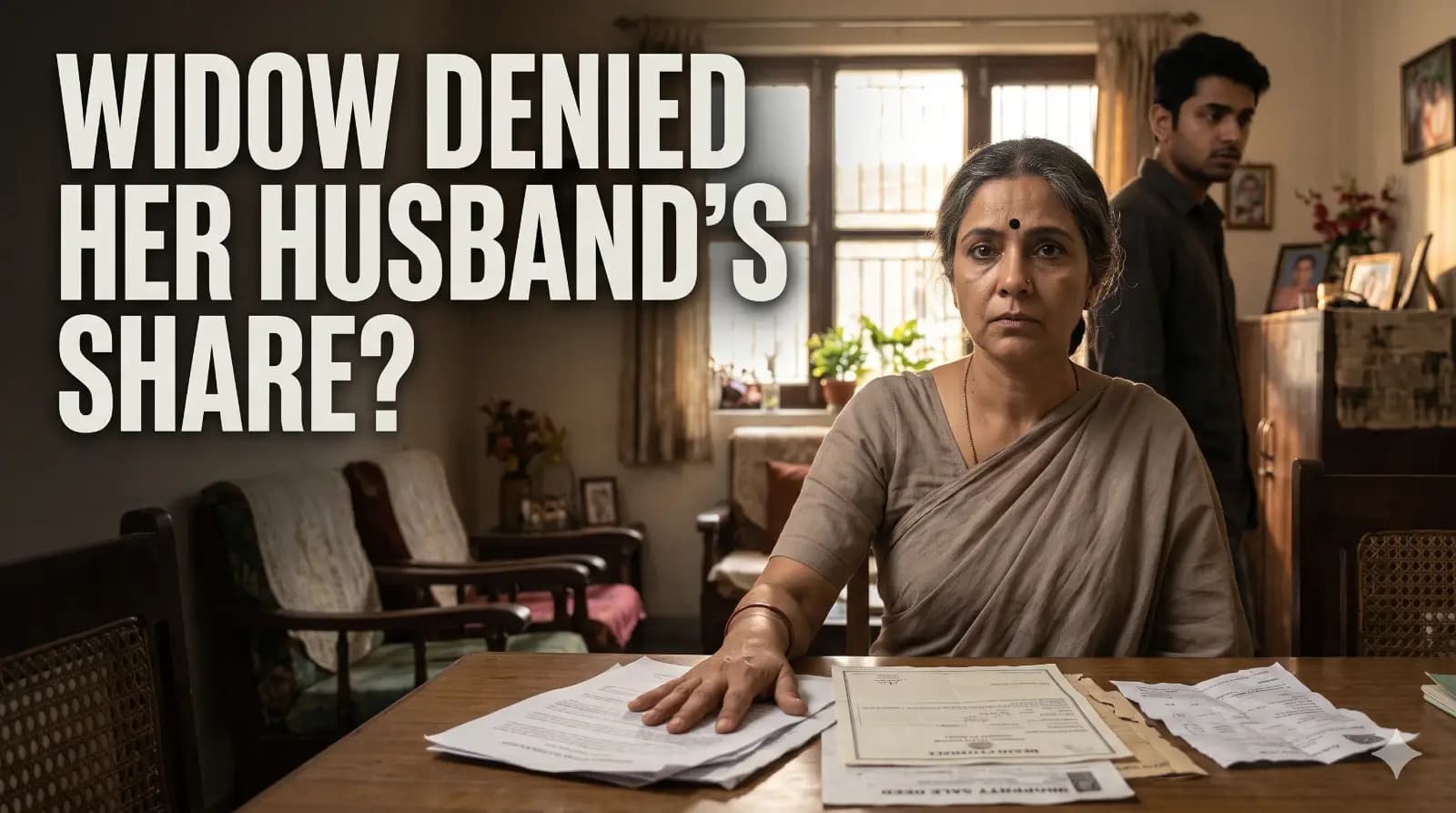
Can a Widow Be Denied Her Husband's Share? Myth-Busting Partition Myths
A widow is not a stranger to her husband's share. Yet in partition suits across Delhi NCR, widows are still told they have no claim, that the property is "ancestral" and belongs only to the sons, or that they must wait for a formal partition to be recognised. This article separates law from folklore.
Myth 1: A Widow Has No Independent Right; She Only Gets Maintenance
Fact: Under the Hindu Succession Act, 1956, a widow is a Class I heir of her husband. If he dies intestate (without a will), she inherits along with his children and mother. In a partition of joint family property, she steps into her husband's shoes and takes the share he would have received. Her right is ownership, not charity. Maintenance is a separate, weaker claim that arises only when inheritance is not available.
Myth 2: Only Sons Inherit Ancestral Property; Daughters and Widows Do Not
Fact: Since the 2005 amendment to Section 6 of the Hindu Succession Act, a daughter is a coparcener (a person born into the joint family with a birth-right in the property) by birth, just like a son. This applies to coparcenary property and to daughters alive on 9 September 2005. A widow, too, is a Class I heir. The old rule that women only received a share at the pleasure of male coparceners no longer holds.
Myth 3: A Widow Loses Her Share If She Remarries or Leaves the House
Fact: Remarriage does not take away a widow's inherited share. Leaving the matrimonial house, filing a police complaint, or living separately does not forfeit property rights. What matters is the deceased husband's status as a coparcener and the widow's legal relationship to him at the time of his death. Courts look at the record, not at family approval.
Myth 4: A Formal Partition Deed Is Mandatory to Claim a Share
Fact: There is no requirement of a registered partition deed to create a right. A widow's right arises by operation of law. A partition suit is only the legal route to have that right declared and the property divided. The Supreme Court has repeatedly clarified that a woman's absolute right to property is not dependent on a formal partition being completed first.
Myth 5: If the Husband Died Without a Will, the Widow Gets Nothing
Fact: This is the opposite of the law. Intestate succession is exactly when the widow benefits most. Under the Hindu Succession Act, when a Hindu male dies without a will, his property devolves first on Class I heirs — widow, children, and mother. Only if there are no Class I heirs do more distant relatives come in. A will can reduce a widow's share, but a will that deprives her completely can be challenged on grounds of maintenance and dependency.
Myth 6: The Widow Must Wait for the Eldest Son to Partition the Property
Fact: Any coparcener or co-owner can file a partition suit. A widow does not need the family's consent. She can file a suit for partition and separate possession in the civil court, and can also seek an injunction to prevent sale or construction during the suit. Delay is the real enemy — it allows the property to be sold or encumbered.
What Courts Actually Look At
In practice, the court asks three things: (1) Is the property joint family property or separate property? (2) Was the husband a coparcener at the time of death? (3) Who are the Class I heirs? Documents such as the death certificate, family tree, municipal records, and proof of the husband's share matter more than family statements. A widow's own admission that she has "no claim" in a family settlement is the most common self-inflicted wound.
What to Check First
Before filing anything, collect: the husband's death certificate; proof of the property being ancestral or joint (sale deeds, mutation records, tax receipts); a family tree; and any will. Check whether a partition has already been recorded in revenue records. If a suit is pending, check the stage and whether an injunction is needed. Limitation periods apply to some claims, so delay should be explained.
A widow's share is a legal right, not a family favour. The first step is to secure the documents and take advice on whether a partition suit or a declaration is the right remedy.
Facing a similar situation? Talk to a BKA advocate before you act.
Chat on WhatsAppNeed help with this?
Our Property Disputes services
Frequently Asked Questions
Kya widow ko husband ki property mein hissa milta hai? (Does a widow get a share in her husband's property?)
Yes. Under the Hindu Succession Act, 1956, a widow is a Class I heir of her husband. If he dies without a will, she inherits along with his children and mother, and in a partition of joint family property she takes the share he would have received. This right is not dependent on the family's consent.
Can a widow claim her husband's share if the property is still in her father-in-law's name?
It depends on whether the husband had a coparcenary interest in that property. If the property was ancestral and the husband was a coparcener at the time of his death, the widow steps into his share. If it was the father-in-law's separate property and he is alive, the husband has no share yet, so the widow cannot claim one.
Does a widow lose her share if she remarries?
No. Remarriage does not take away property already inherited or the right to inherit from a husband who died earlier. The Hindu Succession Act does not impose celibacy as a condition for succession. However, if she remarries and later claims maintenance from her former husband's estate, that is a separate issue.
What documents should a widow gather before filing a partition suit?
Collect the husband's death certificate, a family tree, proof that the property is joint or ancestral (sale deeds, mutation records, property tax receipts), and any will. Also check revenue records for any prior partition. These documents establish the husband's coparcenary status and the class of heirs.
How long does a partition suit take in Delhi courts?
A contested partition suit can take several years, depending on the complexity and the court's docket. An uncontested or settled matter moves faster. The key is to file early and seek an injunction against sale or construction so the property is not alienated during the pendency.
Related Articles
Property Dispute — 10 Costly Mistakes That Sink Property Dispute Cases in Delhi NCR Courts
Missed limitation and weak documents are among ten mistakes that quietly sink property disputes in Delhi NCR, and each has a fix.

How to Evict a Tenant in Delhi: A Step-by-Step Guide Under the Delhi Rent Control Act, 1958
Evicting a tenant in Delhi needs a valid ground, a proper notice and a petition before the Rent Controller, and the Delhi Rent Control Act limits your options.

How to Legally Block a Co-Owner from Selling the Family Home
Learn the legal steps to stop a co-owner from selling joint property in India, including filing a partition suit and obtaining a stay order under Order 39 Rule 1 and 2 of the CPC.