
Why PMLA Cases Are Heard at Rouse Avenue: Delhi's Special Court Explained
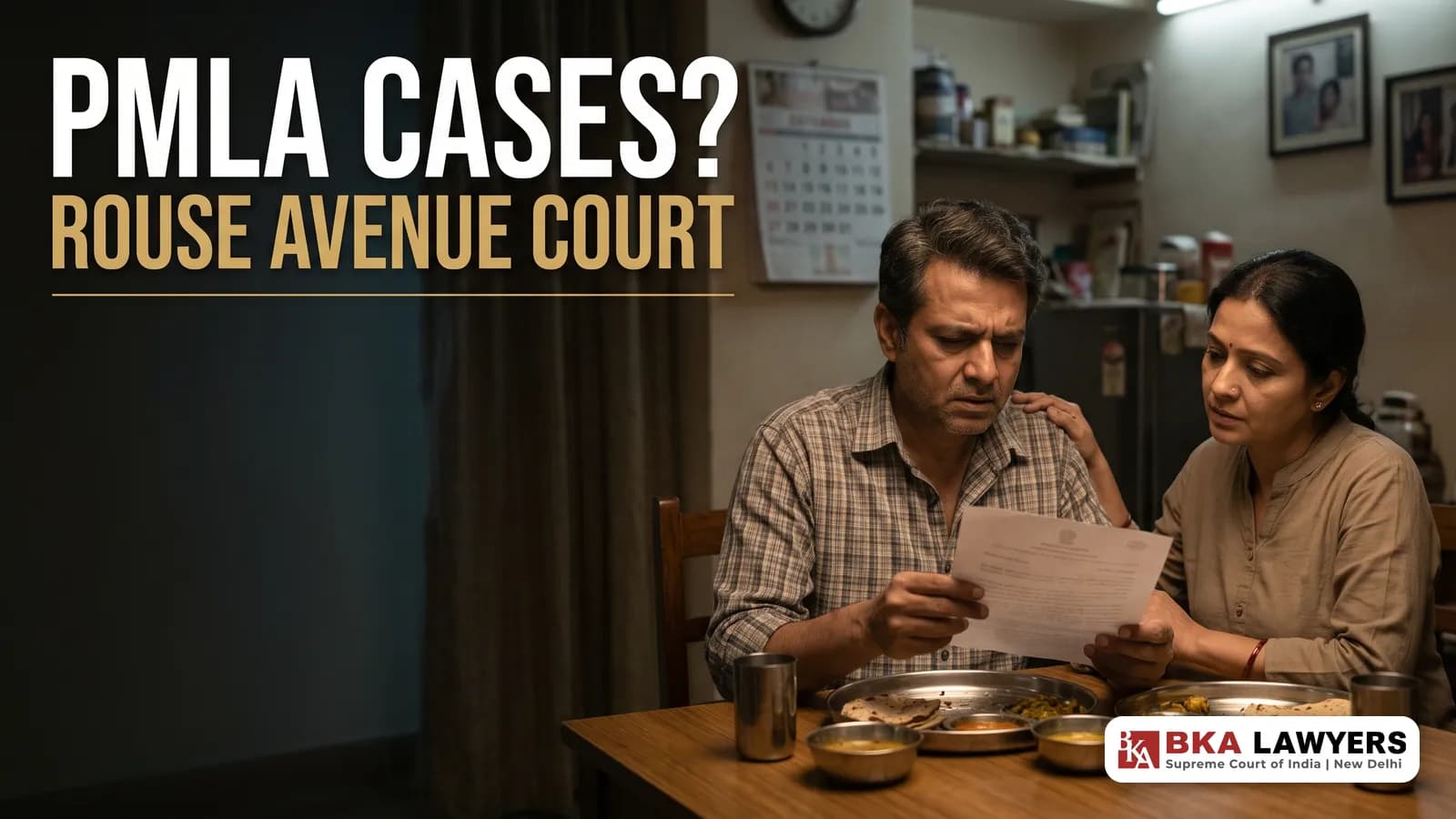
PMLA cases in Delhi are heard at the special court at Rouse Avenue because the Central Government has designated it as the Special Court for PMLA matters under Section 43 of the Prevention of Money Laundering Act, 2002. That single fact decides where the case sits — not the police station, not the place of the alleged offence, and not the investigating agency's office.
The designation is what matters. Under the Act, the Central Government may, by notification, designate one or more courts of session as special courts for such area or cases as may be specified. In Delhi, that notification covers PMLA matters and the court sits at Rouse Avenue. The same premises also house the special courts for other central statutes, which is why the building is often described simply as "Rouse Avenue Court".
What the special court actually deals with
The special court is not a general criminal court that happens to take PMLA files. It is the forum for the trial of the offence of money laundering itself — the complaint filed by the Enforcement Directorate after investigation, the framing of charges, and the trial. It is also the court that hears applications for bail and for the release or attachment of property connected to the alleged proceeds of crime.
Where a PMLA case is linked to a scheduled offence — the underlying crime, such as cheating or criminal conspiracy — the two are ordinarily tried by the same special court, so that evidence is not split across forums. The schedule under the Act lists the offences that can give rise to a money-laundering case at all; if the underlying offence is not on that list, a PMLA case cannot stand on it.
One practical point is often missed: appearance before the special court is not optional because you believe the case belongs elsewhere. If you have been summoned there, the jurisdiction has already been fixed by notification, and the proper course is to appear and raise your objection in that court, not to stay away. Absence is treated seriously and can lead to coercive steps.
What to check before the first hearing
What I would check first in any PMLA file is short. Whether the scheduled offence is one covered by the Act. Whether the summons or complaint was served on you personally and what it requires you to do. Whether any provisional attachment of property has been made, because the period for challenging it before the Adjudicating Authority runs separately from the criminal proceedings. And whether the dates in the complaint line up with the transaction records you hold.
These are not technicalities. A PMLA trial moves on documents — bank statements, transaction trails, company records — and the court's assessment at the bail stage often turns on how convincingly those records have been explained. Loose, undated or incomplete papers presented late do more damage than a weak argument presented on time.
Watch the calendar closely. Summons carry a date, attachment orders carry a period for objection, and an appeal against an order of the Adjudicating Authority lies to the Appellate Tribunal within the time prescribed by the Act. Miss one of these and the remedy does not disappear, but it becomes harder and more expensive. Gather your identity documents, the summons itself, all bank and company records touching the transactions named, and any earlier notices or replies. Take the date on the paper seriously; that is what the court will look at first.
Facing a similar situation? Talk to a BKA advocate before you act.
Chat on WhatsAppNeed help with this?
Our Criminal Defence services
Frequently Asked Questions
Is Rouse Avenue the only court in Delhi that can hear a PMLA case?
For practical purposes, yes. The Central Government designates special courts under Section 43 of the PMLA, and in Delhi the designated special court sits at Rouse Avenue. A magistrate or a regular sessions court cannot take up the trial of a money-laundering offence. If your summons names that court, that is where the case sits.
Mera PMLA case kahan chalega? (Where will my PMLA case be heard?)
In Delhi, a PMLA case is heard at the special court at Rouse Avenue, which is designated under Section 43 of the Prevention of Money Laundering Act. It is not heard at the local police station or at the Enforcement Directorate's office. Check the court named in your summons or complaint; that is the forum for your appearance.
Can I challenge the jurisdiction of the Rouse Avenue court if the alleged offence took place outside Delhi?
You can raise the objection, but the designation under Section 43 is what fixes the forum, not the location of the alleged offence. In practice, the objection is raised before the special court itself, and you should appear on the date given while doing so. Staying away on the belief that the case belongs elsewhere is treated as non-appearance.
What documents should I take to the first PMLA hearing at Rouse Avenue?
Take the summons or complaint itself, your identity documents, and every bank statement, company record and transaction record connected to the amounts named in the notice. Also carry any earlier notices received from the Enforcement Directorate and the replies filed. The court's first assessment usually turns on how well this documentary record is organised.
Related Articles
Cross-Examining Police Witnesses in a False FIR: A Step-by-Step Defence Guide
In a false 498A or SC/ST Act FIR, defence counsel wins by securing the case diary and locking the investigating officer into contradictions.

Can Police Still Register an FIR After Your Section 156(3) Application Is Rejected? Here's What the Supreme Court Just Clarified
The Supreme Court recently held that police can register an FIR even if a Magistrate has rejected a complaint's application under Section 156(3) CrPC. Learn what this means for your case, the legal reasoning, and practical steps for complainants.

Samay Raina and Criminal Liability for Offensive Online Content: What Creators Need to Know
The FIR against Samay Raina over 'India's Got Latent' highlights the real criminal risks of offensive online content. This article breaks down the laws, the legal process, and practical steps for creators.