
Seller Not Refunding Your Money After Online Shopping? A Step-by-Step Legal Roadmap Under the Consumer Protection Act, 2019
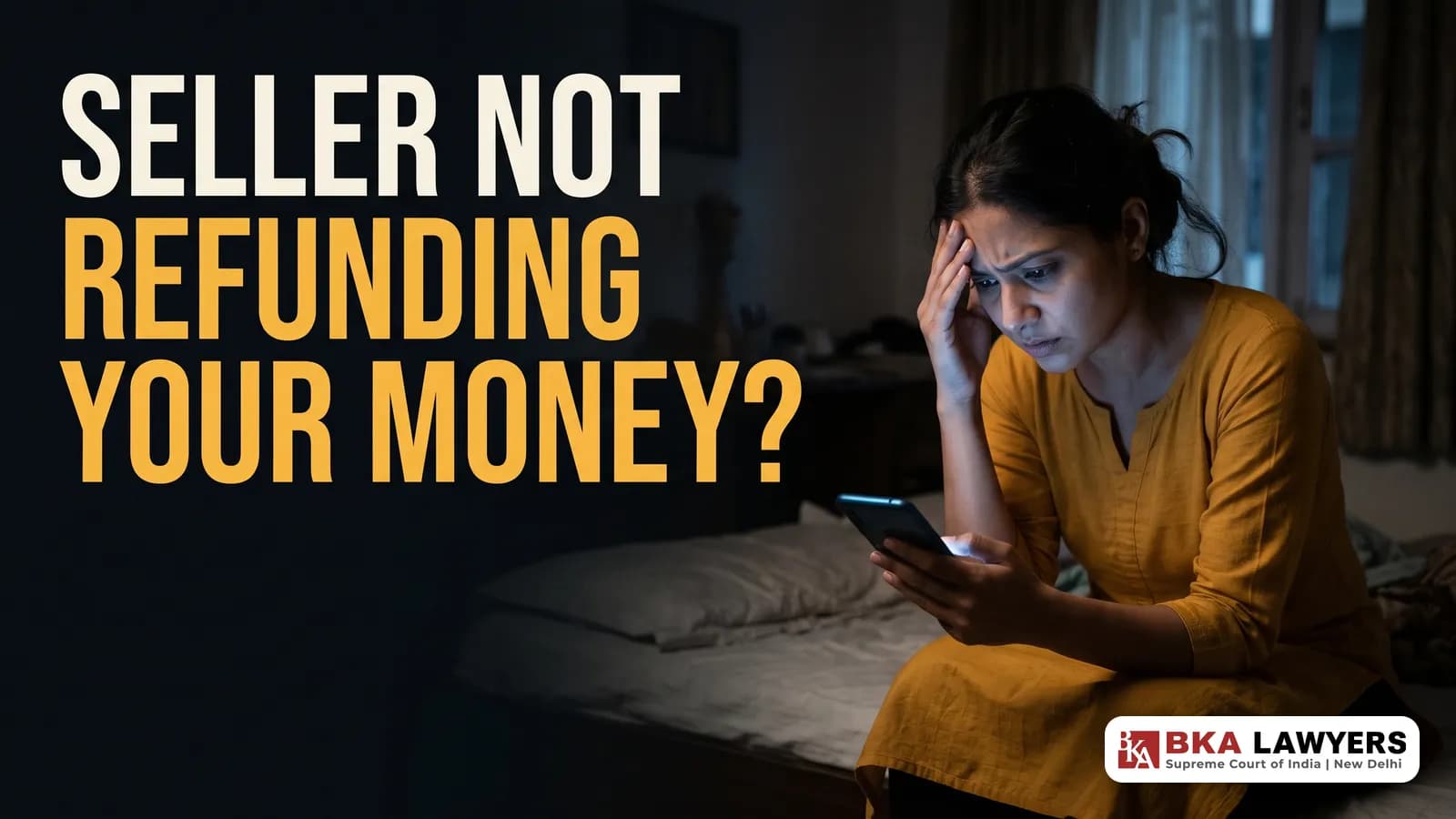
You paid, the product was defective or never arrived, and the seller has stopped responding. The law gives you a clear route to recover your money — but it works only if you build a record early and file in the right forum.
What the law requires of an online seller
When you buy from an e-commerce platform, you are a consumer under Section 2(7) of the Consumer Protection Act, 2019. The seller and the platform must comply with the Consumer Protection (E-Commerce) Rules, 2020, notified under that Act. These rules impose specific duties.
A seller cannot simply declare a product "non-returnable" and keep your money if the goods are defective, spurious, or were delivered late. A blanket no-refund policy is treated as an unfair trade practice under Section 2(47) of the Act. The e-commerce rules also require sellers to accept returns where the goods are defective or not as described, and to refund within a reasonable time. "Reasonable" is not defined in the rules, so tribunals look at the merchant's own stated policy and the facts.
The platform itself is not a silent bystander. Under the e-commerce rules, a marketplace must display seller details, provide a grievance officer, and act on complaints within a set timeline — generally one month. If the platform fails to do so, it can be held liable alongside the seller.
Step 1: Put your complaint in writing and preserve the record
Before you think about a court or commission, create a paper trail. This is the step most buyers skip, and it costs them later.
Write a short email to the seller's customer care and to the platform's grievance officer. State the order number, date, amount paid, what went wrong, and what you want — a replacement or a refund. Attach screenshots of the product page, the order confirmation, the payment receipt, and any chat where the seller promised a refund.
Keep the tone factual. Do not threaten criminal action at this stage. Under the e-commerce rules, the platform's grievance officer must acknowledge your complaint within 48 hours and resolve it within one month. That one-month period is your first clock.
If the seller responds with a settlement offer, read it carefully. A common mistake is accepting a partial refund "as full and final settlement" and then discovering the amount does not cover shipping or the defect. Once you accept, your claim is weaker.
Step 2: Escalate to the platform and, if needed, the National Consumer Helpline
The seller may be a small trader; the platform has deeper pockets and a legal duty to act. Escalate in writing to the platform's Grievance Officer — the name and contact must be displayed on the website under the e-commerce rules. If the platform does not resolve the matter, you can log a complaint on the National Consumer Helpline (NCH) portal run by the Department of Consumer Affairs. The NCH is a mediation channel, not a court; it does not pass binding orders, but a recorded NCH complaint is useful evidence that you tried to resolve the dispute before filing.
Do not wait indefinitely. If a month passes without a refund, move to Step 3.
Step 3: File a complaint before the District Consumer Commission
A consumer complaint is filed before the District Consumer Disputes Redressal Commission where you reside or where the seller has an office. Because you bought online, you can file where you live — a significant advantage for a buyer in Delhi NCR dealing with a seller in another state.
Limitation: Under Section 69 of the Consumer Protection Act, 2019, a complaint must be filed within two years from the date the cause of action arose — usually the date the refund was refused or the defect appeared. Delay beyond that can be condoned only on sufficient cause shown.
Pecuniary jurisdiction: The District Commission handles claims up to ₹50 lakh; above that, the State Commission, and above ₹2 crore, the National Commission. Most online refund disputes fall within the District Commission's limit.
What to file: A complaint under Section 35 of the Act, with a affidavit, the order and payment records, correspondence, and a clear prayer — refund, compensation for mental agony, and litigation costs. You can appear yourself, or through a lawyer. Court fees are modest for small claims.
Step 4: What happens at the hearing — and what the Commission looks for
After admission, the Commission issues notice to the seller. The seller files a written response, and both sides are heard. Proceedings are summary in nature, so the Commission focuses on documents rather than lengthy oral evidence.
What the Commission tends to find convincing: a clean order page showing what was promised, a payment record, a written complaint to the seller, and the seller's silence or evasive reply. What it finds unconvincing: screenshots without context, a buyer who waited a year before complaining, or a claim inflated with exaggerated compensation.
If the seller does not appear despite notice, the Commission can proceed ex parte — that is, decide the case in the seller's absence. An order under Section 39 can direct a refund, replacement, compensation, and costs. If the opposite party does not comply, you can seek enforcement under Section 71, which allows the Commission to attach property or initiate proceedings for non-compliance.
Step 5: Appeal, if the outcome is unfavourable
If you are unhappy with the District Commission's order, an appeal lies to the State Commission within 45 days under Section 41 of the Act. The appeal must be filed with the order copy attached and the grounds stated. Do not miss the 45-day window; condonation of delay is possible but not guaranteed.
Practical checklist before you file
- Order confirmation and invoice showing the seller's identity and the amount paid.
- Payment proof — bank statement, UPI record, or card statement.
- Screenshots of the product page and any return or refund policy displayed at the time of purchase. The policy as it stood when you bought matters, not the one the seller later changed.
- All emails, chats, and complaint ticket numbers, including the platform's grievance officer's response.
- The NCH complaint number, if you filed one.
A common mistake is filing before the grievance period ends, which lets the seller argue you did not follow the prescribed route. Another is filing in the wrong Commission, which leads to rejection and lost time.
What to do next
Gather the documents above, send one final written demand giving the seller a clear deadline, and if there is no refund, file before the District Commission within the two-year limitation. If the amount is small, the process is still worthwhile because the Commission can award costs and compensation on top of the refund. Watch the one-month grievance timeline and the 45-day appeal window — those are the two deadlines that most often catch buyers out.
Facing a similar situation? Talk to a BKA advocate before you act.
Chat on WhatsAppNeed help with this?
Our Consumer Protection services
Frequently Asked Questions
Can I file a consumer complaint in Delhi if the online seller is based in another state?
Yes. Under the Consumer Protection Act, 2019, a complaint may be filed where the consumer resides or works. If you bought the product while living in Delhi NCR, the District Commission in your district has jurisdiction even if the seller's office is elsewhere.
Seller refund nahi de raha, kya karun? (The seller is not refunding — what should I do?)
First send a written email to the seller and the platform's grievance officer, keeping screenshots of the order and payment. If there is no refund within one month, file a complaint before the District Consumer Commission within two years of the refusal.
Is a 'no refund under any circumstance' policy valid in India?
No. A blanket no-refund policy that applies even when goods are defective, spurious or delivered late is an unfair trade practice under the Consumer Protection Act, 2019 and the E-Commerce Rules, 2020. The seller cannot enforce it against a consumer.
Do I need a lawyer to file a consumer complaint for a refund?
You can file and argue the complaint yourself. The procedure is designed to be accessible, and the Commission relies mainly on documents. A lawyer helps where the amount is substantial or the seller disputes the facts.
What if the seller does not appear before the Consumer Commission?
The Commission can proceed ex parte — that is, decide the case in the seller's absence after notice has been served. An ex parte order can direct a refund, compensation and costs, and can be enforced if not complied with.
How long does a consumer refund complaint take?
The Act aims at disposal within about three to five months, though in practice it varies by Commission and whether the seller participates. Straightforward refund claims with clear documents tend to move faster.
Related Articles
Bought a Defective Product in Delhi? How to File a Consumer Complaint Under the Consumer Protection Act, 2019
A defective product gives you a claim under the Consumer Protection Act, 2019. Notice, evidence and the right Delhi forum decide whether you win.
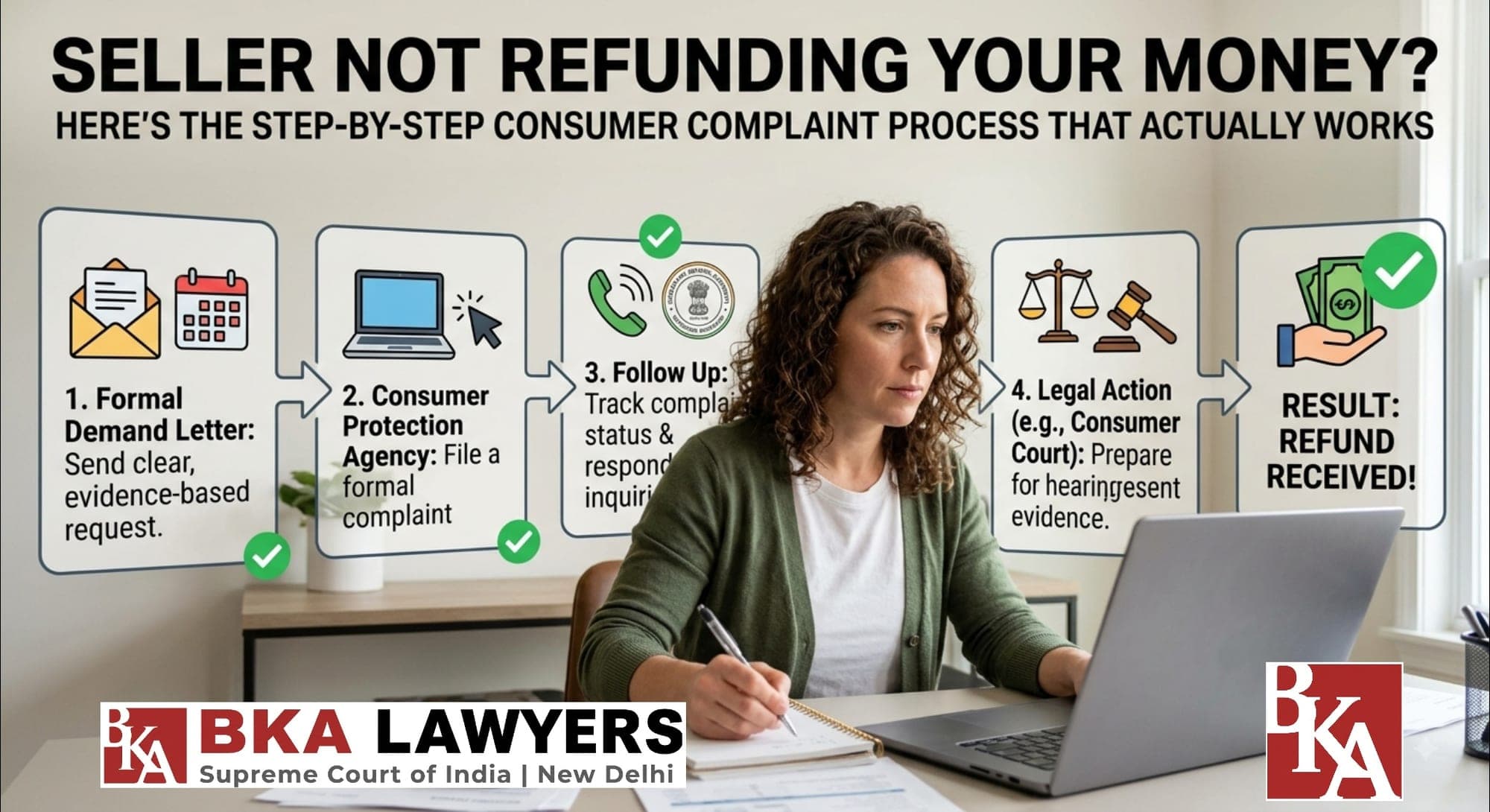
Seller Not Refunding Your Money? Here's the Step-by-Step Consumer Complaint Process That Actually Works
When an online seller keeps your money, the Consumer Protection Act, 2019 lets you file on e-Daakhil or go to the District Commission.
Money Recovery Suit in India: A Practical Guide to Filing and Winning
Learn how to file a money recovery suit in India, including jurisdiction, limitation, summary suits, and enforcement. Practical guidance from BKA Lawyers, Delhi NCR.