
Seller Not Refunding Your Money? Here's the Step-by-Step Consumer Complaint Process That Actually Works
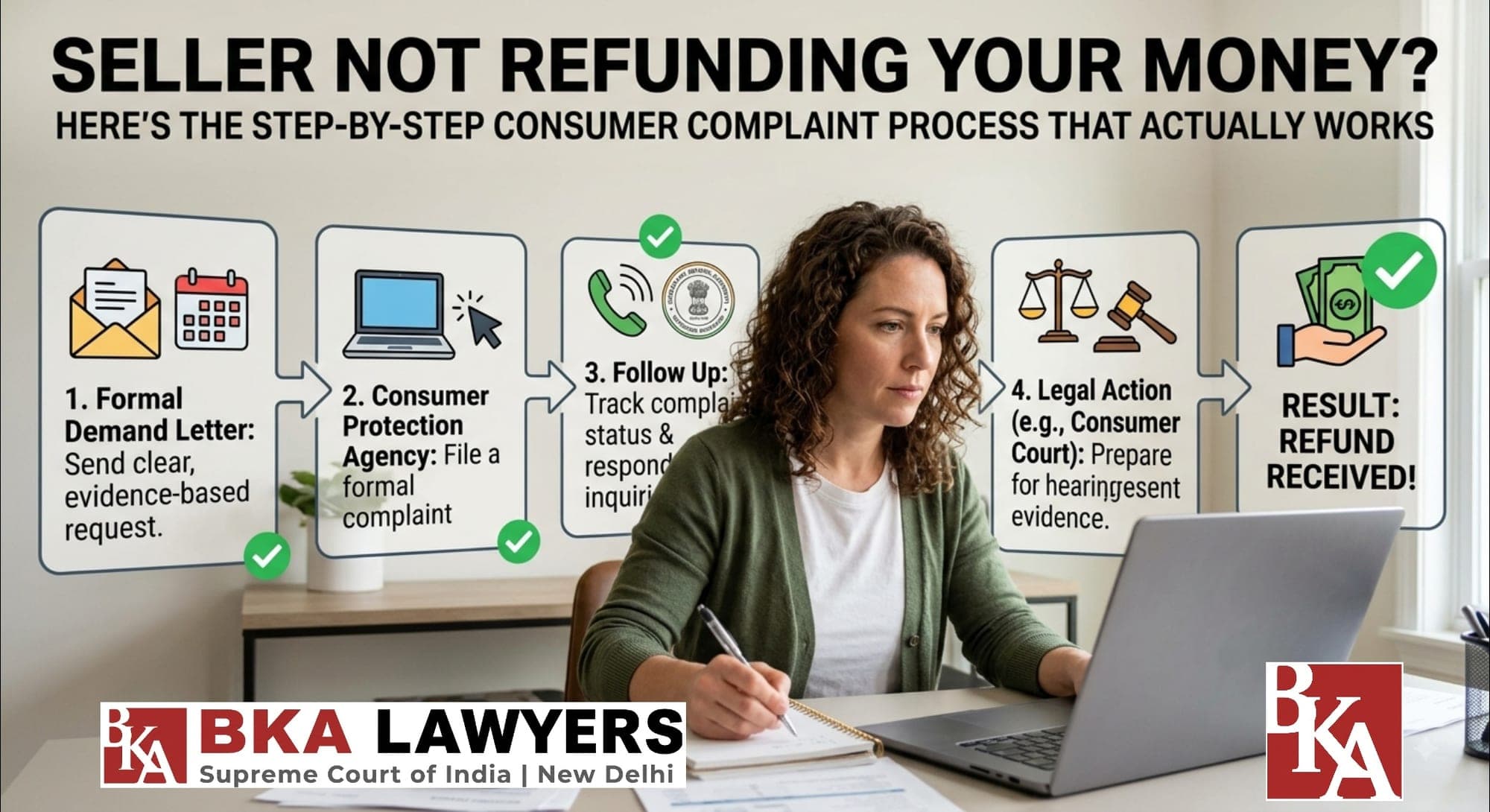
When an online seller ignores your refund request, it’s not just frustrating—it’s a legal wrong. Under the Consumer Protection Act, 2019, you have clear rights, and there’s a defined process to enforce them. This guide walks you through the practical steps that actually work, from informal escalations to formal complaints and consumer commissions.
Step 1: Document Everything and Escalate Informally
The first move is to create a paper trail. Screenshot the product page, order confirmation, payment receipt, and all communication with the seller or platform. Send a formal email to the seller’s customer support and the e-commerce platform (like Amazon, Flipkart, Myntra) citing your order ID and the specific date you requested a refund. State your deadline—usually 7-15 days—and mention that you will file a consumer complaint if not resolved. In many cases, platforms step in to settle disputes with sellers because they know a consumer complaint costs them time and money.
Step 2: Issue a Legal Notice (Optional but Effective)
A legal notice is a formal letter from you or your lawyer to the seller and the platform, demanding a refund under the Consumer Protection Act. It serves as a final warning and often prompts quick action because businesses know it is the precursor to litigation. A lawyer can draft and send this for a modest fee, but you can also draft it yourself. The notice should include your claim, the facts, the legal basis (Section 2(47) defines "unfair trade practice"), and a clear remedy—usually refund plus compensation.
Step 3: File an Online Complaint on e-Daakhil
If informal efforts fail, the most efficient route is the e-Daakhil portal for consumer grievances. You don’t need a lawyer to file, and you can do it entirely online. Go to e-Daakhil, register, and fill the complaint form. You’ll need to select the appropriate District Commission based on your location or the seller’s. Attach all your documents as PDFs. The fee is nominal—usually between ₹100 and ₹2,000, depending on the claim value. Once filed, the commission will issue notice to the seller, and they must respond.
Step 4: Prepare for a Hearing Before the District Commission
The District Consumer Disputes Redressal Commission will schedule a hearing. Present your case clearly: show the order details, the failed refund attempts, and the seller’s refusals. Under Section 39 of the Act, the commission can order a refund, compensation for mental agony, and even penalties. Courts have consistently sided with consumers in such cases. For instance, in a recent case, a consumer forum ordered Amazon and a seller to refund a Rs 13,300 smartwatch that was never delivered, plus costs. You don’t need a lawyer, but having one improves your odds.
Step 5: If Needed, Move to the State or National Commission
If your claim is above ₹50 lakh, it goes to the State Commission; above ₹2 crore, to the National Commission. But for most online shopping refunds, the District Commission is the right forum. If you’re unhappy with the decision, you can appeal within 45 days to the State Commission.
Practical Tips That Work
- Use the platform’s internal dispute resolution—most e-commerce sites have a “Buyer Protection” or “A-to-Z Guarantee” (Amazon) that processes refunds if the seller fails.
- Keep clock on the timeline—the Act gives you two years from the date the cause of action arises, but don’t delay.
- Check the seller’s reputation—if the seller has poor ratings, don’t buy; but if you did, that evidence strengthens your case.
When to Get a Lawyer Involved
If the seller is using legal tactics or if the refund amount is substantial, consulting a consumer-law lawyer at BKA Lawyers can save you time. We’ll draft the notice, file the complaint, and represent you at hearings, so you don’t have to navigate the process alone.
Refunds shouldn’t require a fight, but when they do, the law is on your side. Start with documentation, escalate systematically, and don’t walk away—you have every right to get your money back.
Facing a similar situation? Talk to a BKA advocate before you act.
Chat on WhatsAppNeed help with this?
Our Consumer Protection services
Frequently Asked Questions
How long do I have to file a consumer complaint for a refund?
You have two years from the date the cause of action arises, which is usually when the seller first refused to refund. If you miss that deadline, you can still file but must explain the delay, and the commission may condone it.
Can I file a complaint on e-Daakhil without a lawyer?
Yes, you can. The e-Daakhil portal is designed for self-filing. You just need to register, fill in the form, upload documents, and pay a small fee. However, having a lawyer can help you draft a stronger case and navigate hearings.
What if the seller is not registered or untraceable?
You can still file a complaint naming the e-commerce platform that facilitated the sale, as the Act holds platforms liable for seller misconduct in certain cases. The platform will be forced to respond and often refunds to avoid litigation.
How much does it cost to file a consumer complaint on e-Daakhil?
The fee depends on the claim value. For claims up to ₹5 lakh, the fee ranges from ₹100 to ₹2,000. It's nominal compared to court fees, making consumer forums highly accessible.
Can I get compensation for mental agony in a refund case?
Yes, the District Commission can award compensation for mental agony and other damages caused by the seller's unfair trade practice, in addition to ordering a refund.

About the author
Ujjwal Agrawal
Advocate · Commercial & Money Recovery Cases
Ujjwal Agrawal focuses on commercial litigation and money recovery, including cheque bounce cases under the Negotiable Instruments Act and recovery suits for individuals and businesses.
More about our team →Related Articles
Property Dispute — 10 Costly Mistakes That Sink Property Dispute Cases in Delhi NCR Courts
A senior advocate's plain-English guide to the ten mistakes that quietly destroy property disputes in Delhi NCR — from missing limitation to weak documentation — and what to do instead.
Supreme Court and High Court Rulings on Maintenance When the Wife Has Her Own Income
A wife's salary, flat or car does not automatically shut down her maintenance claim. What the Supreme Court and High Courts have actually held on maintenance where the wife earns, and how the courts decide.
Interim vs Permanent Maintenance: When Can a Husband Legally Reduce or Stop Payments?
Maintenance cannot be stopped at will. This explainer sets out when a husband can lawfully seek reduction or cancellation, and when non-payment is simply illegal.