
Custody of Children in Broken Marriages: A Practical Guide for Parents

When a marriage breaks down, the most painful question isn't about property or alimony—it's about the children. Who will they live with? How will they cope? Indian courts handle these questions with a single guiding principle: the welfare of the child. Not the rights of the father, not the convenience of the mother. The child comes first. Here's what you need to know if you're facing this situation.
The Golden Rule: Welfare of the Child Is Paramount
Indian courts, whether under the Hindu Minority and Guardianship Act or the Guardians and Wards Act, consistently hold that the child's welfare is the paramount consideration. This isn't just a legal slogan; it's a practical test that judges apply to every custody case. In Gaurav Nagpal v. Sumedha Nagpal (2009), the Supreme Court emphasized that the child's happiness, physical and mental health, and moral upbringing are what matter most. Courts will look at who provides a stable, loving environment—not which parent is technically 'entitled' to custody.
Types of Custody: It's Not Just One or the Other
Many parents assume custody means the child lives with one parent and visits the other. But there are several legal options:
- Physical custody: The child lives with one parent, and the other has visitation rights.
- Joint custody: Both parents share physical and legal responsibility, with the child alternating homes. This is becoming more common, especially in amicable separations.
- Legal custody: One or both parents have the right to make major decisions about education, medical care, and religion—regardless of where the child lives.
Courts can also order supervised visitation in cases of abuse or neglect. The key is to be flexible. A custody order isn't a trophy; it's a framework for your child's ongoing life.
How Courts Decide: What Judges Actually Consider
Under Section 17 of the Guardians and Wards Act, 1890, courts consider the child's age, gender, and the parents' capacity to provide for the child. In practice, judges weigh several factors:
- Age of the child: Young children (especially under five) are often placed with the mother, based on the 'tender years' doctrine—though this isn't absolute.
- The child's own preferences: If the child is old enough (usually around 9+) and mature enough, courts will give weight to their wishes.
- Stability: A parent who provides a stable home, consistent schooling, and a routine is favored.
- Financial resources: Not decisive, but a parent's ability to meet the child's needs matters.
- Moral character: A parent's conduct, including any history of abuse or neglect, is closely examined.
There's no mathematical formula. Each case is fact-specific, and judges have wide discretion.
The Mother's Presumption: When Does It Apply?
Under the Hindu Minority and Guardianship Act, the father is the natural guardian—but that's for property matters, not custody. When it comes to a custody dispute, the child's welfare overrides this. The Supreme Court has repeatedly held that the 'mother is a natural guardian' for young children, especially those below five. For older children, the father can equally get custody if it's in the child's best interest. Don't rely on assumptions; consult a lawyer to understand how the facts of your case will play out.
Interim Custody: What Happens During the Case?
If the marriage is broken and you're separated, custody isn't a once-and-done decision. During the pendency of the divorce or custody petition, courts often grant interim custody—a temporary arrangement that can last months or years. This can be sole custody with visitation, or shared custody. It's crucial to establish a stable routine for your child early, because the interim order often shapes the final one. If you're the primary caregiver right now, document your role: school pickup, medical visits, meals—this evidence matters.
The Best Strategy: Put Your Child First
Litigation is stressful, but here's what works in court and in life: cooperation. Parents who can communicate and agree on a parenting plan are far more likely to get a custody order that mirrors their wishes. Courts appreciate parents who encourage a healthy relationship between the child and the other parent. Alienating the child from your ex can backfire. Consider mediation or counseling—not just to settle the case, but to help your child adjust. A custody battle isn't a contest you 'win' by making the other parent look bad. It's a question of what your child needs.
When to Talk to a Lawyer
The earlier you get legal advice, the better. A family lawyer can help you document evidence, file the right petition (under the Hindu Marriage Act, Special Marriage Act, or Guardians and Wards Act), and negotiate a fair arrangement. If the other parent is refusing visitation or threatening to relocate with the child, you need urgent court orders. Don't wait until the situation escalates. A consultation now can save you from collateral damage later.
Every broken marriage is a story of loss—but your child's future doesn't have to be a casualty. With the right approach, you can navigate this painful chapter and come out with a custody arrangement that truly serves your child's best interests. If you're facing this, reach out to BKA Lawyers for a confidential discussion about your options.
Facing a similar situation? Talk to a BKA advocate before you act.
Chat on WhatsAppNeed help with this?
Our Family Law services
Frequently Asked Questions
What is the legal age for a child to decide custody in India?
There's no strict age, but courts typically consider a child's preference when they are around 9 years old or older, provided they are mature enough. The child's welfare remains the primary factor, not just their stated wish.
Can a mother get custody of a child above 5 years old?
Yes, absolutely. The 'tender years' presumption for mothers usually applies to children under 5, but for older children, custody is decided solely on the child's welfare. A mother can win custody of a 10-year-old or teenager if it's in the child's best interests.
What is the difference between physical and legal custody?
Physical custody is where the child lives day-to-day. Legal custody is the right to make major decisions about the child's education, health, and religion. In India, legal custody is often shared, even when one parent has physical custody.
Can a custody order be changed later?
Yes, custody orders are not permanent. If circumstances change—like a parent relocating, becoming unfit, or the child's needs evolving—either parent can petition the court to modify the order. The court will re-evaluate based on the child's current welfare.
What happens if the other parent refuses to return the child after visitation?
This is a serious violation of a court order. You should immediately file a contempt petition or a police complaint. Courts take such breaches seriously and can enforce the order, even with police assistance, to ensure the child's stability.
Does the father have equal rights to custody in India?
Yes, fathers have equal rights in law, but not automatic custody. Courts are gender-neutral; they decide based on the child's welfare. If the father provides a stable, loving environment, he can absolutely get custody, including sole custody.

About the author
Ujjwal Agrawal
Advocate · Commercial & Money Recovery Cases
Ujjwal Agrawal focuses on commercial litigation and money recovery, including cheque bounce cases under the Negotiable Instruments Act and recovery suits for individuals and businesses.
More about our team →Related Articles
Supreme Court and High Court Rulings on Maintenance When the Wife Has Her Own Income
A wife's salary, flat or car does not automatically shut down her maintenance claim. What the Supreme Court and High Courts have actually held on maintenance where the wife earns, and how the courts decide.
Interim vs Permanent Maintenance: When Can a Husband Legally Reduce or Stop Payments?
Maintenance cannot be stopped at will. This explainer sets out when a husband can lawfully seek reduction or cancellation, and when non-payment is simply illegal.
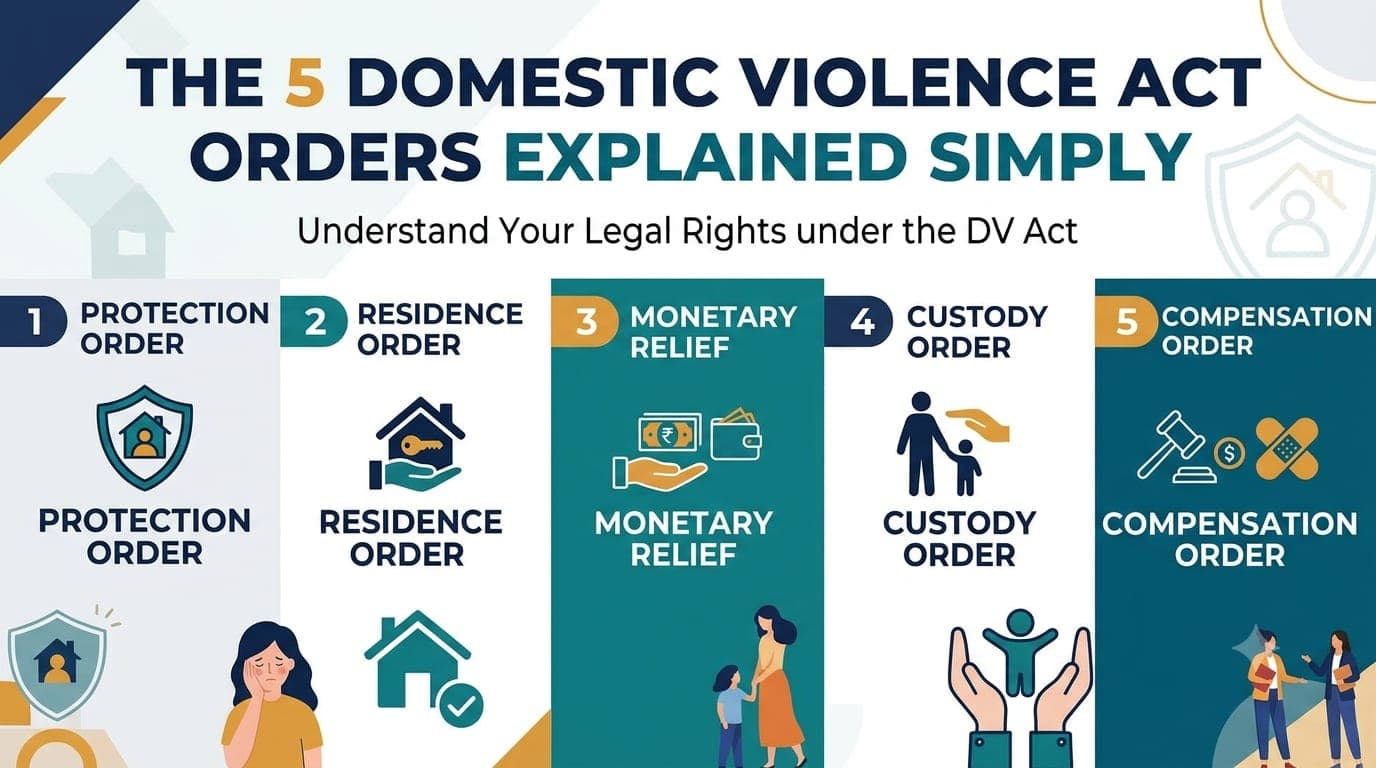
The 5 PWDVA Orders Explained Simply: Protection, Residence, Monetary Relief and More
A plain-English breakdown of the five orders a court can pass under the Protection of Women from Domestic Violence Act, 2005, and how they sit alongside Section 498A of the IPC (now Section 85 of the BNS).