
Mutual Consent Divorce in India: A Step-by-Step Guide (2026)
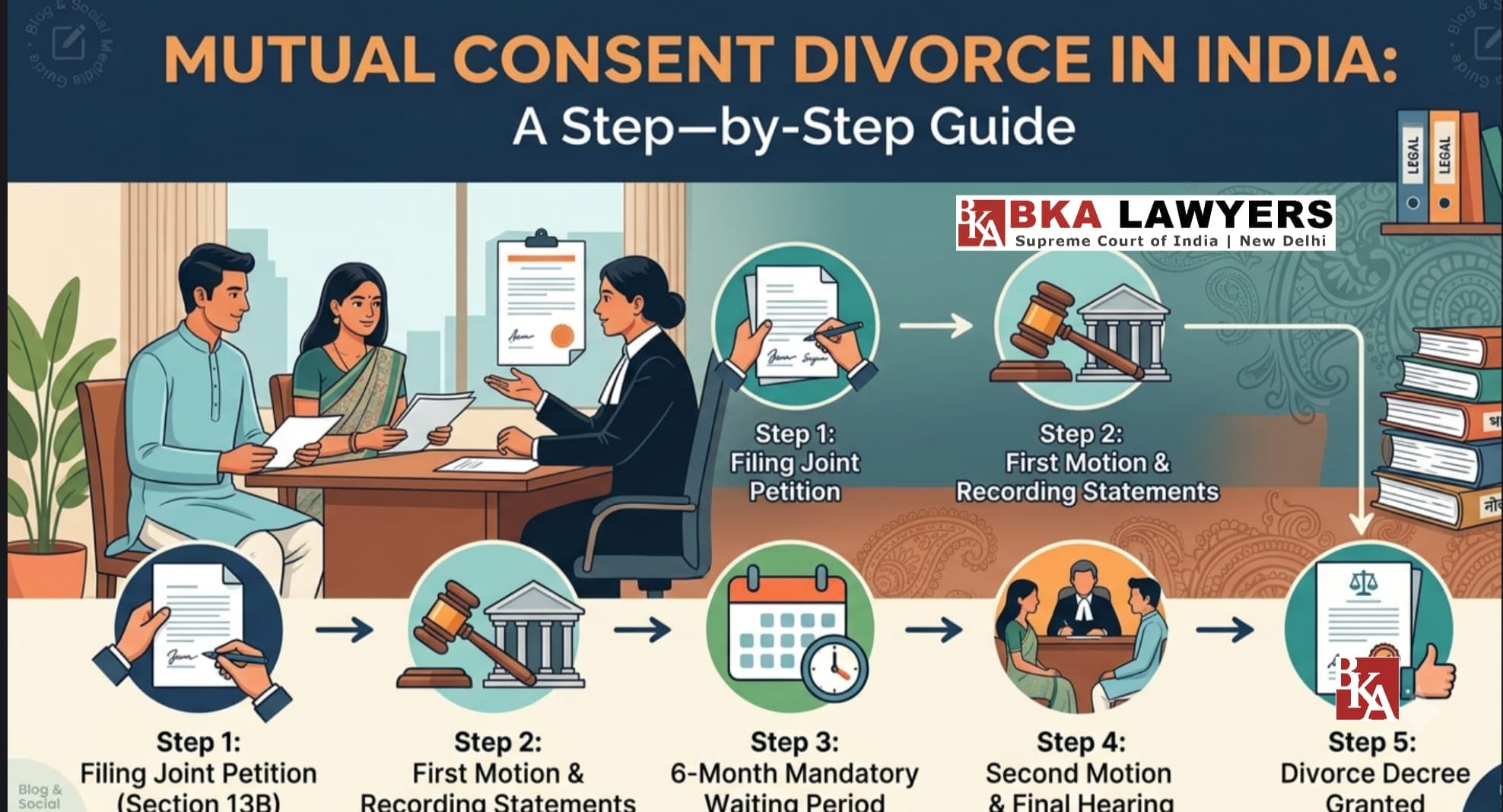
Mutual consent divorce is the most straightforward and least acrimonious way to end a marriage in India. It doesn't mean the couple is on friendly terms; it means both spouses have agreed — voluntarily and without coercion — that the marriage is over. If you and your spouse can agree on the terms, you can get a divorce in as little as six months, sometimes less, without the emotional and financial toll of a contested battle. Under Section 13B of the Hindu Marriage Act, 19555 (and similar provisions under the Special Marriage Act and other personal laws), the law provides a clear, structured route. This guide walks you through the process, the timeline, and what to expect at each stage.
The Basic Conditions: Are You Eligible?
Before you file, you must meet three statutory requirements. First, you and your spouse must have been living separately for at least one year — this doesn't necessarily mean separate addresses; it means you've stopped living as husband and wife in the marital sense. Second, you must have mutually agreed that the marriage has broken down irretrievably, and there is no reasonable chance of reconciliation. Third, both of you must freely and voluntarily consent to the divorce at the time of filing and again at the time of the final decree. If either spouse changes their mind at any point before the final order, the court cannot force the divorce through; the petition will fail.
Step 1: Draft and File the Joint Petition
The process begins with a joint petition signed by both spouses. The petition must state the date and place of marriage, the duration of cohabitation, the date you began living separately, and the grounds for the mutual decision. It must also include the terms of your settlement — alimony, child custody, division of assets and liabilities, and any other arrangements. This is the most critical document, so it's worth having a lawyer draft it carefully to ensure it meets the court's requirements and to avoid delays. You file the petition in the family court (or district court) within whose jurisdiction you last resided together, or where you both currently reside. You'll also need to attach documents such as marriage certificate, address proof, and income proof if alimony is involved.
Step 2: The First Motion and the Cooling-Off Period
Once the petition is filed, the court schedules a first hearing — the "first motion." Both spouses must appear in person (unless the court excuses attendance for exceptional reasons) and state that they are staying together voluntarily and that their consent is free and genuine. The court records these statements and passes an order; at this point, the divorce is not final. Instead, the law imposes a cooling-off period of six months. The purpose is to give both parties time to reflect and possibly reconcile. During this period, either spouse can withdraw consent, which would derail the petition. The court has the discretion to waive the six-month period in exceptional circumstances, but that's rare and requires strong reasons, such as a genuine and irreconcilable breakdown or hardship.
Step 3: The Second Motion and Final Decree
After the cooling-off period ends, you and your spouse return to court for the "second motion." Both of you must again appear and confirm that you still wish to proceed and that your consent remains voluntary. The court will also verify that the terms of your settlement have been complied with — for instance, if alimony was agreed, the spouse should have paid it before this hearing. If the court is satisfied, it passes a decree of divorce, dissolving the marriage. The decree is effective immediately, though a certified copy may take a few days to obtain. If either spouse fails to appear or withdraws consent at this stage, the petition can be dismissed, and you'd have to start over — so it's essential to stay committed to the timeline.
Key Considerations: Alimony, Child Custody, and Legal Fees
The terms you negotiate will become binding, so they must be fair and comprehensive. Alimony can be a lump sum or periodic payments; in mutual consent cases, the amount is typically agreed based on the spouse's income and standard of living during marriage. Child custody and visitation rights are also decided by mutual agreement, and the court will only intervene if the arrangement is not in the child's best interest. Legal fees for mutual consent divorce are significantly lower than contested ones — they can range from ₹10,000 to ₹50,000 depending on the lawyer and city, and the entire process usually concludes within six to twelve months. If either party hides assets or fails to disclose income, the court can set aside the settlement, so transparency is crucial.
A Practical Note for Your Case
Mutual consent divorce is not just a legal formality; it's a negotiated settlement that can save you years of litigation. But the law is strict about the joint nature of the petition — one spouse cannot file a mutual consent divorce unilaterally, and if there are disputes over any term, the court will not grant the divorce. If you're considering this route, speak with a family lawyer who can guide you through the documentation and court appearances, and help you draft a settlement that protects your rights. At BKA Lawyers, we have handled hundreds of mutual consent divorces in Delhi NCR and can help you navigate the process smoothly, from drafting the petition to obtaining the final decree.
Facing a similar situation? Talk to a BKA advocate before you act.
Chat on WhatsAppNeed help with this?
Our Divorce Matters services
Frequently Asked Questions
Can the six-month cooling-off period be waived in a mutual consent divorce?
Yes, but only in exceptional circumstances. Courts have waived the period in cases like a failed foreign divorce, long separation, or where the marriage is irretrievably broken with no chance of reconciliation. You need strong grounds and a court’s discretion.
What happens if one spouse withdraws consent after the first motion?
If either spouse withdraws consent before the second motion, the petition fails, and the divorce cannot be granted. You would then have to file a new petition, possibly for a contested divorce, which is longer and costlier.
How much does a mutual consent divorce cost in India?
Court fees are minimal, but lawyer fees typically range from ₹10,000 to ₹50,000 depending on the city and lawyer. The total cost is much lower than a contested divorce, where legal fees can exceed ₹1 lakh. Always get a clear quote from your lawyer upfront.
What documents are required for a mutual consent divorce petition?
You’ll need the marriage certificate, proof of address, passport-size photographs, income proof (for alimony), and any documents related to property or children. Your lawyer can guide you on the exact list based on your situation.
Can we get a mutual consent divorce if we've been married for less than a year?
The law requires that you and your spouse have been living separately for at least one year. If you’ve been married for less than a year, you don’t meet that condition, so you cannot file for mutual consent divorce yet. You may consider a contested divorce, but it’s advisable to wait until the one-year separation is complete.

About the author
Ujjwal Agrawal
Advocate · Commercial & Money Recovery Cases
Ujjwal Agrawal focuses on commercial litigation and money recovery, including cheque bounce cases under the Negotiable Instruments Act and recovery suits for individuals and businesses.
More about our team →Related Articles

Proving Mental Cruelty in Indian Divorce: 5 Evidence Types Courts Actually Accept
Learn the five types of evidence Indian courts accept to prove mental cruelty in divorce cases, including WhatsApp messages, witness testimony, and more. Essential guide for spouses seeking divorce on grounds of cruelty.
Judicial Separation Lawyer in Delhi: Grounds, Rights and Court Process
Understand judicial separation in Delhi, including legal grounds, Family Court procedure, maintenance, child custody and the difference from divorce.
Contested Divorce Proceedings in India: A Step-by-Step Guide
A practical guide to contested divorce proceedings in India, covering legal grounds, Family Court filing, mediation, evidence, maintenance, custody, decree and appeal.