
Proving Mental Cruelty in Indian Divorce: 5 Evidence Types Courts Actually Accept
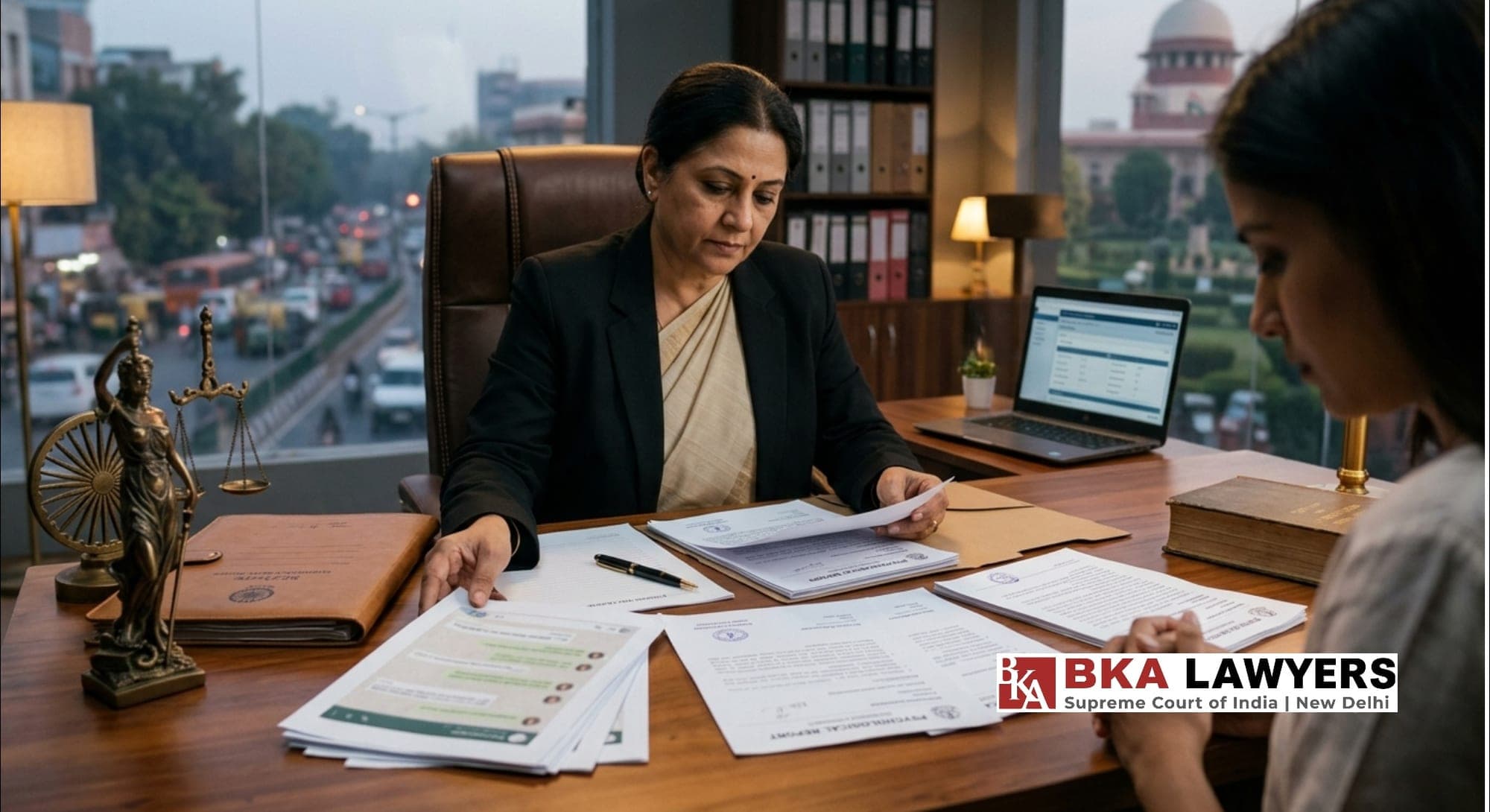
Mental cruelty is the most common ground for divorce in India, yet it remains the hardest to prove. Unlike physical violence, which leaves visible marks, mental cruelty is about patterns of behaviour that make life together unbearable — and courts demand concrete proof, not just allegations. The good news? Indian courts have evolved to accept a range of digital and documentary evidence, but only if it's presented correctly. In this guide, we break down the five evidence types that actually work in family courts across Delhi NCR and India.
1. Digital Communication: WhatsApp Chats, Emails, and SMS
Text messages are often the first place spouses turn to for evidence of cruelty — and for good reason. Abusive, threatening, or demeaning messages can be powerful proof. But here's the catch: Indian courts have repeatedly ruled that WhatsApp messages without a Section 65B certificate of the Indian Evidence Act (now corresponding provisions under the Bharatiya Sakshya Adhiniyam, 2023) cannot be relied upon. This certificate is a formal declaration that the electronic record is authentic and was produced by the device in question.
For example, in a recent Patna High Court case, the court refused to consider WhatsApp chats as evidence because the husband failed to produce the required certificate. To make your chats admissible, preserve the original phone, take screenshots, and get the certificate from an expert or the service provider. Additionally, Bombay High Court has held that cruelty cannot be proven solely based on WhatsApp chats — you need corroborating evidence.
2. Witness Testimony: Family, Friends, and Neighbours
Witnesses who have seen the cruelty firsthand — or its aftermath — can add significant weight to your claim. This includes family members who witnessed heated arguments, friends who received your distress calls, or neighbours who overheard abuse. Courts treat witness testimony seriously, especially when it is consistent and credible. However, witnesses must be willing to depose in court and face cross-examination. A vague statement like "they fought often" won't help; specific incidents, dates, and details will.
In one case, a wife's mother testified about the husband's constant verbal abuse and threats, which the court found compelling alongside WhatsApp messages. Ensure your witnesses are prepared and their accounts align with the documentary evidence.
3. Medical and Psychological Reports
Mental cruelty takes a toll on your health. If you have consulted a doctor or therapist for anxiety, depression, or stress-related issues stemming from the marriage, those records can serve as evidence. A medical report linking your condition to the spouse's behaviour can be persuasive. Similarly, if the cruelty led to physical symptoms like insomnia or hypertension, a physician's note can help substantiate your claim.
Courts have accepted psychiatrist reports and therapy records as proof of the mental impact. In a Delhi case, the wife's medical records, showing treatment for severe depression, corroborated her allegations of cruelty. Keep all prescriptions, treatment notes, and bills — they form a timeline of the damage.
4. False Allegations and Humiliating Conduct: The Subtle Evidence
Not all cruelty is abusive language. Indian courts have recognized that making false allegations of adultery or criminal conduct against a spouse amounts to mental cruelty. For instance, the Supreme Court and various High Courts have held that filing false complaints, such as dowry harassment or domestic violence cases, against a spouse can itself constitute cruelty. Similarly, humiliating a spouse in public, insulting their family, or refusing to wear the 'mangalsutra' (thali) when it holds cultural significance has been treated as cruelty in recent judgments.
Evidence for this type includes copies of false FIRs, legal notices, or statements made in public that demean the spouse. In a notable 2026 Madras High Court case, the court granted divorce to a husband because the wife repeatedly refused to wear the mangalsutra, causing him deep mental anguish. Documentation of these acts — emails, letters, or witness accounts — is critical.
5. Long Separation and Breakdown of Marriage: The Practical Evidence
Courts also consider the duration and circumstances of separation as evidence of cruelty. If you have lived apart for several years with no attempt to reconcile, it can indicate that the marriage has irretrievably broken down due to cruelty. In the Chhattisgarh High Court case, the wife's offer of ₹2 crore to the husband for divorce, coupled with a long separation, was held to prove mental cruelty. Similarly, a 2026 Supreme Court judgment noted that a 49-year-old marriage could be dissolved because the husband's removal of the 'thali' and false allegations constituted cruelty.
Evidence for this includes rental agreements, mail forwarding addresses, or utility bills showing separate residences over time, along with correspondence showing the breakdown. The longer the separation, the stronger the inference of cruelty.
How to Present Evidence Effectively in Court
Merely having evidence isn't enough; presentation matters. Organize your evidence chronologically, prepare a clear narrative, and ensure your legal counsel files the right applications, such as a petition under Section 13(1)(i-a) of the Hindu Marriage Act, 1955 or the relevant provision under the Special Marriage Act. For electronic evidence, remember to obtain the Section 65B certificate. Cross-check that your witnesses are reliable and can withstand cross-examination. Finally, be honest — courts are adept at detecting exaggeration.
Why You Need Expert Legal Guidance
Proving mental cruelty is nuanced and fact-specific. A single misstep in evidence — like failing to get the required certificate — can weaken your case. At BKA Lawyers, our Delhi NCR family law team has decades of experience in divorce matters. We can help you gather admissible evidence, file the correct petitions, and present your case persuasively. Contact us for a confidential consultation to discuss your specific situation and build a strong case.
Proving mental cruelty is challenging, but not impossible. With the right evidence and legal strategy, you can secure a divorce and move towards a healthier life. Start by preserving your evidence today.
Facing a similar situation? Talk to a BKA advocate before you act.
Chat on WhatsAppNeed help with this?
Our Divorce Matters services
Frequently Asked Questions
Can I use WhatsApp messages as evidence of mental cruelty in a divorce case?
Yes, WhatsApp messages can be used, but they must be accompanied by a Section 65B certificate under the Indian Evidence Act (now under the Bharatiya Sakshya Adhiniyam). Without it, courts like the Patna High Court have refused to rely on them. Ensure you preserve the original device and obtain the certificate from an expert to make the chats admissible.
What kind of witness testimony is considered credible in mental cruelty cases?
Witnesses who have directly observed the abusive behavior or its consequences—such as family members, friends, or neighbors—can testify. Their statements must be specific, detailing dates and incidents, not vague observations. Courts assess credibility based on consistency and willingness to undergo cross-examination.
Are medical records enough to prove mental cruelty?
Medical records, including psychiatric reports or therapy notes, can support a cruelty claim, but they are usually corroborative, not standalone proof. For instance, records showing treatment for depression induced by the spouse's behavior strengthen your case. Combine them with other evidence like messages or witness accounts.
Does filing a false complaint against a spouse amount to mental cruelty?
Yes, courts have held that making false allegations, such as filing a baseless dowry harassment or domestic violence complaint, can itself constitute mental cruelty. Documenting such false complaints, including FIR copies or legal notices, can be strong evidence in your divorce proceedings.
How long must I be separated to claim mental cruelty based on separation?
There's no fixed duration, but longer separation periods, often several years, strengthen the inference of mental cruelty. For example, in a Chhattisgarh case, a long separation alongside other factors led the court to grant divorce. Courts look at whether the separation reflects an irretrievable breakdown caused by cruelty.
Can a husband file for divorce on grounds of mental cruelty?
Yes, Indian law permits both husbands and wives to seek divorce on grounds of cruelty. Courts have recognized mental cruelty suffered by husbands, such as false allegations, public humiliation, or denial of marital rights, as valid grounds.

About the author
Ujjwal Agrawal
Advocate · Commercial & Money Recovery Cases
Ujjwal Agrawal focuses on commercial litigation and money recovery, including cheque bounce cases under the Negotiable Instruments Act and recovery suits for individuals and businesses.
More about our team →Related Articles
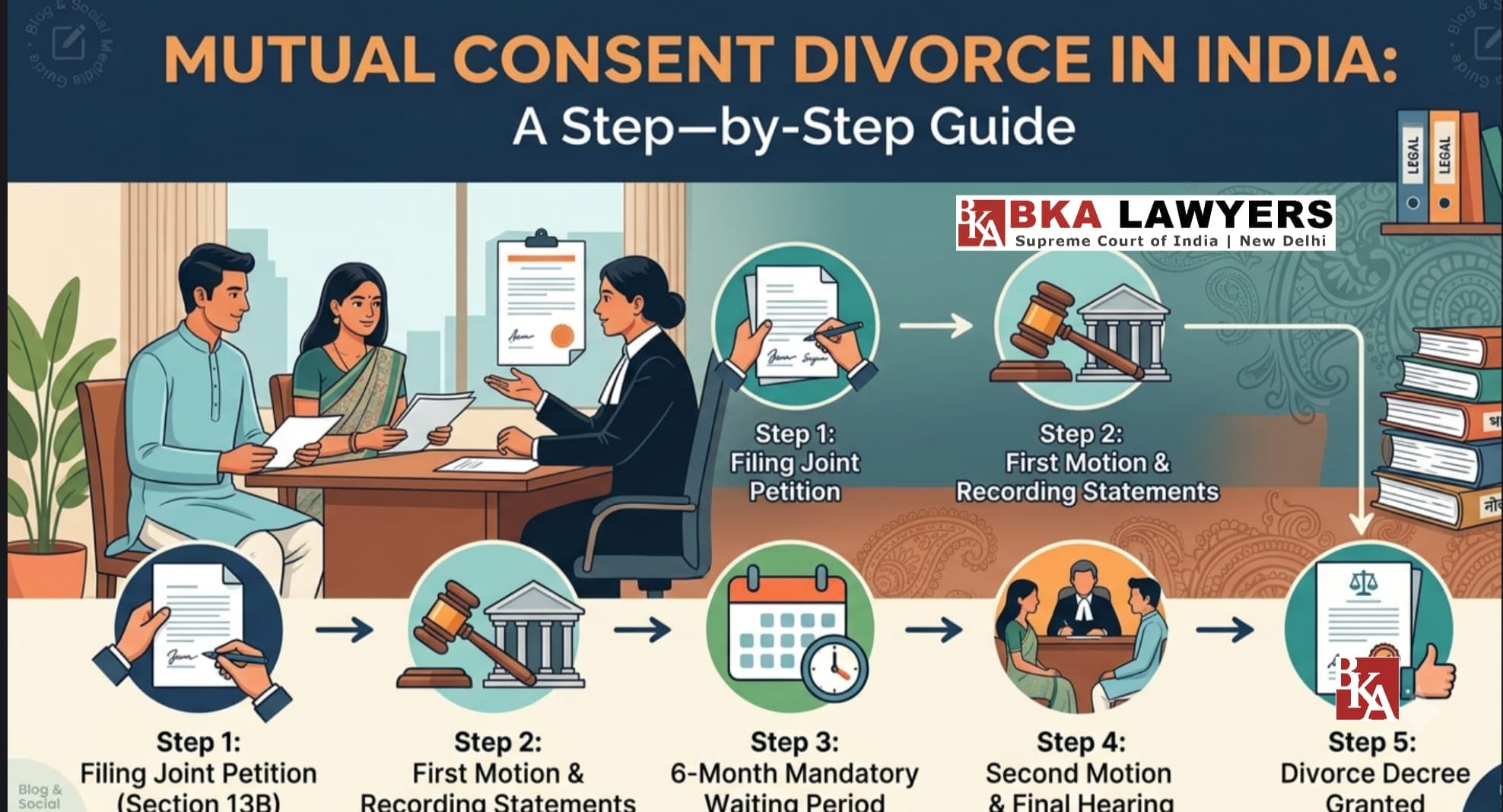
Mutual Consent Divorce in India: A Step-by-Step Guide (2026)
Learn how mutual consent divorce works in India under Section 13B of the Hindu Marriage Act, including the cooling-off period, the role of the family court, and key considerations for alimony, child custody, and the second motion.
Judicial Separation Lawyer in Delhi: Grounds, Rights and Court Process
Understand judicial separation in Delhi, including legal grounds, Family Court procedure, maintenance, child custody and the difference from divorce.
Contested Divorce Proceedings in India: A Step-by-Step Guide
A practical guide to contested divorce proceedings in India, covering legal grounds, Family Court filing, mediation, evidence, maintenance, custody, decree and appeal.