
Is Probate Mandatory in Delhi? What the Indian Succession Act Really Says (2025 Update)
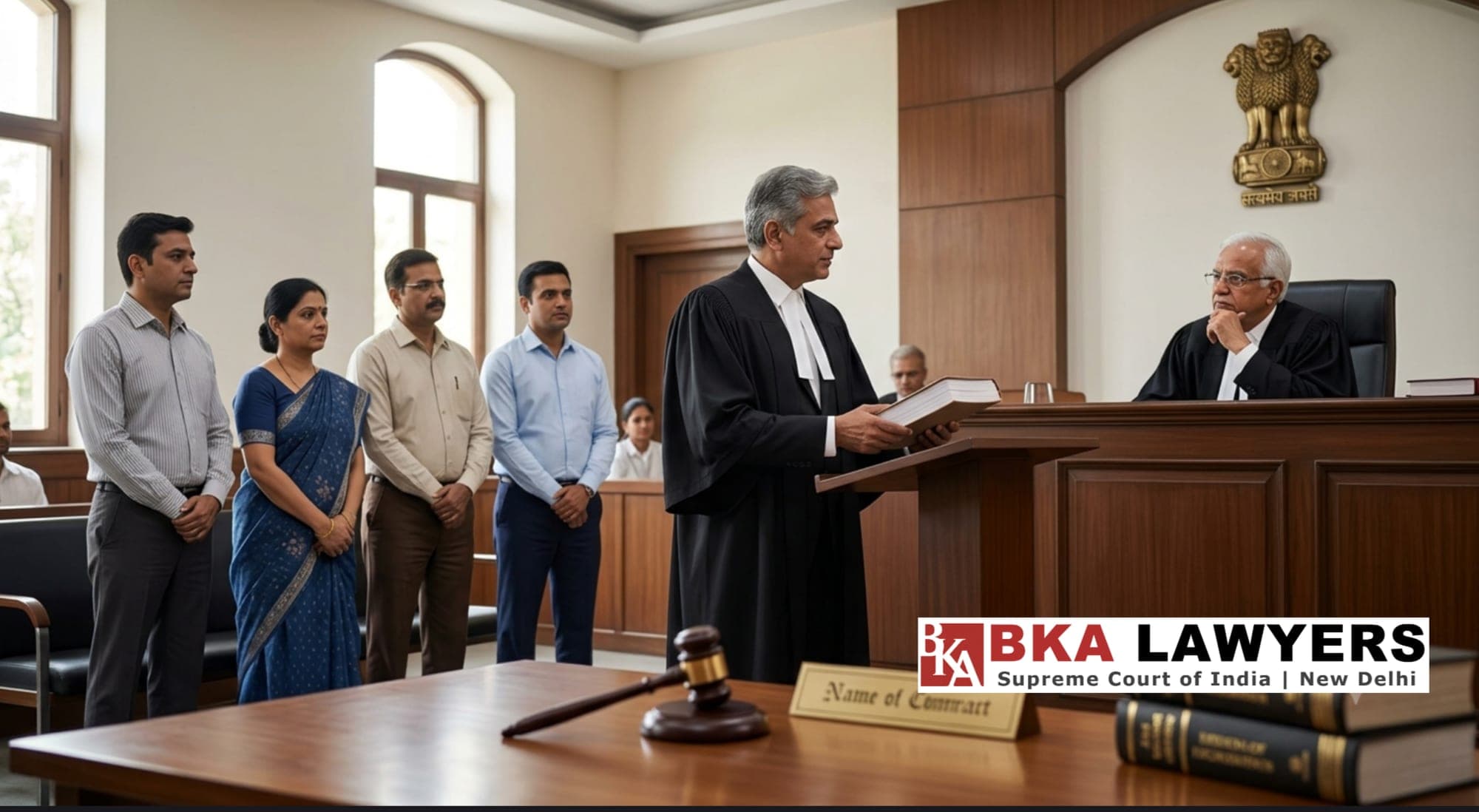
Probate is often misunderstood as a formality. In Delhi, it can be the single most important legal step after someone dies — or completely unnecessary, depending on who the deceased was and where they lived. Getting this wrong means banks and registrars can refuse to deal with you, or worse, a family dispute that drags on for years.
The law here is Section 213 of the Indian Succession Act, 1925. It makes probate mandatory in specific situations, but not for everyone. Here's what you actually need to know in 2025.
When Probate Is Mandatory in Delhi: Section 213 Explained
Section 213 of the Indian Succession Act states that no court can establish the right of a person as a legatee or executor under a will unless probate has been granted. But this mandatory rule only applies to wills made by:
- Hindus, Buddhists, Sikhs, or Jains who lived in certain areas, including the erstwhile Presidency towns of Chennai, Kolkata, and Mumbai — not Delhi.
- All other communities (Christians, Parsis, Muslims, and others) whose wills are governed by the Indian Succession Act — but only within those same Presidency towns or in areas where the Act has been specifically extended.
Delhi is not a Presidency town, and the Act's mandatory probate provisions under Section 213(1) have not been extended to it. So, for a Hindu living in Delhi, probate is not legally compulsory to establish a will. The Delhi High Court has consistently upheld this position.
However, "not mandatory" does not mean "not useful." In practice, many institutions — especially banks and sub-registrar offices — often ask for probate or a succession certificate before transferring assets. Having probate can save you months of delays and disputes.
Probate vs. Succession Certificate: Which One Do You Need?
People often confuse these two legal instruments. They serve different purposes.
- Probate is the court's certification that a will is genuine and valid, and that the executor has the authority to distribute the deceased's property according to that will. Once probate is granted, the will itself does not need to be proved again in any other court.
- Succession certificate is needed when a person dies without a will (intestate) or when the will is not required to be probated. It gives the holder the authority to collect debts, securities, and other movable assets. It does not deal with immovable property.
In Delhi, for a Hindu dying with a will, a succession certificate may not be sufficient for transferring immovable property. A probate is generally accepted by all authorities, including the Delhi Development Authority and the sub-registrar, as conclusive proof of the will's validity.
So, if your parent or grandparent left a will and you need to sell or transfer property, applying for probate is the safer route, even if it isn't strictly mandatory.
The Process of Getting a Probate in Delhi (Step-by-Step)
If you decide to apply for probate, here is the standard procedure in Delhi's courts:
Step 1: File the Petition You (the executor named in the will) file a petition in the District Court within the jurisdiction where the deceased lived or where the property is located. The petition must include the original will, a death certificate, and details of the deceased's family members and assets.
Step 2: Court Issues Notice The court issues notice to all legal heirs and beneficiaries named in the will. You must also publish a notice in a newspaper and display it on the court's notice board to invite any objections.
Step 3: Address Objections If no one objects, the court can grant probate in as little as 3–6 months. If someone challenges the will (on grounds like forgery, undue influence, or lack of testamentary capacity), the case becomes a contested probate suit, which can take years.
Step 4: Grant of Probate Once the court is satisfied that the will was properly executed and the executor is competent, it grants probate. You then receive a probate certificate under the court's seal, which you can use to deal with banks, authorities, and family members.
Recent Developments: What 2025 Rulings Mean for You
The Delhi High Court has recently clarified several important points about probate:
- Once probate is granted, the will need not be proved again under Section 68 of the Evidence Act. This means a probate is conclusive — no one can re-litigate the will's genuineness in another civil case.
- A pending probate case does not bar a criminal investigation for forgery. In a January 2026 decision, the High Court refused to quash an FIR filed against a person who allegedly forged a will, even though probate proceedings were already pending. So, if you suspect forgery, you can go to the police — you don't have to wait for the civil court.
- Probate can be revoked if the will is later found to be forged. A criminal court's finding that a will is forged is grounds for an affected party to apply for revocation of probate. This was highlighted in a February 2026 ruling.
- Proof of execution can stand even if probate is dismissed. In a December 2025 case, the Delhi High Court upheld the genuineness of a will even though probate was dismissed on technical grounds. This means a will can be declared valid in another legal proceeding if the evidence supports it.
These rulings show that probate is not a rubber stamp — it can be challenged, and criminal remedies are separate from the civil probate process.
Probate Is Still a Smart Move — Even if Not Mandatory
A 2026 Livemint article rightly pointed out that while mandatory probate has been removed for most wills (under the Hindu Succession Act amendments), obtaining probate remains a wise step for inheritance. Why?
- It settles disputes pre-emptively. Probate gives you a court order that is binding on all parties who were notified. This prevents future claims from disgruntled relatives.
- It simplifies asset transfers. Banks, insurers, and property registrars accept probate as final authority. Without it, you may face endless paperwork and even demands for a no-objection certificate from every possible heir.
- It protects the executor. If a beneficiary later alleges that you misused the assets, probate is your legal shield — it proves you acted under court authority.
In fact, even in cases where probate is not mandatory, the Delhi High Court has held that a probate is conclusive evidence of the will's validity, and no one can re-open the issue.
The Bottom Line for Delhi Residents
For most Hindus in Delhi, probate is not legally required to establish a will. But if you are dealing with significant assets, especially immovable property, or expect family disputes, get probate. It costs time and money, but it saves years of litigation and gives your family certainty.
If you are unsure whether your situation requires probate, or need help with a contested probate case in Delhi, consult a lawyer who specializes in succession matters. The rules are technical, and one wrong assumption can delay your inheritance for years.
Facing a similar situation? Talk to a BKA advocate before you act.
Chat on WhatsAppNeed help with this?
Our Wills, Succession & Probate services
Frequently Asked Questions
Is probate of a will compulsory in Delhi for Hindu families?
No. Section 213 of the Indian Succession Act, 1925, which makes probate mandatory, applies only to certain areas like Presidency towns (Chennai, Kolkata, Mumbai). Delhi is not covered, so for Hindus in Delhi, probate is not legally required. However, many authorities and banks often ask for probate or a succession certificate, so getting one is generally advisable.
What happens if I don't get probate for a will in Delhi?
You can still use the will to claim assets, but banks and property registrars may refuse to transfer ownership without probate or a court order. In case of disputes, the will may need to be proved in court through a separate civil suit, which can be lengthy and costly. Probate avoids these issues by giving you a court-certified document that is accepted everywhere.
How long does it take to get probate in Delhi?
If no one contests the probate application, it typically takes 3 to 6 months from filing to the grant of probate. This includes time for notices to be served and for the court to review. If family members object, the process becomes a full-fledged suit and can take years.
Can probate be revoked after it is granted?
Yes. If it is later discovered that the will was forged or obtained fraudulently, an affected person can apply for revocation of probate under the Indian Succession Act. A criminal court's finding that the will is forged can be grounds for revocation.
Does probate in Delhi require publication of notice in newspaper?
Yes, the court typically requires the petitioner to publish a notice in a local newspaper and display it on the court's notice board. This is to invite any objections from potential heirs or claimants. The exact procedure may vary from court to court, but it is a standard part of the probate process.
What is the difference between probate and succession certificate in Delhi?
Probate is granted when there is a will, and it confirms the will's validity and the executor's authority. A succession certificate is issued when a person dies without a will or when the will is not probated; it gives the holder the right to collect movable assets like bank deposits and shares. For immovable property, probate is generally preferred.

About the author
Ujjwal Agrawal
Advocate · Commercial & Money Recovery Cases
Ujjwal Agrawal focuses on commercial litigation and money recovery, including cheque bounce cases under the Negotiable Instruments Act and recovery suits for individuals and businesses.
More about our team →Related Articles
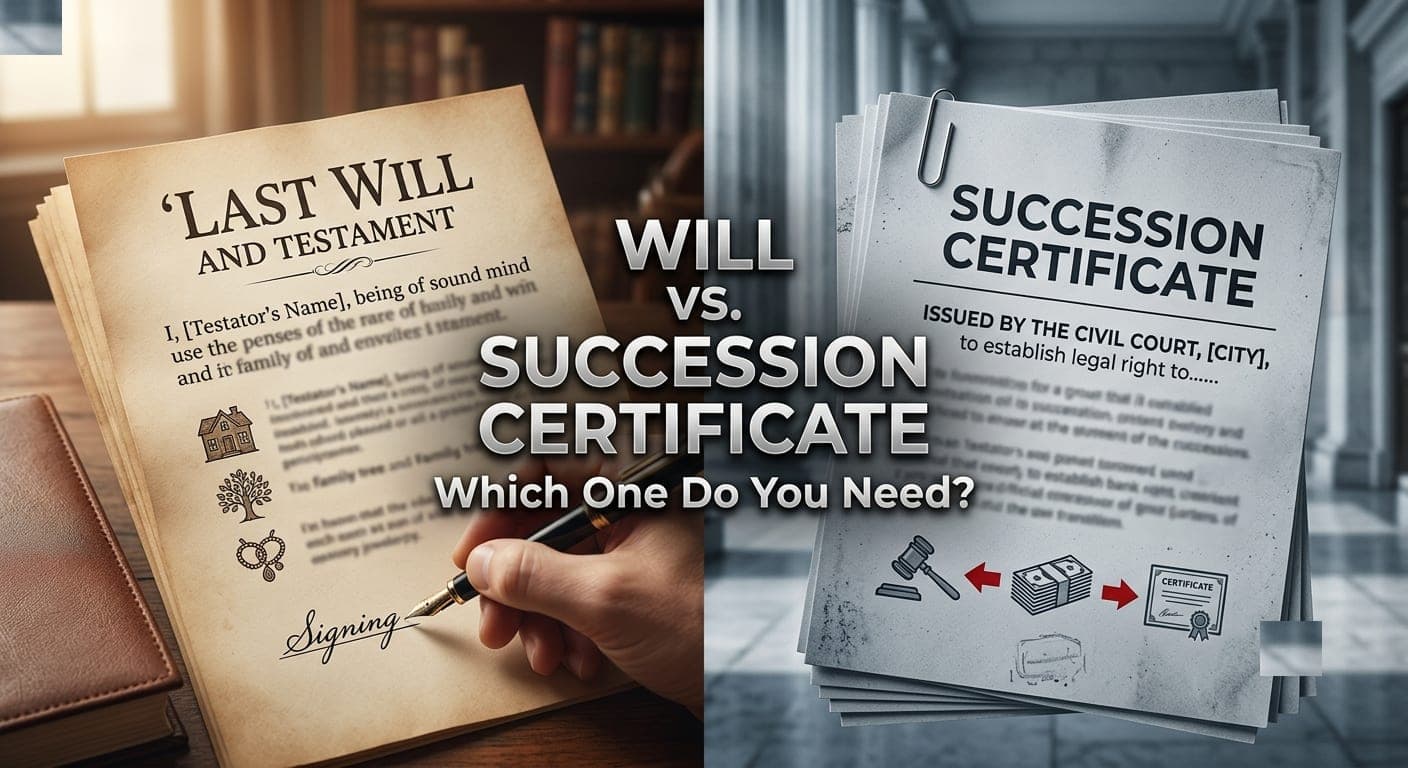
Will vs. Succession Certificate: Which One Do You Need?
Understand the key differences between a Will and a Succession Certificate in India, when each is required, and how they affect inheritance claims.
Property Dispute — 10 Costly Mistakes That Sink Property Dispute Cases in Delhi NCR Courts
A senior advocate's plain-English guide to the ten mistakes that quietly destroy property disputes in Delhi NCR — from missing limitation to weak documentation — and what to do instead.
Supreme Court and High Court Rulings on Maintenance When the Wife Has Her Own Income
A wife's salary, flat or car does not automatically shut down her maintenance claim. What the Supreme Court and High Courts have actually held on maintenance where the wife earns, and how the courts decide.